Uncategorized

odoo 4

Odoo ERP Cloud: Simplify Your General Ledger Management with Daysum

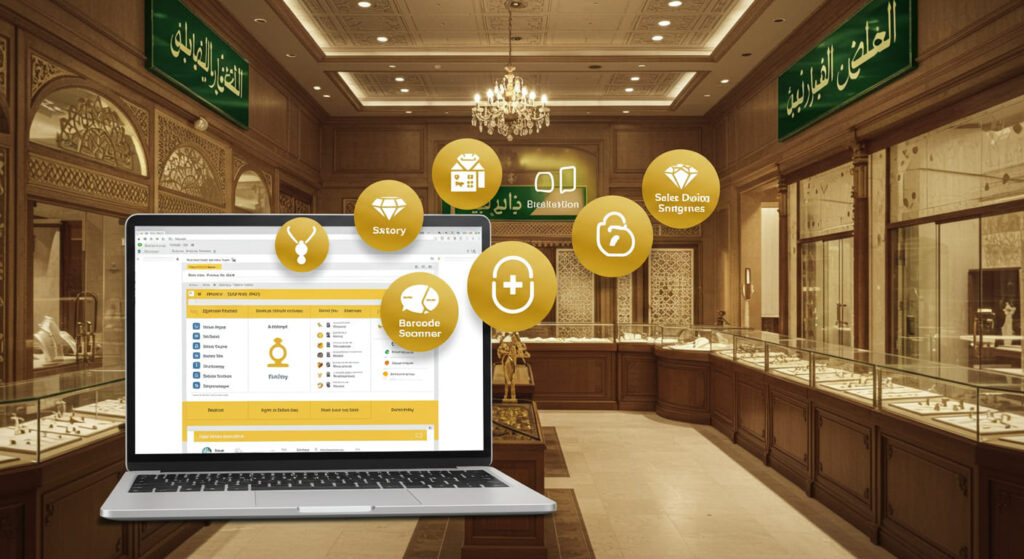
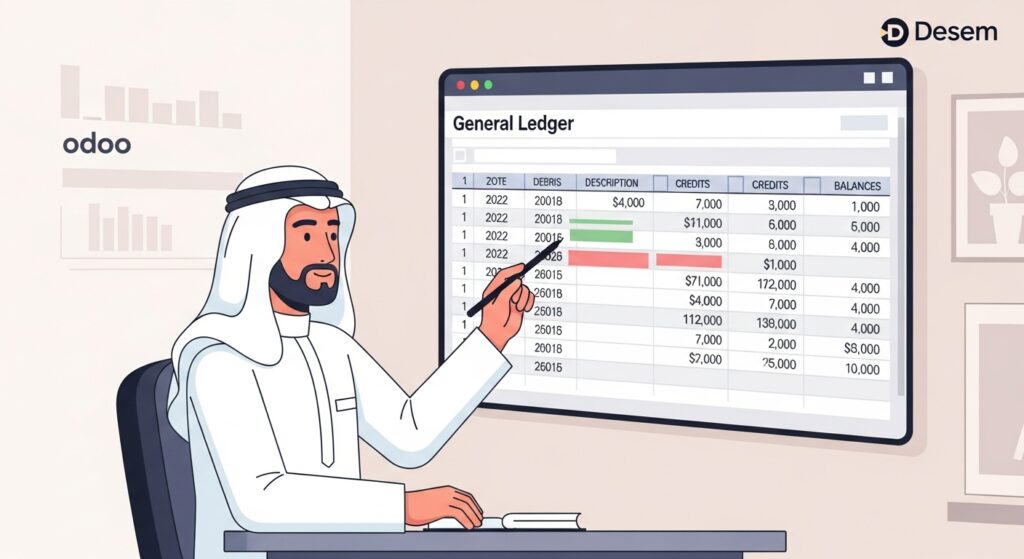
Odoo ERP Cloud is revolutionizing financial management by offering a scalable, efficient, and accessible solution for businesses in Saudi Arabia. The cloud Odoo platform centralizes your General Ledger (GL), the core of your financial ERP system, where all accounting entries from modules like Accounts Payable, Accounts Receivable, and Inventory are seamlessly recorded. Daysum, a leading provider of Odoo Cloud ERP solutions, simplifies General Ledger management by ensuring real-time accuracy and compliance with local regulations. With Daysum’s expertise, Saudi businesses can generate precise financial statements and maintain complete control over their finances through an intuitive, cloud-based system designed to streamline operations and support growth in today’s competitive market. What Is a General Ledger and Why It Matters in Odoo ERP Cloud The General Ledger (GL) is the central component of any financial system, serving as the comprehensive record of all accounting transactions. In odoo erp cloud, the GL consolidates data from multiple accounting modules into one unified platform. This consolidation ensures accurate bookkeeping, transparent financial management, and compliance with Saudi regulations. Daysum’s cloud Odoo solutions simplify GL management, enabling businesses to maintain a precise financial overview crucial for decision-making and regulatory reporting. Key Roles of the General Ledger Records all accounting transactions from various modules. Serves as the foundation for preparing financial statements. Ensures data integrity and audit readiness. How Daysum Integrates All Accounting Modules into the GL Daysum leverages the full capabilities of odoo cloud ERP to seamlessly integrate critical accounting modules such as Accounts Payable, Accounts Receivable, and Inventory into the General Ledger. This integration guarantees that all financial activities are captured in real time, reducing errors and improving efficiency for Saudi businesses using odoo erp cloud. Integration Process by Daysum Connect key accounting modules to the GL automatically. Sync transaction data across modules in real time. Validate entries to ensure accuracy and compliance. Provide unified financial data for reporting and analysis. Real-Time Financial Reporting with Odoo Cloud ERP One of the standout advantages of using cloud Odoo is the ability to generate real-time financial reports directly from the General Ledger. Daysum’s odoo erp cloud implementation empowers Saudi businesses to access up-to-date financial insights anytime, anywhere, enabling faster and more informed decisions that drive growth. Features of Real-Time Reporting Instant updates as transactions are recorded. With Odoo ERP Cloud, every entry in the General Ledger is updated in real time, ensuring accurate and up-to-the-minute financial data. Customizable reports tailored to business needs. Cloud Odoo allows you to design General Ledger reports that match your industry and management requirements for better decision-making. Easy access via cloud from any device. Odoo Cloud ERP lets you review and manage your GL securely from your laptop, tablet, or smartphone—anytime, anywhere. Enhanced transparency for stakeholders. Real-time GL reporting in Odoo ERP Cloud keeps managers, auditors, and partners informed with accurate, accessible, and transparent financial data. Advantages of Cloud-Based GL Management for Saudi Businesses Managing your General Ledger through odoo erp cloud offers numerous benefits, especially in Saudi Arabia’s fast-evolving business environment. Daysum’s cloud-based solutions deliver flexibility, security, and scalability, helping businesses meet local compliance standards while improving operational efficiency. Key Benefits for Saudi Businesses Benefit Description Enhanced Accessibility Access financial data remotely and securely. Cost Efficiency Reduce IT infrastructure and maintenance costs. Scalability Easily adapt as your business grows. Regulatory Compliance Align with Saudi accounting and tax regulations. Automating Journal Entries and Reconciliations in the General Ledger Automating journal entries and reconciliations within the General Ledger is a game-changer for businesses using odoo erp cloud solutions. This automation eliminates manual input errors and accelerates financial workflows by ensuring that all transactions from various modules—such as Accounts Payable, Accounts Receivable, and Inventory—are accurately recorded and matched. Daysum’s expertise in cloud Odoo enables Saudi companies to maintain real-time, error-free financial records, improving reporting accuracy and compliance with local regulations. How Automation Streamlines Journal Entries in Odoo Cloud ERP Automatically captures transactions from integrated accounting modules. Applies predefined rules to categorize and post journal entries. Updates the General Ledger in real time without manual intervention. Steps for Automating Reconciliations System imports bank and payment data automatically. Matches transactions with corresponding journal entries based on set criteria. Flags unmatched transactions for user review and resolution. Updates reconciliation status to reflect accuracy in the GL. Ensuring Data Security in Odoo ERP Cloud Solutions Data security is a top priority for any business, especially when managing sensitive financial information through odoo erp cloud systems. Daysum understands the critical need for protecting your General Ledger data against cyber threats and unauthorized access. Leveraging advanced encryption and compliance with Saudi data protection laws, Daysum’s cloud Odoo solutions ensure your financial data remains confidential, secure, and readily available only to authorized users. Key Security Measures Implemented by Daysum End-to-end encryption for data in transit and at rest. Odoo ERP Cloud by Daysum secures your General Ledger and all financial records with advanced encryption, protecting them during transfer and storage. Multi-factor authentication for user access. Cloud Odoo ensures only authorized personnel can access the GL through an added layer of identity verification beyond simple passwords. Regular security audits and compliance checks. Daysum’s Odoo Cloud ERP undergoes routine assessments to meet Saudi market compliance standards and detect vulnerabilities before they become risks. Secure backups and disaster recovery plans. All GL data is backed up securely in Odoo ERP Cloud, ensuring quick restoration and business continuity in case of any system failure. How Daysum Simplifies Month-End and Year-End Closing Processes Month-end and year-end closings can be complex and time-consuming, but with odoo cloud ERP, Daysum streamlines these critical financial tasks. Automating key closing activities within the General Ledger reduces errors and accelerates reporting cycles. For Saudi businesses, this means compliance with regulatory deadlines and accurate financial statements without the usual stress. Steps to Simplify Closing Processes Automate transaction reconciliation across all modules. Generate preliminary reports to identify discrepancies. Close accounting periods with system-guided checks. Produce final financial statements ready for audit and submission. Client Success Story: Streamlining GL Management with Daysum Many Saudi businesses have

Read more
zatca madate ksa

Understanding the ZATCA Mandate System in Saudi Arabia: What Businesses Need to Know in 2025

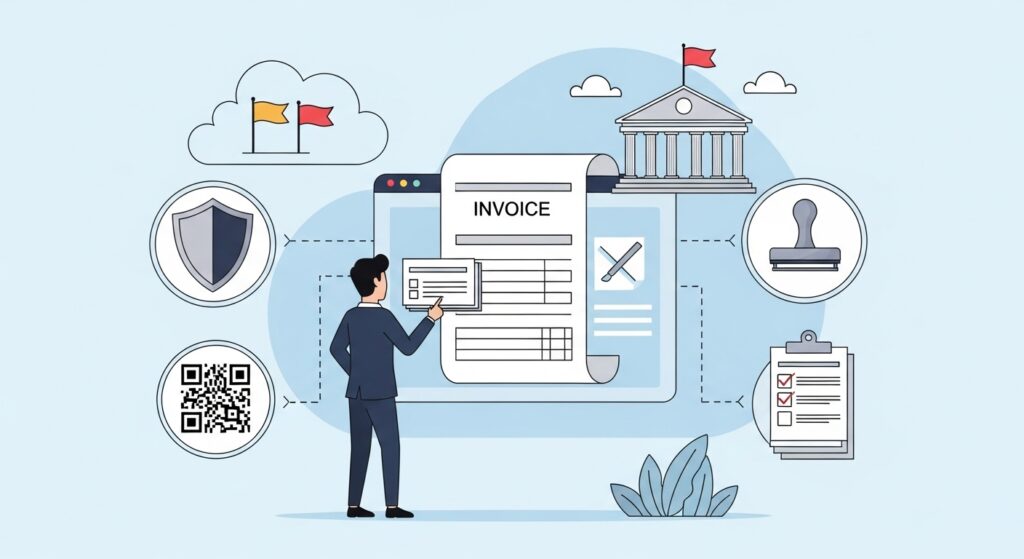
The digital transformation of Saudi Arabia’s tax system is accelerating—and at the heart of it is the ZATCA mandate. As part of the government’s broader Vision 2030 agenda, the Zakat, Tax and Customs Authority (ZATCA) is redefining how businesses issue, store, and report invoices. For companies operating in the Kingdom, from gold stores and retailers to manufacturers and service providers, understanding and complying with the ZATCA mandate system is not just a legal requirement—it’s a competitive necessity. What Is the ZATCA Mandate System? The ZATCA mandate system is a government-led initiative that enforces the digitalization of invoicing through e-invoicing regulations (commonly referred to as the “Fatoorah” system). Its primary goals are to: The system mandates that all taxable persons issue structured electronic invoices instead of manual or paper-based ones. It applies across sectors—including gold and jewelry shops, eCommerce, logistics, F&B, and professional services. Phases of the ZATCA E-Invoicing Mandate The ZATCA e-invoicing program is being rolled out in two main phases: Phase 1 – Generation Phase (Launched December 4, 2021) All VAT-registered businesses in Saudi Arabia must generate and issue tax invoices electronically. Invoices must contain required elements such as QR codes, VAT numbers, timestamps, and mandatory fields as per ZATCA standards. Phase 2 – Integration Phase (Began January 2023 and Ongoing) Businesses must integrate their invoicing systems directly with ZATCA’s platform through compliant APIs. Invoices must be verified, cryptographically stamped, and reported in real-time. ZATCA has staggered deadlines based on business size and turnover. In 2025, medium-sized businesses are actively being onboarded, with larger entities already fully integrated. Key Compliance Requirements To meet ZATCA’s mandates, businesses must: This applies to all B2B, B2G, and B2C transactions for goods or services sold in the Kingdom. What Happens If You Don’t Comply? Failure to comply with the ZATCA mandate system exposes your business to: With ZATCA intensifying its enforcement through AI-driven audits and automatic validation, businesses cannot afford to lag in compliance. How Daysum Helps You Stay Compliant At Daysum, we specialize in delivering ZATCA-compliant digital solutions through our ERP, accounting, and invoicing platforms. Our system is designed to meet both phases of the mandate and serves a wide range of industries—from retail chains and professional services to gold ERP systems tailored for gold and jewelry shops. Our Capabilities Include: Whether you need to retrofit your current invoicing system or implement a full ERP solution, Daysum ensures you meet all ZATCA requirements with zero disruption. Industry Examples: Compliance in Action Gold and Jewelry Shops Using Daysum’s gold ERP, shops can generate compliant invoices with karat-specific valuation, automated barcode scanning, and secure ZATCA-approved formats. Retail & eCommerce Retailers using Daysum’s cloud ERP issue real-time digital invoices with embedded tax data and integrate seamlessly with inventory and CRM modules. Service-Based Businesses Professional firms and agencies use our solutions to issue VAT-compliant invoices, track client payments, and remain audit-ready. How to Choose the Right Solution Not all software providers are created equal. To ensure full ZATCA compliance, look for: With Daysum, you get all this—and more. Looking Ahead: The Future of Tax Technology in Saudi Arabia As ZATCA continues to evolve its digital infrastructure, we can expect: To stay ahead, businesses must invest in future-proof systems that adapt as compliance evolves. Daysum is committed to keeping your operations ready for whatever comes next. Conclusion: Be Confident in Your Compliance with Daysum The ZATCA mandate system is not just a regulatory requirement—it’s a digital milestone for doing business in Saudi Arabia. By adopting the right technology early, your business can stay ahead of the curve, reduce risk, and unlock operational efficiency. Whether you operate gold stores, retail outlets, or a growing service firm, Daysum is your trusted partner in achieving seamless, scalable, and fully compliant invoicing and ERP operations. Contact us today to schedule a free consultation and discover how Daysum can help you stay compliant—and grow with confidence.

Read more
gold compliance

Gold ERP by Daysum: Streamlining Inventory, Sales, and Compliance for the Jewelry Industry

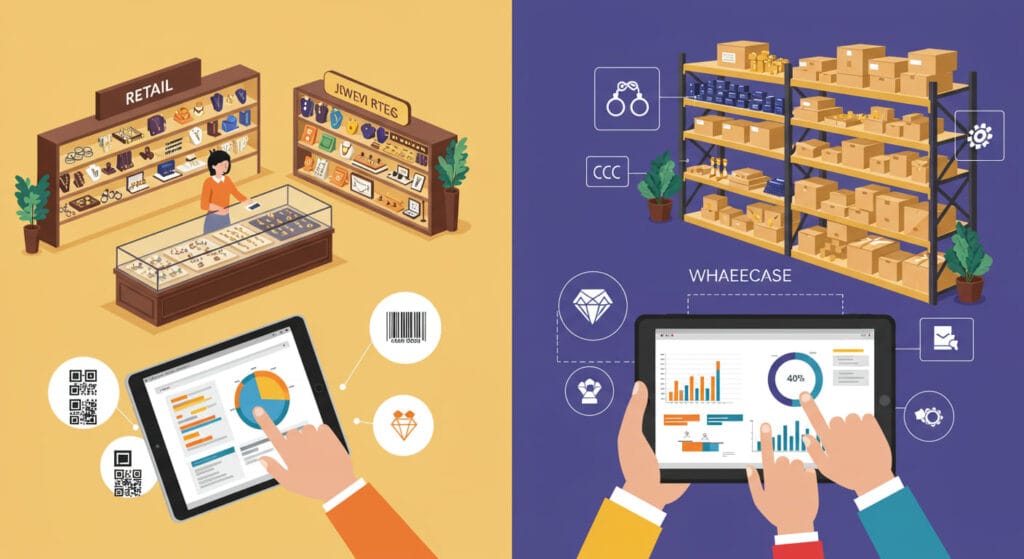
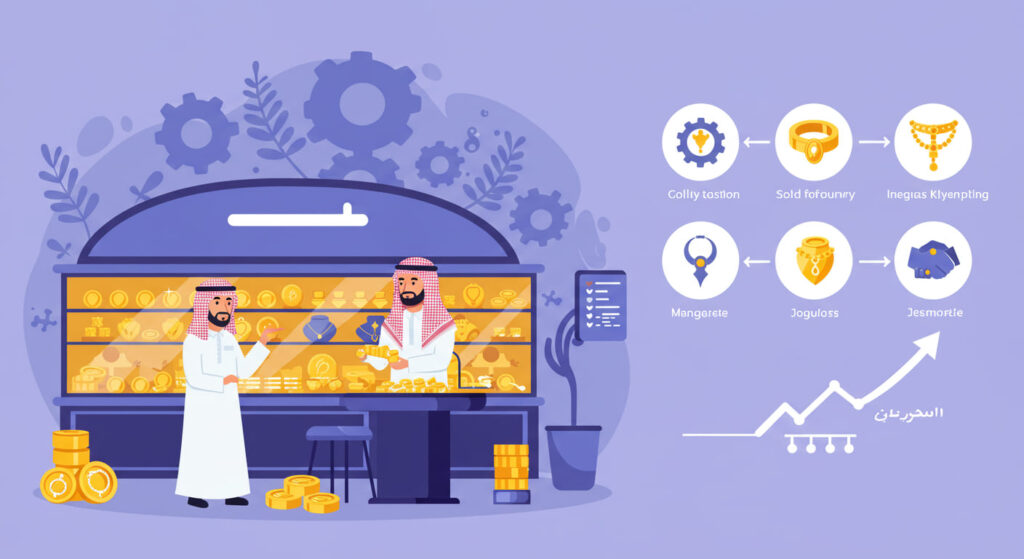
Managing a gold or jewelry business requires precision, agility, and complete visibility over inventory, pricing, and compliance. With the dynamic nature of gold markets and the increasing complexity of retail and wholesale operations, traditional methods no longer suffice. This is where gold ERP from Daysum steps in—offering a fully integrated solution designed specifically for the unique needs of gold and jewelry shops and gold stores operating in today’s competitive landscape. What Is Gold ERP and Why It Matters? A gold ERP (Enterprise Resource Planning) system is a specialized digital solution that unifies inventory control, sales processes, accounting, pricing, and compliance for gold-related businesses. Unlike general ERP platforms, gold ERP software is designed to manage purity levels, karat classifications, weight-based pricing, and real-time gold rate updates. Gold software from Daysum enables jewelry retailers, wholesalers, and manufacturers to run their operations with complete accuracy—eliminating manual processes, reducing risk, and optimizing productivity. Challenges Faced by Gold Businesses Without ERP Operating without a centralized gold inventory system or tailored ERP can result in: These challenges create significant financial, operational, and reputational risks—especially for multi-location gold stores and growing retail chains. How Gold ERP Solves These Problems Daysum’s gold ERP is designed to address the exact operational pain points of gold and jewelry shops, with capabilities such as: With these features, your business gains full control over inventory and transactions—ensuring compliance, accuracy, and profitability. Key Features of Daysum’s Gold ERP Software Our gold software is fully customizable and packed with industry-specific modules, including: Whether you manage a single shop or a chain of gold stores, Daysum’s solution adapts to your operational scale. Why Choose Daysum for Your Gold ERP Implementation? At Daysum, we understand that gold ERP is not just about software—it’s about solving industry challenges with precision and local insight. Here’s what sets us apart: Our proven track record in digital transformation ensures that your ERP solution is fully aligned with your strategic goals. Real-World Business Outcomes Businesses that have adopted Daysum’s gold ERP software have reported: These benefits not only enhance internal control but also position your brand as a tech-forward leader in the jewelry market. Integration & Mobility: A Connected Ecosystem Our gold inventory system integrates seamlessly with: This connected ecosystem allows you to manage operations end-to-end from a single, cloud-based platform—secure, scalable, and mobile-ready. How to Get Started with Daysum’s Gold ERP We make the implementation process smooth and efficient with: Our localized onboarding ensures that your team is fully equipped to maximize the benefits of your new gold ERP system. Conclusion: The Future of Gold Retail Starts with Gold ERP As the gold and jewelry industry continues to evolve, technology will be the differentiator. Businesses that leverage specialized gold ERP solutions like Daysum’s are better positioned to achieve operational efficiency, customer trust, and sustained growth. From managing karat-specific stock to automating VAT-compliant invoices, gold software from Daysum provides everything you need to operate with confidence and control. Ready to transform your jewelry business?Contact Daysum today to schedule a free consultation and explore how our gold ERP can be tailored to meet your exact business needs.

Read more
odoo erp customization

Odoo ERP Customization Services by Daysum: Tailoring Open Source ERP for Saudi Business Excellence

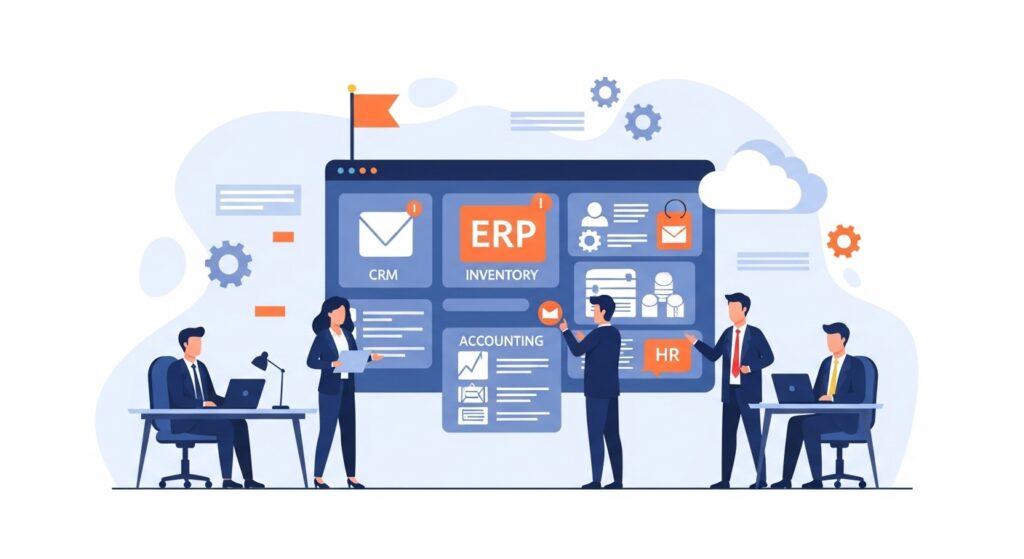
As businesses in Saudi Arabia accelerate their digital transformation, many are turning to flexible and scalable enterprise platforms to manage operations more efficiently. While out-of-the-box ERP solutions offer standardized capabilities, they often fall short of addressing industry-specific or local requirements. That’s where odoo ERP customization services from Daysum come in—delivering tailored ERP experiences that align with unique business needs across various sectors. What Is Odoo ERP and Why Businesses Prefer It? Odoo ERP is a modular, open-source business management platform that offers a wide array of integrated applications, including accounting, sales, CRM, inventory, HR, and more. Unlike rigid legacy systems, odoo software is built for agility and customization, allowing companies to implement only the modules they need and scale over time. The true power of odoo open source ERP lies in its community-driven development model and its flexibility to adapt to evolving business processes. For Saudi organizations seeking growth without being constrained by technology, Odoo offers a dynamic foundation that evolves with the business. Why Off-the-Shelf ERP Systems Fall Short Many organizations begin their ERP journey with generic software that promises a quick fix. However, off-the-shelf platforms often lack the flexibility to adapt to localized workflows, regulatory environments, or industry-specific processes. This mismatch leads to inefficiencies, low user adoption, and missed opportunities. With odoo software, businesses benefit from a framework that is designed to be molded. Through effective customization, your ERP becomes a strategic enabler rather than a technical bottleneck. The Strategic Value of Odoo ERP Customization Services for Saudi Companies Daysum understands that no two businesses operate the same way. Our odoo ERP customization services are focused on enhancing user experience, automating local compliance processes, and aligning modules with your operational strategy. Key areas of customization include: This tailored approach allows organizations to achieve higher efficiency, data visibility, and user satisfaction from their odoo ERP software. Why Daysum Is the Right Partner for Odoo ERP Implementation and Customization With deep experience in both ERP strategy and Saudi market dynamics, Daysum delivers comprehensive odoo ERP implementation and customization services across the GCC region. We take a consultative approach, aligning business goals with technical execution. What sets us apart: Whether you’re starting fresh or scaling your existing odoo ERP instance, Daysum ensures that the solution fits your business like a glove. Our Approach to Successful Odoo ERP Implementation Customizing an ERP platform is not just about writing code—it’s about solving problems and creating value. Our odoo ERP implementation process includes: This lifecycle ensures that every feature deployed serves a clear business purpose and delivers measurable ROI. Real-World Success Stories with Odoo ERP Software Companies across sectors such as retail, logistics, and professional services have partnered with Daysum to build powerful, customized odoo ERP solutions. These implementations have resulted in: These outcomes demonstrate how odoo ERP customization services go beyond automation—they enable smarter decision-making, scalability, and digital maturity. Integration Power: Extend the Value of Odoo ERP A key strength of odoo open source ERP is its ability to integrate with virtually any platform. Whether it’s payment gateways, shipping APIs, CRM platforms, or government systems, Daysum enables: These capabilities turn odoo ERP software into a central hub for your entire enterprise ecosystem. Is Odoo Open Source ERP Secure and Scalable? Absolutely. While odoo open source ERP offers transparency and freedom from vendor lock-in, it also adheres to enterprise-grade security standards. At Daysum, we deploy Odoo in secure, encrypted cloud environments, ensuring that your data is protected and your infrastructure is scalable as your business grows. Conclusion: Unlock the Full Potential of Odoo ERP with Daysum For Saudi businesses seeking a flexible, reliable, and locally-optimized ERP platform, odoo ERP customization services from Daysum deliver unmatched value. With deep technical expertise, a localized approach, and an agile implementation methodology, we help you transform Odoo into a platform that accelerates growth—not just manages it. Looking to maximize your ERP investment?Contact Daysum today to schedule a free consultation and discover how a custom-tailored odoo ERP solution can transform your business operations.  

Read more
hrms cloud solutions from daysum

HRMS Cloud Solutions from Daysum: Powering Agile and Integrated HR Transformation

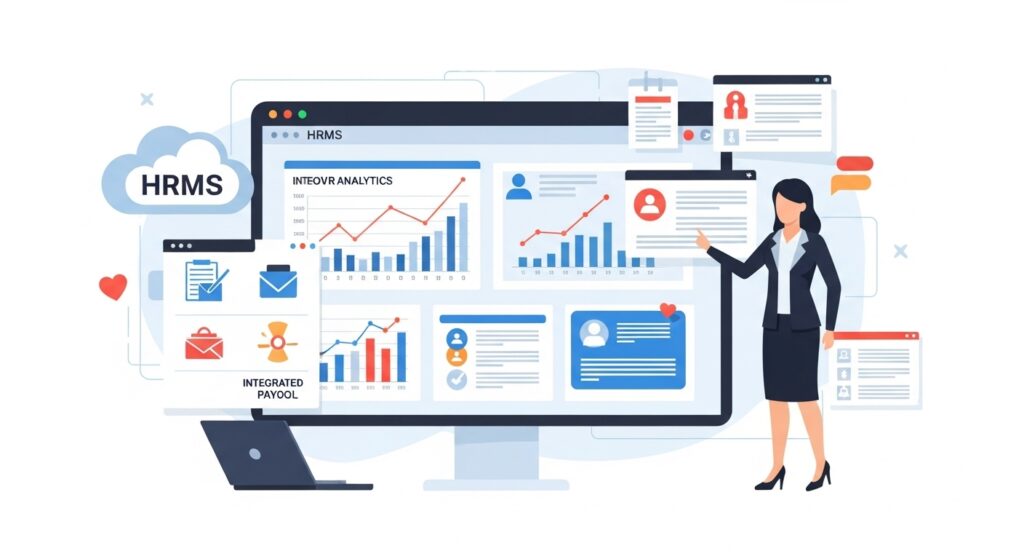
In today’s fast-paced and digitally evolving business environment, human capital is no longer just a function—it’s a strategic driver of organizational success. Traditional HR practices, often confined by manual tasks and siloed systems, are proving to be a significant barrier to growth and innovation. This is where HRMS cloud solutions emerge as a game-changing enabler, offering businesses the ability to modernize HR operations and deliver measurable value. Daysum, a leading provider of digital transformation solutions in Saudi Arabia, offers robust HRMS systems tailored for dynamic, compliance-driven, and performance-oriented organizations. Whether you’re an SME or a large enterprise, Daysum’s cloud-native HR platform helps transform your HR into a strategic powerhouse. What Are HRMS Cloud Solutions and Why Do They Matter? HRMS cloud solutions (Human Resource Management Systems) are software platforms hosted on the cloud that centralize, automate, and optimize a wide range of HR functions. Unlike on-premise software, cloud HRMS provides scalability, real-time accessibility, data integrity, and enhanced security—all without the overhead of managing infrastructure. As the Saudi market accelerates toward Vision 2030 goals, businesses are expected to digitize core functions, including HR. A modern HRMS system ensures compliance with local regulations, supports nationalization (Saudization) programs, and aligns workforce planning with strategic objectives. Core Functionalities of Modern HRMS Systems Daysum’s HRMS systems are designed to meet the end-to-end needs of your human capital lifecycle. Key modules include: The Strategic Value of HRMS Implementation for Saudi Businesses An effective HRMS implementation offers more than just automation—it reshapes the employee experience and empowers data-driven decisions. Key benefits include: By adopting Daysum’s HRMS cloud solutions, Saudi businesses gain agility and operational control over their most valuable asset: their people. Why Choose Daysum for HRMS Implementation? What sets Daysum apart is not just technology—it’s deep local expertise, tailored onboarding, and continuous support. Our HRMS implementation approach is centered around: Whether you’re starting fresh or migrating from an outdated platform, Daysum ensures a smooth and efficient transition to the cloud. How Daysum’s HRMS Systems Enable Workforce Agility and Intelligence Today’s HR leaders demand flexibility, mobility, and actionable insights. Daysum’s HRMS systems are built for exactly that: By leveraging cloud technology, your HR department becomes more agile, strategic, and responsive to change. Step-by-Step HRMS Implementation with Daysum Our proven methodology ensures successful HRMS implementation without disruption: Each stage is handled by certified HR tech consultants who understand both global best practices and local compliance. Overcoming HRMS Implementation Challenges Implementing a new HRMS system can be complex. Daysum helps organizations overcome key challenges, such as: Real Business Impact: Success Stories with Daysum’s HRMS Cloud Solutions Organizations across healthcare, retail, logistics, and public services have successfully deployed Daysum’s HRMS cloud solutions. Examples include: These outcomes demonstrate that a well-executed HRMS implementation pays dividends in both efficiency and business performance. Conclusion: Future-Proof Your HR with HRMS Cloud Solutions In an age where digital transformation is non-negotiable, HRMS cloud solutions are essential for building a future-ready HR function. From recruitment to retirement, Daysum helps you automate, optimize, and align HR with strategic goals—securely and efficiently. Whether you’re scaling fast, facing regulatory complexity, or simply seeking better visibility, Daysum’s HRMS systems give you the control and clarity your business needs. Ready to empower your workforce?Contact us today to schedule a live demo and explore how Daysum’s HRMS can transform your HR operations.

Read more
Integrated Accounting System

Unlock Business Success with an Integrated Accounting System from Daysum

  In the hyper-competitive commercial landscape of the Kingdom of Saudi Arabia, the difference between a market leader and a struggling enterprise often comes down to a single factor: the quality of their data. As the Saudi economy undergoes a radical digital transformation under the umbrella of Vision 2030, the reliance on fragmented tools—isolated accounting software, manual spreadsheets, and disconnected HR files—is no longer just an inconvenience; it is a high-stakes operational risk. For modern Saudi firms, the objective is clear: achieve total visibility, ensure ironclad regulatory compliance, and scale without the friction of manual errors. This is where Daysum enters the fray. By unifying financials, inventory, HR, and e-invoicing into one powerful, cloud-based platform, Daysum’s integrated accounting ERP is transforming fragmented operations into strategic growth engines. In this comprehensive 1,700-word guide, we will explore why integrated accounting is the mandatory future for Saudi business, how sector-specific solutions drive profitability, and why Daysum is the architect of digital success in the Kingdom. 1. The Crisis of Fragmented Data: Why Manual Tools Fail For years, many Saudi SMEs and large enterprises alike have operated on a “reactive” software model. Finance used one tool for bookkeeping, the warehouse used Excel for stock, and HR used paper files for employee contracts. This fragmented approach creates “data silos”—isolated islands of information that do not communicate. The High Cost of the “Silo Effect” When systems are disconnected, the business suffers from: Manual Double-Entry: An order placed in the sales system must be manually re-typed into the accounting ledger. This redundant work wastes thousands of labor hours annually. Typographical Errors: Human data entry is inherently flawed. A misplaced decimal point in a gold weight or a tax calculation can lead to massive financial discrepancies. Lagging Insights: If leadership wants to see a consolidated Profit & Loss (P&L) statement, they must wait days for different departments to manually merge their data. In 2026, waiting days for data means losing your competitive edge. By contrast, an integrated ERP provides a “Single Source of Truth.” When a sale is made at the Point of Sale (POS), the inventory level drops instantly, the revenue is recorded in the general ledger, and the customer’s profile is updated in the CRM—all in real-time, with zero manual intervention. 2. Industry-Specific Solutions: Tailoring Precision for Saudi Success One of Daysum’s greatest strengths is its ability to adapt to the specific “language” of diverse Saudi industries. A generic, one-size-fits-all accounting software simply cannot handle the complexities of jewelry retail or heavy manufacturing. A. Gold and Jewelry: Mastering the Milligram The jewelry sector in KSA is a high-value, high-regulation industry where precision is measured in fractions of a gram. Using a generic ERP for gold is a recipe for disaster. Daysum provides a specialized [gold erp] that handles: Karat Math & Conversions: Automatically converting 18K or 21K weights into their 24K pure gold equivalents for accurate valuation. Live Market Pricing: Integrating with global bullion APIs to update your entire inventory’s retail price the moment the global gold rate fluctuates. Piece-Level Tracking: Utilizing RFID and barcode technology to track unique, high-value items across multiple branches flawlessly. B. Factories and Manufacturing: Precision in the Supply Chain Saudi manufacturing firms must balance complex raw material costs with production timelines and labor efficiency. BOM (Bill of Materials): Daysum tracks every component of the production process, from raw resin to finished plastic products. Multi-Warehouse Sync: Managing stock across different regions of the Kingdom, ensuring that raw materials are available exactly when the production line needs them. C. Retail and Omnichannel: The Seamless Checkout For the retail sector, Daysum integrates the front-end POS directly with back-end accounting. Real-Time Customer Analytics: Understanding exactly who your best customers are and what they are buying across all branches. Automated E-Invoicing: Every transaction triggers a ZATCA-compliant receipt instantly, ensuring that your retail staff remains focused on the customer, not on tax paperwork. 3. Comparing Manual Systems vs. Daysum Integrated Accounting To truly appreciate the ROI of an integrated system, let us look at the operational differences: Operational Feature Manual / Fragmented Systems Daysum Integrated Accounting Data Entry Manual entry in multiple apps; high error risk. Unified Data: Single entry flows to all modules. Reporting Delayed; requires manual consolidation. Real-Time: P&L and Cash Flow available instantly. Compliance Manual ZATCA e-invoice generation. ZATCA Ready: Automated Phase 2 API integration. Inventory Disconnected; prone to stockouts. Live Sync: Accurate levels across all branches. Operational Cost High labor costs due to manual work. 50% Cost Reduction via total automation. 4. The ZATCA Compliance Factor: Navigating Phase 2 with Daysum In 2026, the Zakat, Tax and Customs Authority (ZATCA) has made digital integration a non-negotiable legal mandate. The “Fatoora” project requires that businesses integrate their accounting systems directly with government servers to clear B2B invoices and report B2C receipts. Avoiding the Penalty Trap Failing to comply with ZATCA Phase 2 can result in devastating fines and operational suspensions. Many business owners try to “patch” their old systems with basic plugins, but these often fail during high-volume periods. By deploying a professional [e invoicing zatca] solution through Daysum, your business is shielded. Our system natively generates the required cryptographic stamps, UUIDs, and XML files in the background. The compliance is “invisible”—it happens the moment your accountant clicks “Confirm,” without adding a single second of delay to your operations. 5. Key Advantages of the Daysum Ecosystem Why do leading Saudi enterprises choose Daysum over global competitors? It is because Daysum is built for the Saudi reality. Unified Data Architecture: Whether you are looking at your HR payroll or your supply chain costs, you are looking at the same database. This prevents “financial drift” where different departments report different numbers. Arabic-First Interface: Our system features a flawless Right-to-Left (RTL) Arabic interface, ensuring your local staff can navigate the software with total confidence. Cloud Access & Security: In the age of remote work, your CFO needs to access financial data from their smartphone in London just as easily as from their office in Riyadh. Daysum

Read more
Best Practices in Gold Inventory Management for Retailers and Wholesalers

Best Practices in Gold Inventory Management for Retailers and Wholesalers

Operating a business in the precious metals sector carries a unique kind of pressure. In a standard retail environment, a misplaced item or a slight pricing error might result in a negligible drop in monthly profits. However, when your display cases and vaults are filled with gold, diamonds, and platinum, the financial stakes are exponentially higher. Every single gram matters. A minor discrepancy in weight, a miscalculated purity level, or a delayed response to global market shifts can instantly erode thousands of Riyals in profit. The margin for error is virtually nonexistent, making absolute precision the only acceptable standard. The Saudi Arabian market is currently undergoing a massive structural shift. Consumers are increasingly sophisticated, demanding transparent pricing and flawless service. At the same time, government authorities are enforcing strict modernization policies, requiring businesses to digitize their financial records to ensure total economic transparency. For retailers and wholesalers alike, relying on memory, handwritten ledgers, or basic spreadsheets is no longer a viable business strategy. The sheer volume of transactions, combined with the extreme value density of the products, demands a technology-driven approach to asset control. By adopting proven best practices in gold inventory management for retailers and wholesalers, business owners can establish a secure, highly efficient operational framework. This requires moving beyond simple tracking and embracing a holistic digital ecosystem. We will explore the specific tools, operational procedures, and compliance measures necessary to lock down your assets, streamline your daily workflows, and protect your enterprise from both internal vulnerabilities and external market shocks. What Makes Precious Metals So Complex to Manage? Before implementing new strategies, it is crucial to dissect exactly why managing a jewelry store or a wholesale bullion distribution center is fundamentally harder than running any other type of commercial enterprise. The difficulty stems from the dynamic nature of the product itself. The Intricacies of Karat Variations: Gold is rarely sold in its absolute pure form for daily wear. It is alloyed with other metals to increase durability, resulting in different purity levels. Your stockroom might hold a mix of 18K white gold engagement rings, 21K traditional bracelets, 22K bangles, and 24K pure investment bars. Your tracking system must perfectly distinguish between these purities. Mixing up an 18K item for a 21K item during a sale or an audit throws your entire financial valuation into chaos. Weight-Based Valuation Down to the Milligram: In this industry, you do not sell units; you sell weight. The valuation of a piece requires precision down to 0.1 grams or less. Furthermore, many pieces include precious stones, enamel, or pearls. A robust management strategy must account for the gross weight of the physical item while mathematically isolating the net weight of the actual gold to apply the correct market rate. Extreme Price Volatility: Unlike a television or a pair of shoes, the underlying material cost of your merchandise changes constantly. Global economic events, interest rate decisions, and geopolitical tensions cause the price of gold to fluctuate by the hour. Your store’s pricing strategy must be deeply connected to these live market feeds to ensure you never sell a piece below its current replacement cost. The Constant Threat of Internal and External Theft: High-value, easily concealable items naturally attract severe security risks. Without a flawless, unalterable digital paper trail tracking the movement of every single ring and necklace, pieces can easily go missing. Implementing a centralized gold management system reduce theft profitability by creating total accountability, ensuring that any misplaced item is identified within minutes rather than months. Best Practice 1: Automating Your Tracking Infrastructure The first and most critical step in securing your assets is entirely removing the human element from the data entry process. Manual data entry is the enemy of accuracy. When a tired employee attempts to type a thirteen-digit serial number or a precise decimal weight into a spreadsheet at the end of a busy shift, mistakes are inevitable. To achieve operational excellence, you must automate the synchronization of weights, karats, and market rates. Every piece entering your store must be immediately cataloged and tagged with a secure, highly detailed barcode or a Radio Frequency Identification (RFID) chip. The implementation of RFID technology, in particular, is a massive leap forward. Instead of manually weighing and scanning hundreds of pieces during the evening audit, a manager can simply wave a handheld RFID scanner over the display trays. The scanner communicates wirelessly with the tags, instantly identifying every piece, its exact weight, and its assigned location. This reduces a grueling five-hour manual inventory check into a five-minute digital sweep. Furthermore, this automation ensures instant updates across your entire network. When a cashier finalizes a sale at the point-of-sale (POS) terminal, that specific piece is instantly deducted from the available stock, preventing another salesperson from accidentally attempting to sell the same item to a different client. Best Practice 2: Merging Financials with the Showroom Floor A common structural flaw in many jewelry businesses is operating the showroom and the accounting department as two disconnected silos. The sales team uses one program to ring up customers, while the accounting team uses a completely different software to manage the books. This disconnect requires massive amounts of manual data transfer, leading to lost receipts, miscalculated taxes, and severe administrative delays. The gold standard of operational efficiency is deploying a unified Enterprise Resource Planning (ERP) platform that natively connects your physical stock directly to your financial ledgers. When you utilize a specialized gold erp, the bridge between physical goods and financial data becomes seamless. This native integration is absolutely vital for maintaining flawless regulatory compliance. Saudi Arabia’s push for economic transparency means that businesses must adhere to strict electronic invoicing rules. By understanding the ZATCA mandate system in Saudi Arabia, business owners recognize that generating a legal invoice in the jewelry sector requires complex arithmetic. The system must isolate the making charge from the raw metal value, apply the Value Added Tax (VAT) correctly based on the transaction type, and generate a secure cryptographic QR code. A

Read more
Golden Inventory System vs. Generic ERPs Why Jewelers Need a Specialized Tool

Golden Inventory System vs. Generic ERPs: Why Jewelers Need a Specialized Tool

The retail environment across the Kingdom of Saudi Arabia is experiencing a profound and rapid modernization. Driven by sweeping national economic initiatives and a highly educated, tech-savvy consumer base, the days of running a commercial enterprise purely on handwritten ledgers and mental arithmetic are firmly in the past. This digital evolution is especially critical in the jewelry and precious metals market. Unlike standard retail environments, selling gold involves managing massive financial value condensed into incredibly small, highly mobile physical items. As store owners and regional distributors look to upgrade their technological infrastructure to meet these modern demands, they frequently encounter a highly dangerous operational trap: purchasing an off-the-shelf, standard business management program. Many business owners mistakenly assume that software designed to manage a large supermarket, a clothing boutique, or an electronics distributor can simply be slightly adjusted to manage a showroom full of diamonds and bullion. This assumption almost always leads to catastrophic administrative failures, severe financial discrepancies, and a highly frustrating experience for both the sales staff and the customers. The fundamental reality is that the precious metals sector requires uncompromising precision. You are not tracking static boxes on a warehouse shelf; you are tracking exact weights down to the milligram, distinct purity levels that drastically alter the valuation of the metal, and a baseline product value that fluctuates constantly based on international commodity trading. Furthermore, the regulatory environment requires absolute perfection in financial reporting and tax calculations. Navigating the choice between a golden inventory system vs generic erp is the most consequential technological decision your executive team will make, dictating whether your business scales smoothly or collapses under its own administrative weight. Where Standard Business Software Falls Short To fully grasp why generic software fails so spectacularly in a jewelry store, you must dissect the unique anatomy of a gold transaction. A standard Enterprise Resource Planning (ERP) platform is built on a very simple premise: an item has a fixed cost, a static identification number (SKU), and a set retail price. This structure shatters immediately when exposed to the daily realities of the bullion and jewelry trade. Here are the specific, deeply rooted limitations of using generic platforms for your high-value operations: The Complete Absence of Karat Tracking: In a standard system, a metal ring is simply categorized as a piece of jewelry. The software lacks the architectural depth to distinguish between an 18K white gold engagement ring, a 21K traditional bridal necklace, and a 24K pure gold investment bar. Because the system cannot automatically categorize and separate inventory by its elemental purity, business owners are left completely blind to their actual material equity. You cannot accurately calculate your total wealth if your software treats 18K and 24K as identical financial assets. Catastrophic Weight-Based Pricing Issues: Generic software demands a fixed price tag. If you enter a necklace into a standard system at 5,000 Riyals, that price remains frozen until a human manually types in a new number. However, the spot price of gold changes by the minute. When a customer walks in to buy that necklace, the cashier is forced to look up the current global gold rate on their phone, weigh the piece on a scale, manually calculate the raw metal value, add the specific making charge (Masaneya), and then manually override the price in the software. This manual calculation process is agonizingly slow, deeply unprofessional, and guarantees that devastating mathematical errors will occur during busy evening shifts. Missing Industry-Specific Features: Standard platforms do not understand the concept of melting down scrap gold, refining losses, or trading old jewelry for new pieces. When a customer brings in a broken 21K bracelet to offset the cost of a new diamond set, a generic ERP cannot process this simultaneous buy-and-sell transaction. The cashier must perform bizarre workarounds, ringing up negative inventory or creating fake vendor profiles, which completely corrupts the company’s financial database and triggers massive audit red flags. Severe Compliance Gaps and Tax Liabilities: The Saudi government maintains strict regulations regarding electronic invoicing to ensure absolute financial transparency. While a generic ERP might be able to calculate a flat 15% tax on a television set, it often fails to handle the nuanced tax rules surrounding gold exchanges and making charges. Attempting to force a standard system to comply with zatca e invoicing phase 2 regulations usually requires expensive, custom-coded plugins that constantly break. Failing to integrate natively with these national tax portals exposes the business to massive fines, sudden operational shutdowns, and severe reputational damage. Defining a Specialized Platform for Precious Metals Escaping the chaotic limitations of generic software requires investing in a platform that was architected from the very first line of code to speak the highly specific language of jewelers, goldsmiths, and bullion traders. A specialized platform does not force your complex operations to fit into a rigid, predetermined box; instead, it molds itself perfectly around the unique fluid dynamics of your daily trade. What exactly transforms a basic database into a highly tuned ecosystem for your showrooms? Live Synchronization with Global Markets: The beating heart of a specialized platform is its direct, unblinking connection to international gold exchanges. The software constantly pulls the latest spot prices for precious metals. The store manager simply sets the desired local premium and specific making charges for different categories of jewelry. From that moment on, the software automatically recalculates the exact retail price of every single item in the store in real-time. When a cashier scans a barcode, the price displayed on the screen is perfectly accurate for that exact second, protecting your profit margins against sudden market spikes or dips without requiring any manual intervention. Unyielding Precision in Weights and Purity: The system natively understands the difference between grams, ounces, and tolas. It meticulously categorizes every item not just by design or brand, but by its exact karat purity. This allows management to instantly generate reports showing exactly how many kilograms of 21K gold they hold across all branches, instantly converting that weight into a 24K

Read more
Choosing the Right Gold Software 5 Must-Have Features for Jewelers in Saudi Arabia

Choosing the Right Gold Software: 5 Must-Have Features for Jewelers in Saudi Arabia

  The retail landscape across the Kingdom of Saudi Arabia is undergoing a massive, unprecedented digital evolution. For generations, the historic gold markets and independent jewelry boutiques operated on foundational principles of deep personal trust, sharp mental calculations, and handwritten ledgers. However, the sweeping modernization initiatives driving the national economy have fundamentally altered what it takes to run a successful retail business. Today, the pressure on gold retailers to digitize their entire operational framework is immense and unforgiving. Consumers now expect total pricing transparency and a seamless checkout experience. Simultaneously, government regulatory bodies have implemented rigorous financial tracking standards. Running a jewelry business using calculators and paper receipts is no longer just inefficient; it is a direct path to severe legal penalties and crippling operational bottlenecks. Shop owners are dealing with the critical, daily need to maintain flawless compliance with national tax authorities, manage highly volatile pricing across multiple branches, and track inventory that fluctuates in value by the minute. In this highly regulated and fiercely competitive environment, specialized digital architecture has transitioned from being an optional luxury to an absolute survival tool. Attempting to scale a business, open new branches, or even simply maintain your current profit margins without the right technological backbone is virtually impossible. Why Standard Retail Systems Collapse in the Jewelry Market A common and highly expensive mistake many jewelry store owners make is attempting to force a generic point-of-sale or standard retail software to manage their precious metals. If you sell electronics, clothing, or furniture, your inventory is straightforward. A television has a fixed wholesale cost, a static barcode (SKU), and a predetermined retail price that remains unchanged for months. Selling gold and diamonds operates in an entirely different reality. A generic software program simply cannot comprehend the variables involved in a precious metals transaction. Here is exactly why standard systems fail catastrophically when applied to this sector: Commodity Volatility vs. Static Pricing: A generic system expects you to type in a price tag of 5,000 Riyals for an item and leave it there. In the jewelry sector, the price of the raw material changes constantly based on global commodity markets. A specialized system ties directly into live market feeds, updating the foundational value of your entire stock minute by minute. Weight-Based Metrics vs. Quantity-Based Metrics: Standard software counts boxes on a shelf. If you sell three shirts, the system deducts three units. In the gold market, you are not just selling a “unit”; you are selling a highly specific weight. The software must meticulously track grams, ounces, and tolas, and it must possess the logical capability to separate the net weight of the gold from the gross weight of the piece (such as deducting the weight of pearls, enamel, or cubic zirconia) to calculate the true material value. Tracking Purity Levels: A generic system treats all metals equally. A purpose-built gold erp understands the massive financial difference between 18K, 21K, 22K, and 24K bullion. It automatically categorizes these purity levels, allowing the business owner to see their exact equity and material wealth accurately converted into 24-karat equivalents. Understanding these profound differences highlights exactly why researching and choosing the right gold software is the most critical operational decision a modern jewelry brand will make. Core Feature #1: Uncompromising Real-Time Inventory Visibility The biggest source of anxiety for any jewelry store manager is the daily inventory audit. When millions of Riyals are locked inside small, easily misplaced items, knowing exactly what you have and where it is located is paramount. A high-tier digital platform eliminates the guesswork entirely by providing real-time, granular updates the absolute second a transaction occurs. Whether a piece is sold to a customer, transferred to the workshop for resizing, or sent to a different branch across the city, the central database reflects the movement instantly. This prevents the embarrassing and costly scenario of a salesperson promising a specific diamond ring to a VIP client, only to discover it was sold at another location an hour earlier. To understand the operational leap this provides, review the following comparison: Operational Metric Manual / Generic Tracking Specialized Real-Time Systems Stock Accuracy Highly prone to discrepancies, unrecorded transfers, and human error during manual counts. Mathematically flawless tracking by weight, karat, and unique serial numbers. Price Adjustments Requires staff to manually update price tags or Excel sheets whenever the market spikes. Automatically recalculates the retail value of every item based on live global market feeds. Loss Prevention Missing items are usually only discovered during grueling, end-of-month physical audits. Instant alerts if an item’s status changes unexpectedly, drastically reducing inventory shrinkage. By maintaining a hyper-accurate view of your physical assets, you completely neutralize the massive financial risks associated with stock mismatches and delayed price updates. Core Feature #2: Flawless Automated Invoicing and Tax Compliance The days of handing a customer a simple, handwritten paper receipt are permanently over in Saudi Arabia. The implementation of strict electronic invoicing mandates means that every single transaction must be recorded, categorized, and cryptographically stamped according to government standards. This poses a massive mathematical challenge for jewelers. When a customer purchases a necklace, the invoice cannot simply display a single lump sum. The document must accurately reflect the live spot price of the gold at the exact moment of sale, explicitly state the purity level, detail the separate making charge (Masaneya) applied by the store, and calculate the Value Added Tax (VAT) specifically on the applicable portions of the sale. If a customer trades in old gold (scrap) to offset the cost of the new piece, the invoice must perfectly document this complex exchange, showing the incoming asset and the outgoing product without triggering a double-taxation error. A specialized platform handles this incredibly complex arithmetic instantly. It automatically generates invoices that fully comply with ZATCA phase 2 e-invoicing Saudi Arabia regulations. The cashier simply scans the item, inputs the trade-in weight if applicable, and the software executes the math, applying the correct taxes and generating the required QR code in under five

Read more
How a Gold Inventory System Can Transform Jewelry Businesses in Saudi Arabia

How a Gold Inventory System Can Transform Jewelry Businesses in Saudi Arabia

Operating a retail business in the jewelry sector is fundamentally different from managing any other type of consumer goods store. When a retailer sells clothing or electronics, the items have fixed prices, stable barcodes, and predictable profit margins. In stark contrast, the jewelry and precious metals market operates in a state of constant, fluid motion. Every single item in the display case is tied directly to the global commodities market, meaning the value of your entire store fluctuates by the minute based on international trading desks. In the Saudi Arabian market, where the cultural and financial significance of gold is deeply rooted, the volume of transactions is massive. Buyers are highly educated, and the demand ranges from heavy, intricate 21-karat bridal sets to sleek, modern 18-karat daily wear. Tracking this inventory requires managing three distinct, highly volatile variables simultaneously: the exact weight down to the milligram, the precise purity of the metal (whether it is 18K, 21K, 22K, or 24K pure bullion), and the live spot price of gold. If your internal tracking mechanism fails to capture even one of these variables accurately, you are either overcharging your loyal customers and damaging your reputation, or you are severely underpricing your assets and bleeding capital. Beyond the daily arithmetic of buying and selling, the regulatory environment in the Kingdom has undergone a massive digital transformation. The government’s push for total financial transparency means that understanding the ZATCA mandate system in Saudi Arabia is now a daily operational necessity, not just an end-of-year accounting chore. Jewelry businesses must comply strictly with e-invoicing Phase 2 regulations, ensuring that every transaction, whether it is a direct sale, a gold exchange, or a manufacturing repair fee, is documented, encrypted, and reported correctly with the exact Value Added Tax (VAT) applied. In this high-stakes environment, implementing a highly specialized gold inventory system is the only guaranteed method to protect your assets and maintain flawless legal compliance. Why Spreadsheets and Manual Ledgers Are Destroying Profit Margins For decades, many historic gold markets (Souqs) across the Kingdom relied on generational trust, sharp mental math, and thick paper ledgers. Even as computers became mainstream, many shop owners simply transitioned their paper ledgers into basic Excel spreadsheets. However, as transaction volumes grow and tax laws become stricter, these outdated methods have become the single biggest threat to a jeweler’s profitability. Relying on generic tools or manual entry triggers a cascade of operational failures: The Devastating Cost of Human Error: Data entry in a busy retail environment is inherently prone to mistakes. A salesperson rushing to finalize a transaction during the evening rush hour might accidentally type “18” instead of “21” for the karat purity, or misplace a decimal point when entering the gram weight. In a standard retail shop, a typo might cost a few Riyals. In a gold shop, a misplaced decimal on a heavy necklace can result in a loss of thousands of Riyals in a single transaction. The Inability to Handle Real-Time Market Shifts: Spreadsheets are static documents. When the global price of gold spikes aggressively at 4:00 PM, a store manager cannot feasibly open a spreadsheet and manually update the price formulas for three thousand individual rings, bracelets, and pendants before the next customer walks through the door. This lag in pricing updates means the store is almost always selling behind the market curve, drastically reducing the potential profit margin on replacement inventory. Severe Compliance and Financial Risks: Generic spreadsheets do not talk to government portals. They cannot generate the complex cryptographic stamps and QR codes required by the Zkr (ZATCA) e-invoicing regulations. If an auditor reviews a store’s records and finds that VAT was calculated on the gross weight of a traded piece rather than the making charge (Masaneya), the business faces crippling financial penalties and potential closure. The Nightmare of Inventory Mismatches: High turnover, constant customer handling, and the physical transfer of pieces between the display floor, the safe, and the repair workshop create massive tracking blind spots. When manual counts are performed at the end of the month, managers routinely find discrepancies. Pieces go missing, tags get swapped, and the paper trail leads nowhere, creating a toxic environment of suspicion among staff and massive write-offs for the owners. Defining the Anatomy of Specialized Retail Software It is a common misconception that any modern Enterprise Resource Planning (ERP) software can handle a jewelry store. A generic ERP is built to count boxes, not to calculate the fluctuating value of precious stones set in variable-karat metals. To solve the unique problems of this industry, the software must be architected from the ground up to speak the language of jewelers and bullion traders. What exactly separates a specialized solution from an off-the-shelf program? Granular Weight and Measurement Tracking: The system must natively understand and convert between grams, tolas, and ounces seamlessly. It must separate the net weight of the gold from the gross weight of the piece (subtracting stones, enamel, or pearls) to ensure the financial valuation of the metal is perfectly accurate. Intelligent Purity Management: The software must categorize inventory by karat. This allows the business owner to view their total equity at a glance—knowing exactly how much 24K equivalent they hold across their entire 18K and 21K inventory. Live Spot Price Integration: A true industry solution connects directly to live market feeds. The store manager sets a local premium (the markup over the spot price), and the software automatically adjusts the retail price of every single item in the store second by second. Instantaneous RFID Auditing: Radio Frequency Identification (RFID) technology replaces the grueling process of weighing every piece by hand. Tiny, secure tags are attached to each item. A manager simply waves a handheld scanner over the display trays, and the system instantly counts hundreds of pieces in seconds, immediately highlighting any missing items on a digital dashboard. If you are currently evaluating options to modernize your storefront, researching and choosing the right gold software is the most critical technical decision your

Read more
top
Business Challenges

Digital Transformation

Security

Automation

Gaining Efficiency