
E-Invoicing

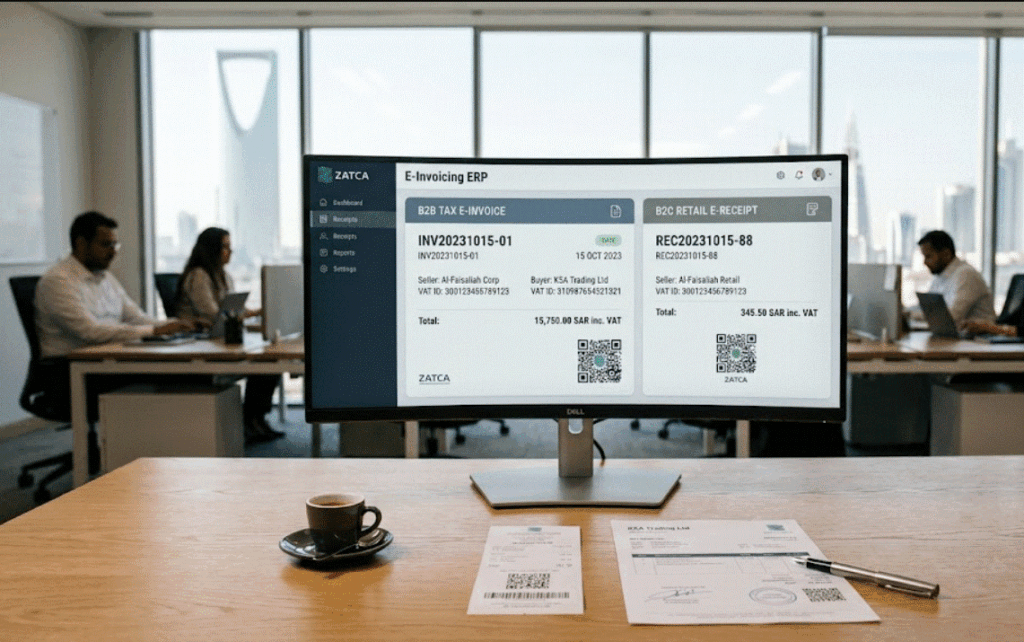
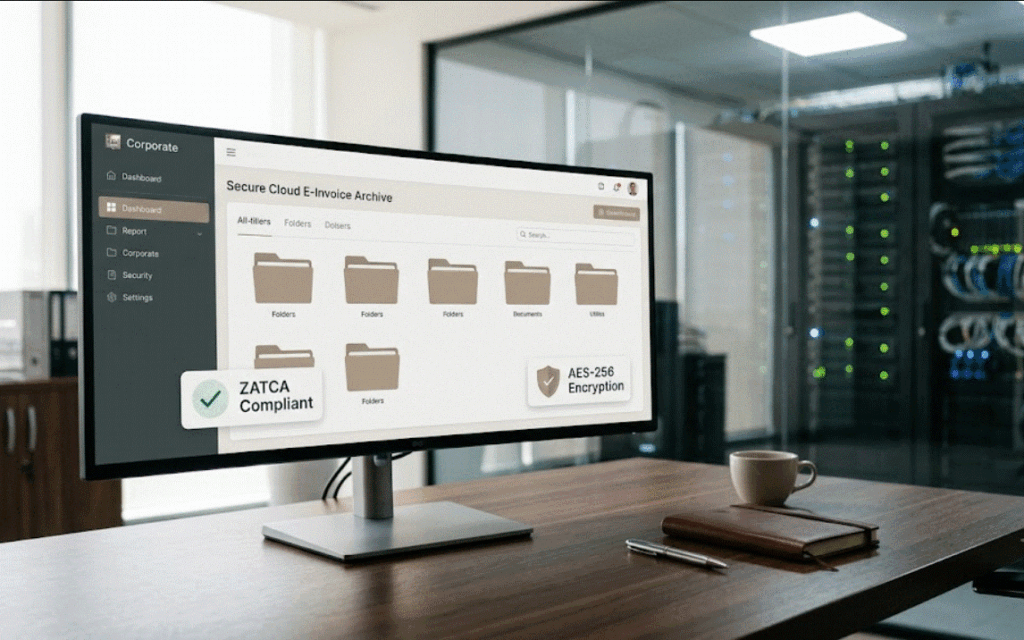
Saudi business professionals reviewing encrypted e-invoices

Security and Data Privacy in E-invoicing: What You Need to Know When Choosing Your KSA Provider

As Saudi Arabia’s businesses undergo a rapid digital transformation, the Zakat, Tax and Customs Authority (ZATCA) e-invoicing (Fatoora) system stands as a cornerstone of this new, digital-first economy. The rollout of Phase 2 (the Integration Phase) is compelling businesses to move beyond simple compliance and integrate their core financial systems directly with ZATCA’s platform. This integration, however, opens a critical new conversation. While most businesses are rightly focused on compliance—”Does my system meet ZATCA’s rules?”—many are overlooking an equally vital, long-term question: “Is my data secure?“ When you choose an e-invoicing solution, you are not just buying a piece of software. You are entrusting a partner with the most sensitive data your company possesses: your complete sales ledger, your pricing, your customer list, and your core financial records. In this new landscape, choosing from the many e-invoicing solution providers in Saudi Arabia becomes a decision that is as much about security and data privacy as it is about compliance. This article will guide you through the essential security considerations and provide a checklist for what to demand from your provider. Why E-invoicing Security is Non-Negotiable An e-invoice is not just a digital version of a paper receipt. It is a structured data file (XML) containing the DNA of your business transactions. The stakes for protecting this data are enormous: Your data’s security is only as strong as the weakest link, and that weak link is often the third-party provider you choose. ZATCA’s Built-in Security: The Foundation The good news is that ZATCA designed the Fatoora system with a robust security foundation. Your provider isn’t starting from scratch; they must adhere to a strict set of protocols. Here are the core security features mandated by ZATCA itself: This framework ensures the integrity of the invoice and the security of its transmission to ZATCA. But what about the security of your data while it’s sitting on your provider’s server? That is the provider’s responsibility. 7 Security Questions You MUST Ask Your E-invoicing Provider ZATCA secures the pipeline to their platform. Your provider must secure the platform itself. Before you sign any contract, demand clear, specific answers to these questions: Cloud vs. On-Premise: A Modern Security Comparison Many businesses traditionally believe that an on-premise server (in their office) is more secure. In the modern era of ZATCA compliance, this is often a dangerous misconception. Security Aspect On-Premise Solution Secure Cloud Provider (like Daysum) ZATCA Updates Your IT Team’s Responsibility. Must manually update APIs and security patches from ZATCA. Slow and high-risk. Provider’s Responsibility. Patches and updates are rolled out instantly and automatically to all users. Physical Security Your server room. Vulnerable to theft, fire, or flood. Enterprise-grade data centers with 24/7 security, biometric access, and redundant power. Cybersecurity Relies on your local firewall and IT team, who are generalists. Managed by a dedicated team of cybersecurity specialists using advanced threat detection. Backups & Recovery Your responsibility. Often manual, infrequent, and stored in the same building. Automated & Geo-Redundant. Backed up daily to multiple secure locations. Total Cost of Security Extremely high. Includes hardware, IT salaries, and software licenses. Included in your subscription. You get enterprise-grade security for a fraction of the cost. The verdict: For over 99% of businesses, a reputable, ZATCA-approved cloud provider offers vastly superior security and reliability than an on-premise solution. Daysum: Security & Compliance at the Core of Your ERP Choosing from the list of e-invoicing solution providers in Saudi Arabia is a critical decision. At Daysum, security isn’t an add-on; it’s the foundation of our Odoo ERP solution. We don’t just “bolt on” a ZATCA module. Our e-invoicing solution is a native, core function of your integrated accounting, sales, and inventory system. The Daysum Security Guarantee: Frequently Asked Questions (FAQs) Q1: Is my data shared with ZATCA secure? Yes. The connection between your provider’s system and ZATCA’s Fatoora platform is a highly secure and encrypted API. This “digital tunnel” is designed to protect data in transit. Q2: Can ZATCA see all my business secrets, like my costs or employee salaries? No. ZATCA only requires the data points listed in the e-invoicing regulation, which are related to the invoice itself (seller, buyer, items, quantities, price, tax). They do not have access to your internal costs, payroll, HR records, or other private data within your ERP. Q3: What’s the biggest security mistake a business can make with e-invoicing? Choosing an unapproved provider or using a simple, standalone invoicing tool that isn’t part of a secure, integrated system. This creates data silos, increases the risk of a breach, and often leads to manual data entry errors. Conclusion: Choose a Partner, Not Just a Provider Your e-invoicing system is the new digital heart of your business’s finances. The security of this system is paramount. Don’t choose a provider based on price alone. Scrutinize their security, their infrastructure, their backup plans, and their commitment to data privacy. Choose a long-term partner who sees security not as a checkbox, but as a core responsibility. Don’t leave your most critical financial data at risk. Contact Daysum today for a free, confidential consultation. We’ll assess your current compliance and show you what a truly secure, integrated, and ZATCA-approved ERP solution looks like.

Read more
ZATCA

ZATCA E-Invoicing in Saudi Arabia: A Complete Guide for Businesses

Saudi Arabia’s Zakat, Tax, and Customs Authority (ZATCA) has taken a major step toward digital transformation with the introduction of electronic invoicing (Fatoora). Designed to enhance transparency, reduce tax evasion, and streamline compliance, e-invoicing is now a mandatory requirement for all eligible businesses operating in the Kingdom. Whether you’re an SME or a large enterprise, understanding the ZATCA E-Invoicing system is crucial for staying compliant and avoiding penalties. In this guide, we’ll break down what e-invoicing means, its two key phases, and how Daysum ERP can help you automate and simplify compliance across your operations. 1. What Is ZATCA E-Invoicing and Why It Matters E-invoicing (known locally as Fatoora) is the process of generating, issuing, and storing invoices electronically in a standardized digital format. It replaces traditional paper-based or manual invoices with structured digital files that can be verified and transmitted in real time to ZATCA’s systems. The main objectives of ZATCA’s e-invoicing initiative are: 2. ZATCA E-Invoicing Implementation Phases ZATCA introduced e-invoicing in two key phases, each with its own technical and operational criteria: Aspect Phase 1 – Generation Phase Phase 2 – Integration Phase Start Date December 4, 2021 January 1, 2023 (progressive rollout) Objective Replace manual invoicing with digital formats Enable real-time validation and reporting to ZATCA Main Requirement Generate e-invoices in XML-compliant format Integrate directly with ZATCA’s Fatoora system via API Invoice Type PDF/A-3 with embedded XML Structured XML/JSON for clearance and reporting System Type Local invoicing or accounting system ERP system integrated with ZATCA API Key difference: Phase 1 focused on replacing manual invoicing with digital formats, while Phase 2 enables real-time clearance and validation — ensuring every invoice is verified and approved through ZATCA’s system before it reaches the buyer. 3. Technical and System Requirements To ensure compliance, your ERP or billing solution must meet several critical technical requirements: A. System Capabilities B. Data & Compliance Structure 4. Preparing Your Business for Compliance Before activating e-invoicing, your organization needs to assess its readiness. Follow these key steps: 5. Choosing the Right Implementation Partner Partnering with a qualified ERP provider can make all the difference in achieving seamless compliance. When evaluating your vendor, look for:   6. Why Daysum ERP Is Built for ZATCA Compliance Daysum ERP offers a powerful, end-to-end solution designed specifically to simplify ZATCA E-Invoicing for Saudi businesses. It combines automation, compliance, and analytics to streamline your entire invoicing process. Key Advantages of Daysum ERP With Daysum ERP, your business is fully equipped to meet current and future ZATCA regulations — effortlessly. ZATCA’s e-invoicing initiative represents a new era of transparency and efficiency in Saudi Arabia’s digital economy. While compliance is mandatory, it also offers an opportunity to modernize your financial systems, reduce errors, and improve real-time visibility. By partnering with Daysum ERP, you can move beyond basic compliance — automating your invoicing, integrating all departments, and ensuring total readiness for future ZATCA updates. Contact Daysum today for a free consultation and discover how our ZATCA-compliant ERP can transform your financial operations. Frequently Asked Questions (FAQs) Q1: Is ZATCA E-Invoicing mandatory for all businesses?  Yes. All VAT-registered businesses in Saudi Arabia must implement e-invoicing according to ZATCA regulations. Q2: How can I check if my system is compliant? Your ERP must generate XML-formatted invoices and, in Phase 2, be integrated with ZATCA’s API for real-time clearance. Q3: What are the penalties for non-compliance?  ZATCA may impose fines, suspend your VAT account, or block invoice issuance for repeated violations. Q4: How does Daysum ERP help with compliance? Daysum ERP is pre-configured for both e-invoicing phases and automatically applies ZATCA’s technical and security standards.

Read more
e-invoicing system, ensuring ZATCA

ZATCA E-invoicing Phase 2: A Complete Checklist for KSA Businesses

  The introduction of e-invoicing (Fatoora) by the Zakat, Tax and Customs Authority (ZATCA) has marked a significant digital transformation for businesses in Saudi Arabia. After the successful implementation of Phase 1 (the Generation Phase), the Kingdom is now progressively rolling out Phase 2 (the Integration Phase). This second phase is a much more significant technical leap, requiring businesses to integrate their invoicing systems directly with ZATCA’s Fatoora platform for real-time clearance and verification of invoices. This is no longer just about issuing a compliant electronic invoice; it’s about creating a live, automated data link between your business and the tax authority. For many businesses, this transition can seem daunting. This comprehensive checklist is designed to demystify the process, outline the essential requirements, and provide a clear roadmap to ensure your business is fully prepared and compliant. Understanding the Core Shift: Phase 1 vs. Phase 2 Before diving into the checklist, it’s crucial to grasp the fundamental difference between the two phases. Aspect Phase 1 (Generation & Storage) Phase 2 (Integration & Clearance) Primary Goal Digitize invoice creation and stop manual invoicing. Achieve real-time data sharing and verification with ZATCA. Process Flow Generate a compliant e-invoice and store it locally. Generate invoice -> Send to ZATCA for clearance -> Receive cryptographic stamp -> Send to customer. Data Sharing No real-time sharing with ZATCA. Real-time, API-based integration for instant data exchange. Technical Format PDF/A-3 with embedded XML. Requires structured XML or JSON format for API communication. System Requirement A compliant billing software. An ERP or accounting system with API integration capabilities. Export to Sheets The key takeaway is the move from a passive (generation) to an active (integration) compliance model. The Ultimate Phase 2 Compliance Checklist Use this checklist to assess your current readiness and identify any gaps that need to be addressed. Section 1: Technical & System Requirements Section 2: Data & Invoicing Fields Section 3: Vendor & Solution Provider The Strategic Advantage of an Integrated ERP Solution While the immediate goal is compliance, the integration required by Phase 2 presents a strategic opportunity to streamline your entire financial operations. Instead of using a simple, standalone e-invoicing tool, integrating this function within a comprehensive ERP system like Daysum ERP provides immense benefits: ZATCA’s E-invoicing Phase 2 is more than just a regulatory hurdle; it’s a catalyst for digital transformation. By taking a strategic approach and choosing the right technology partner, you can turn this compliance requirement into an opportunity to automate your financial processes, improve data accuracy, and gain a competitive advantage. Don’t wait until the deadline is looming. Use this checklist to assess your readiness today, and partner with an expert like Daysum to ensure a smooth, seamless, and successful transition to the future of digital invoicing in Saudi Arabia. Contact Daysum for a free consultation and see how our ZATCA-compliant ERP solution can prepare you for Phase 2 and beyond. Frequently Asked Questions (FAQs)   Q1: How do I know when my business needs to comply with Phase 2? ZATCA is notifying businesses in waves. You will receive an official notification from ZATCA at least six months before your mandatory integration date. It is crucial to monitor official channels and start preparing as soon as you are notified. Q2: What are the penalties for non-compliance? Failure to comply with Phase 2 requirements can result in significant financial penalties, as outlined in the e-invoicing regulations. It can also disrupt your business operations, as you will be unable to issue valid tax invoices. Q3: Can I build my own solution for Phase 2 integration? While technically possible, it is an extremely complex, time-consuming, and expensive process. It requires a dedicated team of developers to build, test, and maintain the integration. For over 99% of businesses, partnering with a ZATCA-approved vendor is the most practical and cost-effective approach. Q4: My business is small. Do I still need a full ERP system? Yes. Compliance is mandatory for all applicable taxpayers, regardless of size. Modern, cloud-based ERPs like those offered by Daysum are scalable and affordable for small and medium-sized businesses, providing them with the same powerful tools as large enterprises.

Read more
odoo vat

Odoo ERP Solutions: How Daysum Simplifies VAT Management

 Odoo ERP solutions have become a cornerstone for Saudi businesses seeking seamless compliance and efficiency in financial operations. Managing VAT (Value-Added Tax) is integral to every sales and purchase transaction, and every entry must be linked to a valid tax code to meet regulatory requirements.  Daysum, a leading provider of Odoo ERP service and advanced Odoo software integrations, simplifies VAT management with automation, accuracy, and real-time tracking. Designed for the Saudi market, Daysum’s tailored ERP solutions ensure your VAT processes are error-free, fully compliant, and effortlessly aligned with ZATCA regulations—empowering your business to focus on growth, not paperwork. Understanding VAT and Its Importance in Odoo ERP VAT, or Value-Added Tax, plays a vital role in Saudi Arabia’s financial framework. Within odoo erp solutions, VAT is not just a statutory requirement but an essential part of each transaction record. Daysum ensures that VAT is accurately recorded, reported, and linked to the correct accounts. This reduces errors and supports smooth ZATCA compliance, which is critical in the Saudi market. With the right odoo erp service, businesses can manage VAT effortlessly while staying focused on growth. Key Benefits of VAT Integration in Odoo ERP How VAT Is Applied on Sales and Purchase Transactions In Odoo ERP, VAT is automatically calculated and applied to both sales invoices and purchase bills. Daysum configures the odoo software so that each transaction is assigned a valid tax code. This ensures compliance and accuracy, whether dealing with local sales or imports. The system’s automated workflows mean businesses save time and reduce risk, enabling smooth operations even during peak transaction periods. VAT Workflow in Odoo ERP Transaction Type VAT Process in Odoo ERP Benefit for Businesses Sales Invoice Auto-calculates VAT rate Accurate customer billing Purchase Bill Links to tax code for deduction Optimized tax recovery Credit Notes Adjusts VAT accordingly Corrects records without manual edits Automating VAT Codes and Calculations with Daysum ERP Solutions Manually managing VAT codes is both time-consuming and prone to human error. Daysum’s odoo erp service leverages automation to assign and validate tax codes in real time. This means every invoice and bill is automatically linked to the correct VAT percentage. With VAT rules changing periodically, automation ensures you’re always aligned with the latest ZATCA requirements without extra effort. Steps Daysum Uses to Automate VAT Ensuring ZATCA Compliance with VAT Management Tools Compliance with ZATCA’s VAT regulations is non-negotiable for Saudi businesses. Daysum’s odoo software includes built-in compliance features, ensuring your business meets every requirement. From e-invoicing to digital tax code verification, our VAT management tools safeguard your operations from costly fines. By automating compliance checks, businesses can focus on sales, service, and expansion, knowing their financial data is secure and compliant. VAT Compliance Features in Daysum Odoo ERP Managing VAT Reporting and Filing in Saudi Arabia VAT reporting in Saudi Arabia requires precision, compliance with ZATCA rules, and timely filing to avoid penalties. Businesses need an ERP that can handle automated tax calculations, organize invoices, and prepare submission-ready reports. Daysum’s Odoo ERP solutions provide a streamlined approach to VAT filing, ensuring that every sales and purchase transaction is accurately recorded and linked to the correct tax code. This not only saves time but also ensures full compliance without the risk of manual errors. Key Features for VAT Reporting How Daysum Simplifies Multi-Transaction VAT Tracking Handling hundreds or thousands of daily transactions can make VAT tracking a challenge. Daysum’s Odoo ERP solutions simplify this by auto-validating tax codes, categorizing transactions, and flagging discrepancies instantly. Whether it’s domestic or cross-border sales, the system ensures VAT is applied correctly every time. This automation reduces the workload for accountants and ensures the business remains ZATCA-compliant without additional manual intervention. Benefits of Automated VAT Tracking Case Study: Successful VAT Management with Daysum Odoo ERP A mid-sized retail chain in Saudi Arabia faced recurring VAT filing issues due to manual processing. By implementing Daysum’s Odoo ERP solution, the company achieved 100% accuracy in VAT coding, automated its filing process, and eliminated compliance delays. In just one quarter, their accounting team reduced VAT report preparation time from three days to a few hours, proving the power of automation in financial compliance. Results Achieved Metric Before Daysum ERP After Daysum ERP VAT Report Accuracy 80% 100% Time to Prepare Reports 3 days 4 hours Compliance Errors per Quarter 6 0 How to Implement VAT in Daysum’s Odoo ERP Solutions Implementing VAT in your ERP system requires careful planning, correct tax code configuration, and user training. Daysum offers a step-by-step approach to ensure your Odoo ERP is VAT-ready from day one. From initial setup to staff onboarding, every stage is designed to make compliance straightforward. The system supports both existing VAT structures and new changes introduced by Saudi tax regulations. Steps to Set Up VAT Master VAT Compliance and Reporting with Daysum’s Comprehensive Odoo ERP Solutions Daysum’s Odoo ERP is more than a tax tool — it’s a complete VAT compliance ecosystem for Saudi businesses. From automated filing to secure data storage, it ensures every step of your tax process meets ZATCA standards. Its real-time reporting features give business owners and accountants full visibility into VAT liabilities, reducing the risk of errors and penalties. This makes it an essential choice for companies seeking both operational efficiency and full legal compliance. VAT Compliance Features in Daysum Odoo ERP Boost VAT compliance with Daysum’s Odoo ERP solutions—automate reports, cut errors, and stay audit-ready in Saudi Arabia. Get started today! FAQ: How does Daysum’s Odoo ERP help with VAT compliance in Saudi Arabia?  Daysum’s Odoo ERP automates VAT processes by linking every sales and purchase transaction to a valid tax code, ensuring compliance with ZATCA regulations. It generates VAT reports in approved formats, stores records securely, and provides real-time alerts for discrepancies, making VAT management accurate, fast, and audit-ready. Can Odoo ERP from Daysum integrate with ZATCA e-invoicing?  Yes. Daysum’s Odoo ERP features full ZATCA-approved e-invoicing integration, ensuring invoices meet Saudi legal requirements. It automatically validates tax codes, formats invoices according to regulations, and stores

Read more
automated bank

Zatca approved software: How Daysum Simplifies Bank Reconciliation

ZATCA approved software is essential for Saudi businesses aiming to stay compliant while streamlining financial operations. One critical process that demands accuracy is bank reconciliation—a mandatory monthly task to ensure your bank statement perfectly matches your accounting records. Errors in this step can lead to compliance risks, financial misstatements, and operational delays.  Daysum, a trusted provider of Odoo e-invoice KSA integration and ERP software for precious metals, automates bank reconciliation with precision, saving time and eliminating costly mistakes. Designed for the Saudi market, Daysum ensures your business meets ZATCA standards while maintaining smooth, accurate, and efficient financial management. What Is Bank Reconciliation and Why It’s Mandatory Bank reconciliation is a mandatory monthly process for Saudi businesses to ensure that their bank statements perfectly match the financial records in their ERP systems. This step is crucial for regulatory compliance, detecting discrepancies, and maintaining accurate financial data for VAT purposes. With the increasing requirements from ZATCA, accuracy and timeliness are no longer optional — they are essential for business success. Key Purposes of Bank Reconciliation Challenges of Manual Bank Reconciliation in Saudi Businesses Many Saudi companies still rely on spreadsheets and manual processes to reconcile bank statements. This often leads to time-consuming, error-prone workflows that delay financial closing and increase the risk of non-compliance with ZATCA regulations. Manual reconciliation not only wastes resources but also creates reporting inconsistencies that can lead to financial penalties. Common Pain Points in Manual Reconciliation Challenge Impact on Business Human errors Inaccurate reports, risk of penalties Delayed processing Missed compliance deadlines Lack of integration Data silos and mismatch with ERP No real-time alerts Issues discovered too late How Daysum’s ZATCA Approved Software Automates Reconciliation Daysum offers a ZATCA approved software solution that eliminates the inefficiencies of manual bank reconciliation. Fully integrated with Odoo e-invoice KSA and designed for industries including precious metals ERP, it automates transaction matching, provides real-time alerts, and ensures VAT-ready data for reporting. This not only saves time but also ensures businesses remain compliant without extra manual effort. Automation Advantages with Daysum Matching Bank Statements with Odoo ERP Records Efficiently Daysum’s integration ensures your bank statement data flows directly into your Odoo ERP system without the need for manual entry. The system instantly compares incoming transactions with your recorded entries, flagging any mismatches. This ensures a smoother monthly close, enhanced accuracy, and full readiness for ZATCA reporting requirements. Steps in Efficient Bank Statement Matching Benefits of Real-Time Bank Reconciliation for Cash Management Real-time bank reconciliation is a game-changer for businesses aiming to optimize cash flow management. By continuously matching bank transactions with accounting records, companies gain immediate visibility into their financial status. This helps prevent overdrafts, detect fraud early, and improve decision-making. For Saudi businesses, especially in precious metals, timely and accurate reconciliation is crucial to maintain compliance with ZATCA regulations and enhance operational efficiency. Key Benefits of Real-Time Reconciliation Steps to Implement Real-Time Bank Reconciliation with Daysum Integrating E-Invoicing (ZATCA Compliant) with Bank Reconciliation In Saudi Arabia, businesses must ensure their invoicing systems comply with ZATCA’s e-invoicing regulations while maintaining accurate bank reconciliation. Daysum’s zatca approved software bridges this gap by integrating e-invoice data directly with financial records. This synchronization helps reduce errors, supports Odoo e invoice KSA requirements, and guarantees regulatory compliance without manual intervention. Key Integration Benefits Case Study: Reducing Errors and Delays with Daysum Software Many Saudi businesses face reconciliation delays due to mismatched invoices and payments. In this case study, a retail company implemented Daysum’s zatca approved software, integrating bank feeds with Odoo-based e-invoicing. Within three months, they reduced reconciliation time by 60% and eliminated common mismatches. Results Achieved How Daysum Supports Precious Metals Businesses with Reconciliation The precious metals sector in Saudi Arabia requires ERP software for precious metals that handles fluctuating prices, high-value transactions, and compliance needs. Daysum offers tailored tools that integrate reconciliation with inventory tracking, VAT compliance, and customer invoicing, ensuring operational accuracy for gold and jewelry traders. Specialized Features for Precious Metals Step-by-Step Guide: Using Daysum for Bank Reconciliation Bank reconciliation doesn’t have to be complicated. Daysum’s zatca approved software offers an intuitive workflow that connects your bank account, invoices, and ERP data into a seamless process. Here’s how to get it done effectively each month. Steps to Complete Reconciliation oost your precious metals business with Daysum’s ZATCA approved software. Automate bank reconciliation, ensure VAT compliance, and streamline your financial processes now! FAQ What is ZATCA approved software?  ZATCA approved software complies with Saudi Arabia’s tax authority requirements for e-invoicing and VAT reporting. It ensures secure, accurate, and auditable financial data management, simplifying tax compliance for businesses in the Kingdom. How does Daysum simplify bank reconciliation?  Daysum automates matching bank transactions with system records, provides real-time alerts for discrepancies, and integrates seamlessly with Odoo e-invoice KSA modules, reducing manual errors and speeding up reconciliation. Why is bank reconciliation mandatory in Saudi Arabia?  Bank reconciliation is mandatory to verify that recorded transactions match bank statements. This ensures financial accuracy, prevents fraud, and complies with Saudi tax regulations and auditing standards. Can Daysum handle precious metals business needs?  Yes, Daysum’s software supports gold and jewelry businesses by syncing live gold prices, segmenting VAT for mixed products, and securely tracking high-value transactions with full audit trails. How does integration with Odoo ERP benefit VAT management?  Integration ensures automatic VAT code validation, real-time tax calculation, and compliant invoice generation. This streamlines VAT reporting and filing, making it easier to meet ZATCA requirements without manual intervention.

Read more
zatca madate ksa

Understanding the ZATCA Mandate System in Saudi Arabia: What Businesses Need to Know in 2025

The digital transformation of Saudi Arabia’s tax system is accelerating—and at the heart of it is the ZATCA mandate. As part of the government’s broader Vision 2030 agenda, the Zakat, Tax and Customs Authority (ZATCA) is redefining how businesses issue, store, and report invoices. For companies operating in the Kingdom, from gold stores and retailers to manufacturers and service providers, understanding and complying with the ZATCA mandate system is not just a legal requirement—it’s a competitive necessity. What Is the ZATCA Mandate System? The ZATCA mandate system is a government-led initiative that enforces the digitalization of invoicing through e-invoicing regulations (commonly referred to as the “Fatoorah” system). Its primary goals are to: The system mandates that all taxable persons issue structured electronic invoices instead of manual or paper-based ones. It applies across sectors—including gold and jewelry shops, eCommerce, logistics, F&B, and professional services. Phases of the ZATCA E-Invoicing Mandate The ZATCA e-invoicing program is being rolled out in two main phases: Phase 1 – Generation Phase (Launched December 4, 2021) All VAT-registered businesses in Saudi Arabia must generate and issue tax invoices electronically. Invoices must contain required elements such as QR codes, VAT numbers, timestamps, and mandatory fields as per ZATCA standards. Phase 2 – Integration Phase (Began January 2023 and Ongoing) Businesses must integrate their invoicing systems directly with ZATCA’s platform through compliant APIs. Invoices must be verified, cryptographically stamped, and reported in real-time. ZATCA has staggered deadlines based on business size and turnover. In 2025, medium-sized businesses are actively being onboarded, with larger entities already fully integrated. Key Compliance Requirements To meet ZATCA’s mandates, businesses must: This applies to all B2B, B2G, and B2C transactions for goods or services sold in the Kingdom. What Happens If You Don’t Comply? Failure to comply with the ZATCA mandate system exposes your business to: With ZATCA intensifying its enforcement through AI-driven audits and automatic validation, businesses cannot afford to lag in compliance. How Daysum Helps You Stay Compliant At Daysum, we specialize in delivering ZATCA-compliant digital solutions through our ERP, accounting, and invoicing platforms. Our system is designed to meet both phases of the mandate and serves a wide range of industries—from retail chains and professional services to gold ERP systems tailored for gold and jewelry shops. Our Capabilities Include: Whether you need to retrofit your current invoicing system or implement a full ERP solution, Daysum ensures you meet all ZATCA requirements with zero disruption. Industry Examples: Compliance in Action Gold and Jewelry Shops Using Daysum’s gold ERP, shops can generate compliant invoices with karat-specific valuation, automated barcode scanning, and secure ZATCA-approved formats. Retail & eCommerce Retailers using Daysum’s cloud ERP issue real-time digital invoices with embedded tax data and integrate seamlessly with inventory and CRM modules. Service-Based Businesses Professional firms and agencies use our solutions to issue VAT-compliant invoices, track client payments, and remain audit-ready. How to Choose the Right Solution Not all software providers are created equal. To ensure full ZATCA compliance, look for: With Daysum, you get all this—and more. Looking Ahead: The Future of Tax Technology in Saudi Arabia As ZATCA continues to evolve its digital infrastructure, we can expect: To stay ahead, businesses must invest in future-proof systems that adapt as compliance evolves. Daysum is committed to keeping your operations ready for whatever comes next. Conclusion: Be Confident in Your Compliance with Daysum The ZATCA mandate system is not just a regulatory requirement—it’s a digital milestone for doing business in Saudi Arabia. By adopting the right technology early, your business can stay ahead of the curve, reduce risk, and unlock operational efficiency. Whether you operate gold stores, retail outlets, or a growing service firm, Daysum is your trusted partner in achieving seamless, scalable, and fully compliant invoicing and ERP operations. Contact us today to schedule a free consultation and discover how Daysum can help you stay compliant—and grow with confidence.

Read more
zatca e-invoicing

ZATCA Phase 2 Is Here: Your Ultimate Guide to Compliant E-Invoicing in Saudi Arabia

  The commercial ecosystem in the Kingdom of Saudi Arabia is experiencing a profound technological renaissance. Driven by the ambitious benchmarks of Vision 2030, the Zakat, Tax and Customs Authority (ZATCA) has fundamentally altered how businesses record, transmit, and validate their financial transactions. What began as a foundational digital shift has rapidly evolved into a strict, real-time reporting mandate. As we navigate the complexities of 2026, adopting a passive approach to tax compliance is a guaranteed recipe for operational disruption. Currently, the regulatory spotlight is intensely focused on Small and Medium Enterprises (SMEs). With the deadline for Wave 24 rapidly approaching on June 30, 2026—capturing businesses with annual revenues as low as SAR 375,000—thousands of organizations must urgently upgrade their digital infrastructure. Connecting your billing architecture directly to the government’s Fatoora platform is no longer an optional upgrade; it is a critical survival metric. This comprehensive guide dissects the intricate layers of ZATCA’s Integration Phase, outlines the devastating costs of non-compliance, and equips enterprise leaders with the knowledge needed to select the ultimate technology partner. Whether you operate a single boutique or manage a sprawling industrial supply chain, mastering e invoicing zatca requirements guarantees sustained profitability and total peace of mind. 1. Decoding the Implementation Phases: From Generation to Integration To fully grasp the magnitude of the current mandate, executives must understand the evolutionary trajectory of the Kingdom’s e-invoicing program. ZATCA designed this rollout in two distinct, carefully orchestrated stages, each carrying significantly different technical demands. Phase 1: The Generation Era (December 2021) The inaugural phase served as a technological warm-up for the Saudi market. Its primary objective was to eradicate handwritten receipts and easily manipulated paper records. During this period, VAT-registered entities were required to utilize compliant electronic systems capable of generating standardized digital invoices. For Business-to-Consumer (B2C) transactions, this meant printing a simplified tax invoice featuring a foundational QR code. However, these systems remained isolated; they were not required to transmit data automatically to the government. If a company used an offline point-of-sale terminal, they remained compliant as long as the digital format was preserved locally. Phase 2: The Integration and Connectivity Era (2023 – Present) Phase 2—which began rolling out in localized revenue-based “waves” starting in January 2023—represents a massive leap in regulatory sophistication. This stage forces business software to “talk” directly to ZATCA’s servers in real-time or near-real-time. This phase bifurcates the invoicing process based on the recipient of the goods or services: The Clearance Model (B2B & B2G): When transacting with another business or a government entity, your invoice cannot be legally issued to the buyer immediately. Instead, your accounting software must instantly transmit the XML data payload via an API (Application Programming Interface) to the Fatoora platform. ZATCA’s algorithms validate the data, apply an unalterable cryptographic stamp, and return the “cleared” invoice to your system in milliseconds. Only then can you legally present the document to your client. The Reporting Model (B2C): For retail transactions involving individual consumers, demanding a real-time clearance delay at the checkout counter is impractical. Therefore, retailers issue a simplified tax invoice instantly, complete with a locally generated, highly complex Phase 2 QR code. The merchant’s system then has a strict 24-hour window to autonomously “report” these aggregated transactions to the central authority. Managing these simultaneous workflows manually is technically impossible. Securing a specialized electronic invoice ksa solution is the only viable method to navigate these dual pathways seamlessly. 2. Who Bears the Burden of Compliance? A pervasive, and highly dangerous, misconception within the Saudi business community is that regulatory enforcement only targets multi-national corporations. The timeline for 2026 definitively shatters this myth. The Expanding Regulatory Net The integration mandate applies to every single VAT-registered taxpayer operating within the Kingdom (excluding non-resident taxable persons). The Authority notifies targeted groups at least six months prior to their mandatory “Go-Live” date. However, waiting passively for an official notification before initiating software upgrades is a severe strategic misstep. Consider the recent enforcement trajectory: Wave 23: Targeted businesses with revenues exceeding SAR 750,000 between 2022 and 2024, enforcing a strict compliance deadline of March 31, 2026. Wave 24: Casts the widest net yet, mandating that enterprises generating SAR 375,000 or more finalize their Fatoora API connectivity by June 30, 2026. If your organization has crossed the mandatory VAT registration threshold during any recent fiscal year, you must assume immediate integration is imminent. Proactive preparation prevents the frantic, error-prone software deployments that inevitably occur when a deadline is mere weeks away. 3. The True Cost of Non-Compliance: Beyond Simple Fines Failing to adhere to the rigid specifications of Phase 2 carries consequences that extend far beyond initial administrative slaps on the wrist. Non-compliance is a multifaceted threat capable of paralyzing your entire commercial operation. A Breakdown of Enterprise Risks Risk Category Direct Impact on Business Operations Direct Financial Penalties ZATCA imposes escalating fines. Minor formatting errors can trigger penalties starting at SAR 5,000, while blatant manipulation or failure to integrate can result in maximum fines of up to SAR 50,000 per violation. Cash Flow Paralysis If you issue a B2B invoice that lacks the official cryptographic clearance stamp, your corporate client cannot legally claim that VAT as an input tax deduction. Their finance department will immediately reject your invoice, freezing your payment cycle and suffocating your working capital. Reputational Damage In a highly competitive market, trust is your most valuable currency. Presenting an invalid, un-scannable, or non-compliant document signals to premium clients that your internal operations are unprofessional and risky to partner with. Operational Suspension Continuous, willful disregard for the electronic reporting mandates can ultimately lead to the suspension of crucial government services, blocking your ability to renew commercial registries or process employee visas. Implementing robust e invoicing software saudi arabia completely neutralizes these threats, transforming a potential legal liability into a streamlined, automated asset. 4. Selecting Your Technology Partner: The Five Critical Questions The software market is currently saturated with vendors claiming “full compliance.” Unfortunately, many offer rudimentary patchwork solutions that demand extensive

Read more
How to Stay ZATCA-Compliant with E-Invoicing: A Practical Guide for Saudi Businesses

How to Stay ZATCA-Compliant with E-Invoicing: A Practical Guide for Saudi Businesses

The economic landscape of Saudi Arabia is being rapidly redrawn. Guided by the ambitious objectives of Vision 2030, the Kingdom is transitioning toward a fully digitized, transparent, and hyper-efficient economy. The most significant administrative change driving this transformation is the Zakat, Tax and Customs Authority’s (ZATCA) implementation of the FATOORA program—a mandatory, nationwide electronic invoicing initiative. The core objectives of the FATOORA program are profound: establishing absolute tax transparency, systematically dismantling tax evasion, and modernizing daily commercial operations. For business owners, compliance is not merely an administrative checkbox; it is a fundamental shift in how financial transactions are recorded and reported. Transitioning from traditional, fragmented billing methods to a unified digital ecosystem is the only way to operate legally and efficiently in the modern Saudi marketplace. Decoding ZATCA and the FATOORA Mandate ZATCA is the central regulatory authority responsible for administering and enforcing zakat, value-added tax (VAT), and customs regulations across the Kingdom. To achieve total visibility over commercial transactions, ZATCA designed the e-invoicing rollout in two distinct phases: Phase 1 (The Generation Phase): This initial phase required all VAT-registered taxpayers to stop issuing handwritten invoices and begin generating digital invoices that included specific data fields and basic QR codes. Phase 2 (The Integration Phase): The current, highly complex phase requires real-time clearance. Businesses must integrate their billing software directly with ZATCA’s Fatoora portal. For B2B transactions, invoices must be cleared by ZATCA before they are issued to the buyer. For B2C transactions, invoices are reported to the portal within 24 hours. This mandate applies to all VAT-registered taxpayers, and ZATCA is enforcing the rollout in targeted waves based on annual revenue. Failing to comply within your designated wave will result in severe financial penalties and massive operational disruptions. The Technical Anatomy of a Compliant Solution Achieving full compliance requires sophisticated technological architecture. A standard billing program cannot meet these requirements. To operate legally, your billing software must possess the following non-negotiable features: 1. Structured Invoice Generation The system cannot just produce a visual PDF. It must generate invoices in a structured XML format, ensuring all mandatory fields—such as accurate VAT numbers, precise timestamps, and specific item categorizations—are perfectly formatted for machine reading. 2. Ironclad Authentication Protocols Security is paramount in the FATOORA system. Your software must automatically apply complex cryptographic stamps and digital signatures to every invoice. Furthermore, it must generate a Universally Unique Identifier (UUID) for every transaction to definitively prevent invoice duplication or tampering. 3. Real-Time API Integration For Phase 2 clearance, your software must maintain a stable, highly secure Application Programming Interface (API) connection directly to the Fatoora portal, allowing for instantaneous data transmission and receipt of ZATCA’s cryptographic clearance stamp. 4. Dual-Format Output While the government requires XML data, your customers still need a readable bill. Compliant software must generate a PDF/A-3 file that natively embeds the structured XML data within it, featuring a dynamic QR code that is particularly mandatory for all B2C transactions. The Roadmap to Absolute Compliance Preparing your business for ZATCA integration is a strategic project that requires careful execution. Attempting to rush this process inevitably leads to critical system failures. Follow these essential steps to ensure a smooth transition: Evaluate Your Current Infrastructure: Conduct a brutal assessment of your existing POS and accounting systems. If your current setup cannot natively support XML generation, digital signatures, or live internet connectivity, it must be replaced. Select an Approved Solution: You must partner with a software provider whose platform is officially certified to handle ZATCA integration. Reviewing a ZATCA e-invoicing phase 2 checklist ksa will help you verify that the software meets all legal criteria. Execute Sandbox Testing: Before processing live financial data, your IT team must utilize ZATCA’s sandbox environment. This allows you to simulate thousands of transactions, identify formatting errors, and refine your data mapping without triggering official tax liabilities. Register on the Fatoora Portal: Access the ZATCA portal to officially register your specific billing devices and obtain the essential cryptographic API credentials and certificates required for secure communication. Conduct Rigorous Staff Training: Your frontline sales staff and accounting teams must be thoroughly trained on the new workflows, specifically regarding how to handle rejected invoices or issue legally compliant credit notes under the new system. The Commercial Advantages of Digital Billing While the primary driver for upgrading is regulatory compliance, the operational benefits of utilizing a comprehensive electronic invoice system are massive. Unprecedented Operational Efficiency Automated workflows completely eliminate the need for manual data entry, physical printing, and postal mailing. Invoices are generated, cleared, and delivered instantly, drastically cutting the administrative time required to process a sale. Flawless Mathematical Accuracy By removing the human element from tax calculations and data transcription, you eliminate the costly errors that lead to delayed payments and frustrated clients. The system ensures every calculation is mathematically perfect and aligned with current VAT regulations. Accelerated Cash Flow Because invoices are delivered instantly and securely into your clients’ payable systems, the payment cycle is significantly shortened. Real-time tracking allows your accounts receivable team to monitor exactly when an invoice is received, enabling faster follow-ups and improved monthly cash flow. Total Audit Readiness The anxiety surrounding government tax audits completely evaporates. The digital, cryptographically secure audit trails created by a compliant system mean that compliance reviews are incredibly simple. Your accounting team can produce flawless records with a few clicks. Securing Your Financial Operations with Daysum Navigating the intricacies of cryptographic stamping, XML schemas, and live API endpoints is a daunting task for any commercial enterprise. You need a technological partner whose primary focus is safeguarding your compliance. Daysum is a highly sophisticated ecosystem developed specifically for the Saudi market, offering full, guaranteed support for ZATCA Phase 2 integration. Daysum does not operate as an isolated tool; it provides seamless connectivity directly into your existing ERP, POS, and accounting architecture. By offering deep local expertise, native Arabic support, and continuous, automated updates as ZATCA refines its regulations, Daysum ensures your business remains perpetually compliant without requiring expensive IT

Read more
Why an Electronic Invoice in KSA is Crucial for Financial Transparency and Growth

Why an Electronic Invoice in KSA is Crucial for Financial Transparency and Growth

The Kingdom of Saudi Arabia is currently undergoing a sweeping economic and technological renaissance, driven by the ambitious framework of Vision 2030. At the very core of this digital transformation is the push for absolute financial transparency, a goal heavily supported by the Zakat, Tax and Customs Authority’s (ZATCA) electronic invoicing mandate. While many business owners initially view these new government regulations as a burdensome compliance hurdle, forward-thinking executives recognize them for what they truly are: a massive strategic advantage. Transitioning from traditional paper ledgers and fragmented billing systems to a unified digital infrastructure does more than just satisfy government tax inspectors. It fundamentally modernizes your commercial operations. By embracing this mandate, businesses unlock unprecedented operational excellence, drastically reduce administrative friction, and lay a highly secure, data-driven foundation for sustainable, long-term growth in a rapidly modernizing regional economy. Defining the Anatomy of an Electronic Invoice in the Kingdom To leverage the benefits of this system, you must first understand exactly what constitutes a legal electronic invoice within the Saudi market. It is a dangerous misconception to assume that a standard PDF generated by a word processor fulfills the mandate. Under ZATCA regulations, an electronic invoice is a highly structured, machine-readable digital file. It requires a specific dual-format generation: a human-readable PDF/A-3 document that contains a natively embedded XML code file. This structured format completely replaces traditional paper invoices by ensuring that billing software can instantly communicate with government tax portals without requiring a human to manually read or retype the data. Furthermore, these digital files must contain strict, mandatory data fields. Every invoice must clearly state the exact Value Added Tax (VAT) registration numbers of both the buyer and the seller, provide a highly specific breakdown of applied taxes, include precise timestamps, and feature a dynamic cryptographic QR code to prove the document’s authenticity. The Regulatory Framework and Strict Compliance Requirements Operating legally within the Kingdom means adhering to a strict set of technical and procedural rules. Understanding the ZATCA mandate system in Saudi Arabia is essential for avoiding severe business disruptions. Rigorous Technical Standards: Your billing software must generate the correct XML schema, apply cryptographic stamps to prevent data tampering, and utilize Public Key Infrastructure (PKI) digital signatures to guarantee the identity of the invoice issuer. The Phased Implementation Model: The rollout is divided into two distinct eras. Phase 1 (Generation) simply required businesses to issue and store digital invoices. We are now deep into Phase 2 (Integration), which mandates a real-time “Clearance” model for B2B transactions, requiring invoices to be validated by ZATCA before they are issued to the buyer. Live API Integration: To achieve Phase 2 compliance, your billing system must maintain a constant, secure Application Programming Interface (API) connection directly to the national Fatoora portal. Long-Term Digital Archiving: Businesses are legally required to securely store these electronic invoices, along with their unalterable digital audit trails, for a minimum of seven years. The Cost of Non-Compliance: The regulatory net is tightening. As consecutive implementation waves roll out, businesses failing to achieve full integration will face escalating financial penalties and operational restrictions starting in 2026. Accelerating Business Growth Through Digital Billing While the initial motivation for upgrading your systems may be regulatory survival, the actual outcome is a massive boost to your daily operational capabilities. Implementing robust electronic invoice architecture directly supports aggressive business growth. Dramatically Faster Cash Flow Paper invoices get lost in the mail, sit on desks, and delay the entire payment cycle. Electronic invoicing allows for instant delivery directly into your client’s payable systems. Coupled with automated payment reminders, this drastically reduces your Days Sales Outstanding (DSO), injecting necessary cash back into your business much faster. Real-Time Tracking and Financial Accuracy Digital systems eliminate the “black hole” of traditional billing. You can track the exact status of an invoice in real-time—knowing the second it is generated, cleared by ZATCA, and received by the client. Furthermore, by removing manual data entry from the equation, you completely eliminate costly human errors, such as miscalculated tax rates or duplicate billing. Live Reporting and Audit Readiness When your invoices are processed digitally and instantly, your financial dashboards reflect reality by the second. Executive teams gain access to live financial insights, allowing for rapid, data-driven strategic decisions. When it is time for a ZATCA inspection, your accounting team does not panic; the flawless digital audit trails make compliance reviews incredibly simple and stress-free. Critical Considerations for Selecting Your Software Partner Choosing the right technological infrastructure is a decision that will impact your business for the next decade. Do not settle for basic solutions that will struggle to scale. When evaluating your options, ensure you review a comprehensive ZATCA e-invoicing Phase 2 checklist KSA and prioritize the following capabilities: Certified Phase 2 Clearance: The system must natively support real-time cryptographic stamping and direct API connectivity to the Fatoora portal. Deep ERP and POS Integration: Your invoicing tool should not exist in isolation. It must communicate flawlessly with your existing Point-of-Sale (POS) terminals, inventory management systems, and overarching Enterprise Resource Planning (ERP) software. Bilingual Support: The platform must navigate the complexities of generating structured XML data while producing human-readable PDF invoices seamlessly in both Arabic and English to accommodate the diverse Saudi business landscape. Multi-Branch Scalability: As your business grows, the software must easily deploy across new branches without requiring entirely new server installations, maintaining centralized control from your head office. Mobile Accessibility: For field sales teams and mobile distributors, the ability to generate fully compliant, ZATCA-cleared invoices directly from a smartphone or tablet is a massive operational advantage. Measuring Success: Real-World Transformations in KSA The theoretical benefits of digital billing translate into massive, measurable gains in the real world. Businesses across various sectors in Saudi Arabia are already reaping the rewards of their digital transitions: Industry Sector The Pre-Digital Challenge The Post-Implementation Result Retail Chains Plagued by missing receipts, mismatched end-of-day drawer counts, and customer disputes over handwritten bills. Achieved a 40% faster end-of-day reconciliation process, eliminated calculation errors, and

Read more
E-Invoicing in Saudi Arabia: Everything You Need to Know Before Implementation

E-Invoicing in Saudi Arabia: Everything You Need to Know Before Implementation

The Kingdom of Saudi Arabia is aggressively pursuing a sweeping digital transformation across all economic sectors. At the forefront of this modernization is the Zakat, Tax and Customs Authority’s (ZATCA) electronic invoicing mandate—a regulatory shift designed to fundamentally alter how businesses record, report, and secure their financial transactions. The primary goals driving this national initiative are definitive: ensuring absolute tax compliance, fostering unprecedented economic transparency, and drastically reducing the hidden shadow economy. This mandate is not optional; it applies rigorously to all VAT-registered businesses operating within the Kingdom, requiring them to route their financial data directly through the national Fatoora platform. Transitioning to this level of digital oversight requires more than simply upgrading an accounting software package. It demands a holistic restructuring of your billing workflows, a deep understanding of complex cryptographic security protocols, and an operational commitment to real-time data accuracy. Decoding the Mechanics of the E-Invoicing Mandate To successfully navigate this transition, executive teams must first understand the architectural scope and timeline of ZATCA’s requirements. The mandate applies universally to all taxable transactions, whether your enterprise is conducting Business-to-Business (B2B), Business-to-Consumer (B2C), or Business-to-Government (B2G) commerce. ZATCA purposefully designed the rollout in two distinct phases to allow businesses time to adapt: Phase 1 (The Generation Phase): Initiated in December 2021, this phase banned handwritten invoices and required businesses to generate electronic invoices containing specific data fields, including a basic QR code. Phase 2 (The Integration Phase): This is the current, highly complex phase being rolled out in targeted waves. It requires the taxpayer’s billing system to natively integrate with ZATCA’s systems. The Imminent Wave 24 Deadline The regulatory net is widening significantly. ZATCA recently announced the criteria for Wave 24, which targets a massive segment of the small and medium-sized enterprise (SME) market. If your business generated annual VAT-taxable revenues exceeding SAR 375,000 during 2022, 2023, or 2024, you are legally obligated to complete full technical integration with the Fatoora platform by June 30, 2026. The Clearance and Reporting Models The defining characteristic of Phase 2 is understanding the ZATCA mandate system in Saudi Arabia regarding how invoices are validated. For B2B transactions, the Kingdom employs a “Clearance Model.” This means the invoice must be sent to ZATCA in real-time, validated, and cryptographically stamped by the government before it can be legally issued to the buyer. For B2C transactions, businesses use a “Reporting Model,” where simplified electronic invoices are handed to the customer immediately and subsequently reported to ZATCA within 24 hours. The Business Readiness Execution Checklist Preparing for the Integration Phase is a multi-step operational challenge. Rushing this process in the final weeks before the deadline guarantees critical system failures. To ensure a smooth transition, project managers should adhere strictly to the following execution path: Assess System Compatibility: Conduct a brutal audit of your current point-of-sale (POS) and accounting software. If your legacy system cannot support live internet connectivity and complex data structuring, it must be replaced immediately. Select an Approved Solution: Not all software is created equal. You must select an electronic invoicing ecosystem that is officially certified and actively maintained to keep pace with changing government regulations. Reviewing a comprehensive ZATCA e-invoicing Phase 2 checklist KSA will help you identify the necessary software capabilities. Fatoora Registration and API Provisioning: Access the ZATCA Fatoora portal using your company credentials to register your specific billing devices and obtain the cryptographic keys (API credentials) required for the secure handshake between your server and the government. Rigorous Sandbox Testing: Before taking the system live, your IT team must utilize ZATCA’s testing environment (the Sandbox). This allows you to simulate thousands of transactions, identify validation errors, and refine your data mapping without triggering official tax liabilities. Comprehensive Staff Training: A perfect software system will still fail if the cashiers and accountants do not know how to handle rejected invoices or issue compliant credit notes. Training must focus heavily on the new procedural workflows. Navigating the Strict Technical and Legal Framework The technical specifications dictated by ZATCA are absolute. A single missing data field will result in an immediate rejection from the Fatoora portal. Your infrastructure must reliably support the following elements: Dual Format Generation: The system must generate the invoice data in a structured XML format. Simultaneously, it must generate a human-readable PDF/A-3 file with the XML code embedded inside it. Mandatory Data Fields: Every invoice must contain specific identifiers, including the accurate VAT numbers of both the seller and the buyer, highly precise timestamps, and a Universally Unique Identifier (UUID) to prevent duplication. Cryptographic Security: To ensure the invoice has not been tampered with after generation, the system must apply complex digital signatures using Public Key Infrastructure (PKI) and generate a dynamic, highly specific QR code (which is particularly mandatory for B2C simplified invoices). Live API Integration: The software must maintain a constant, stable, and highly secure real-time Application Programming Interface (API) connection directly to the government’s servers, fulfilling the core requirement of ZATCA Phase 2 e-invoicing Saudi Arabia. Long-Term Archiving: Legal compliance does not end when the invoice is cleared. Businesses are legally required to securely archive all electronic invoices locally or via encrypted cloud servers for a minimum of seven years, ensuring they remain accessible for future governmental audits. Identifying Roadblocks and Engineering Solutions Transitioning to this complex digital ecosystem will expose inherent weaknesses in your current operations. Anticipating these roadblocks allows you to deploy targeted solutions proactively: Common Operational Challenge Strategic Technical Solution Legacy System Incompatibility Deploying modern, API-ready cloud platforms that bypass the limitations of localized, outdated desktop software. Phase 2 Clearance Rejections Utilizing intelligent software that performs internal “pre-validation” testing on the XML file to catch and correct data errors before submitting it to ZATCA. Bilingual Compliance Constraints Adopting platforms with native dual-language support, ensuring the structured XML data remains compliant while the human-readable PDF displays perfectly in both Arabic and English. Staff Confusion and Bottlenecks Implementing software with highly intuitive, user-friendly interfaces that automate the complex cryptography in the background, allowing cashiers

Read more
top
Business Challenges

Digital Transformation

Security

Automation

Gaining Efficiency