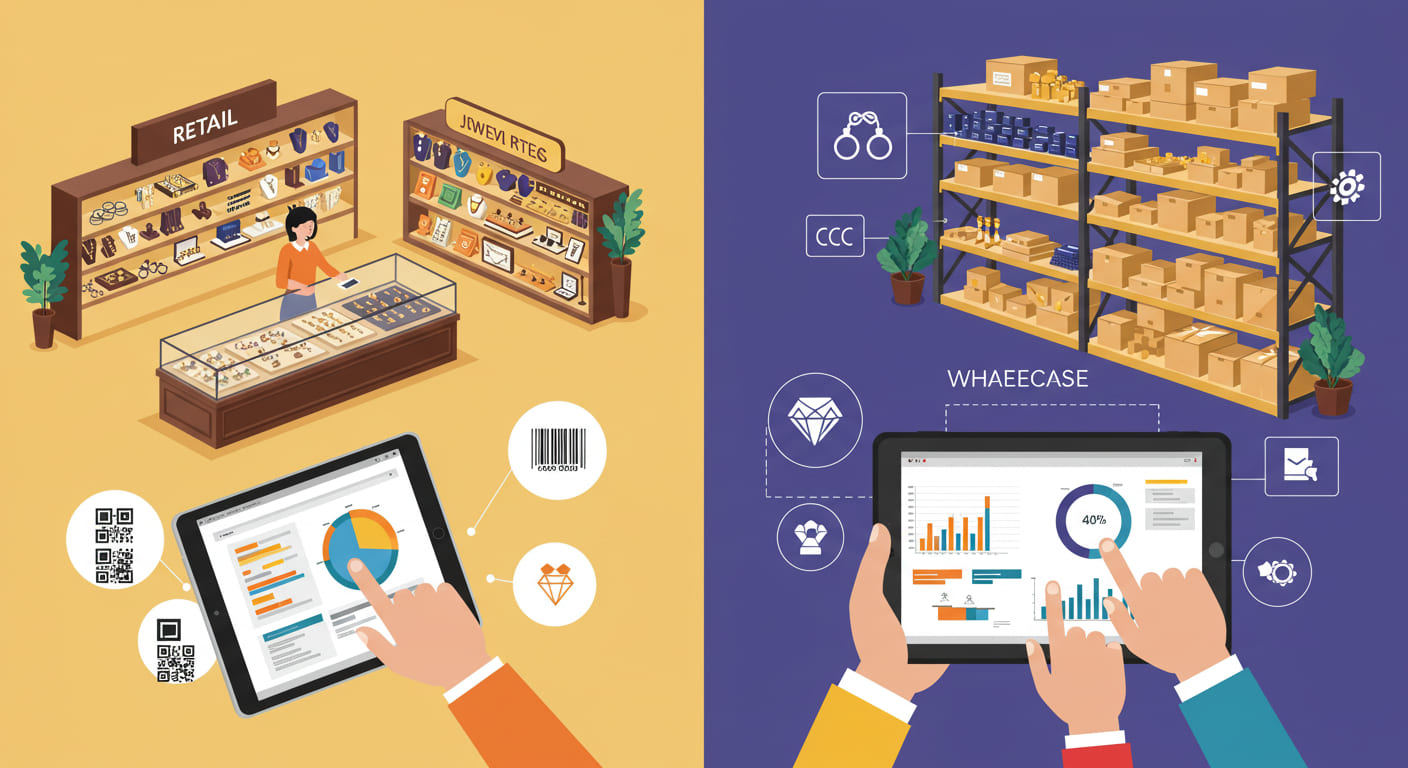
Protect your valuable assets and optimize your gold inventory management with industry best practices. Operating a business in the precious metals sector carries a unique kind of pressure. In a standard retail environment, a misplaced item or a slight pricing error might result in a negligible drop in monthly profits. However, when your display cases and vaults are filled with gold, diamonds, and platinum, the financial stakes are exponentially higher. Every single gram matters. A minor discrepancy in weight, a miscalculated purity level, or a delayed response to global market shifts can instantly erode thousands of Riyals in profit. The margin for error is virtually nonexistent, making absolute precision the only acceptable standard.
The Saudi Arabian market is currently undergoing a massive structural shift. Consumers are increasingly sophisticated, demanding transparent pricing and flawless service. At the same time, government authorities are enforcing strict modernization policies, requiring businesses to digitize their financial records to ensure total economic transparency. For retailers and wholesalers alike, relying on memory, handwritten ledgers, or basic spreadsheets is no longer a viable business strategy. The sheer volume of transactions, combined with the extreme value density of the products, demands a technology-driven approach to asset control.
By adopting proven best practices in gold inventory management for retailers and wholesalers, business owners can establish a secure, highly efficient operational framework. This requires moving beyond simple tracking and embracing a holistic digital ecosystem. We will explore the specific tools, operational procedures, and compliance measures necessary to lock down your assets, streamline your daily workflows, and protect your enterprise from both internal vulnerabilities and external market shocks.
What Makes Precious Metals So Complex to Manage?
Before implementing new strategies, it is crucial to dissect exactly why managing a jewelry store or a wholesale bullion distribution center is fundamentally harder than running any other type of commercial enterprise. The difficulty stems from the dynamic nature of the product itself.
- The Intricacies of Karat Variations: Gold is rarely sold in its absolute pure form for daily wear. It is alloyed with other metals to increase durability, resulting in different purity levels. Your stockroom might hold a mix of 18K white gold engagement rings, 21K traditional bracelets, 22K bangles, and 24K pure investment bars. Your tracking system must perfectly distinguish between these purities. Mixing up an 18K item for a 21K item during a sale or an audit throws your entire financial valuation into chaos.
- Weight-Based Valuation Down to the Milligram: In this industry, you do not sell units; you sell weight. The valuation of a piece requires precision down to 0.1 grams or less. Furthermore, many pieces include precious stones, enamel, or pearls. A robust management strategy must account for the gross weight of the physical item while mathematically isolating the net weight of the actual gold to apply the correct market rate.
- Extreme Price Volatility: Unlike a television or a pair of shoes, the underlying material cost of your merchandise changes constantly. Global economic events, interest rate decisions, and geopolitical tensions cause the price of gold to fluctuate by the hour. Your store’s pricing strategy must be deeply connected to these live market feeds to ensure you never sell a piece below its current replacement cost.
- The Constant Threat of Internal and External Theft: High-value, easily concealable items naturally attract severe security risks. Without a flawless, unalterable digital paper trail tracking the movement of every single ring and necklace, pieces can easily go missing. Implementing a centralized gold management system reduce theft profitability by creating total accountability, ensuring that any misplaced item is identified within minutes rather than months.
Best Practice 1: Automating Your Tracking Infrastructure
The first and most critical step in securing your assets is entirely removing the human element from the data entry process. Manual data entry is the enemy of accuracy. When a tired employee attempts to type a thirteen-digit serial number or a precise decimal weight into a spreadsheet at the end of a busy shift, mistakes are inevitable.
To achieve operational excellence, you must automate the synchronization of weights, karats, and market rates. Every piece entering your store must be immediately cataloged and tagged with a secure, highly detailed barcode or a Radio Frequency Identification (RFID) chip.
The implementation of RFID technology, in particular, is a massive leap forward. Instead of manually weighing and scanning hundreds of pieces during the evening audit, a manager can simply wave a handheld RFID scanner over the display trays. The scanner communicates wirelessly with the tags, instantly identifying every piece, its exact weight, and its assigned location. This reduces a grueling five-hour manual inventory check into a five-minute digital sweep. Furthermore, this automation ensures instant updates across your entire network. When a cashier finalizes a sale at the point-of-sale (POS) terminal, that specific piece is instantly deducted from the available stock, preventing another salesperson from accidentally attempting to sell the same item to a different client.
Best Practice 2: Merging Financials with the Showroom Floor
A common structural flaw in many jewelry businesses is operating the showroom and the accounting department as two disconnected silos. The sales team uses one program to ring up customers, while the accounting team uses a completely different software to manage the books. This disconnect requires massive amounts of manual data transfer, leading to lost receipts, miscalculated taxes, and severe administrative delays.
The gold standard of operational efficiency is deploying a unified Enterprise Resource Planning (ERP) platform that natively connects your physical stock directly to your financial ledgers. When you utilize a specialized gold erp, the bridge between physical goods and financial data becomes seamless.
This native integration is absolutely vital for maintaining flawless regulatory compliance. Saudi Arabia’s push for economic transparency means that businesses must adhere to strict electronic invoicing rules. By understanding the ZATCA mandate system in Saudi Arabia, business owners recognize that generating a legal invoice in the jewelry sector requires complex arithmetic. The system must isolate the making charge from the raw metal value, apply the Value Added Tax (VAT) correctly based on the transaction type, and generate a secure cryptographic QR code.
A unified system performs this entire process automatically at the moment of sale. It calculates the VAT flawlessly and prepares the data for official reporting. Trying to achieve this level of zatca e invoicing compliance manually is a recipe for devastating financial penalties and failed audits. Additionally, a unified system ensures that your profit and loss reports reflect the true, live valuation of your current stock holdings, giving ownership a perfectly clear picture of their financial health at any given second. Retailers and wholesalers who standardize on one erp gold platform for both operations avoid the reconciliation gap that appears when retail POS and wholesale ledgers run on separate tools. Contact Daysum to unify both under one system.
Best Practice 3: Implementing Strict Role-Based Security
Your digital database contains the blueprints to your entire financial empire. It holds your profit margins, your supplier lists, your VIP customer contact information, and the exact physical location of every gram of gold you own. Granting identical access levels to every employee in the company is a massive, entirely preventable security vulnerability.
Protecting your data requires the strict implementation of role-based access control (RBAC). This ensures that employees only have access to the specific tools and data necessary to perform their daily job functions. It prevents accidental data deletion by untrained staff and acts as a powerful deterrent against internal fraud.
Here is a standard framework for assigning digital permissions within a jewelry enterprise:
|
Assigned Corporate Role |
Designated Access Level and Capabilities |
|
Frontline Sales Staff |
Access restricted strictly to the POS interface, customer profile creation, and viewing item prices. Cannot alter base prices or delete inventory. |
|
Branch Inventory Manager |
Authorized to process incoming stock, initiate branch-to-branch transfers, and conduct daily RFID audits. Cannot view overarching company profit margins. |
|
Executive Owners |
Full, unrestricted visibility. Complete control over pricing premiums, system configurations, and access to all sensitive financial and profit/loss reports. |
Best Practice 4: Deploying Live Reporting and Analytics
Successful wholesalers and retailers do not rely on gut feelings or outdated historical reports to make crucial purchasing decisions. They rely on cold, hard data. If you are waiting until the end of the month to review your sales figures, you are operating entirely in the past.
Modern platforms provide management with live, interactive analytical dashboards. These dashboards break down your entire operation visually. You can instantly see your total stock value separated by karat purity, analyze the exact profit margins generated by specific jewelry designers, and identify exactly which pieces are sitting stagnant in your displays.
These analytics are paired with uncompromising audit trails. Every single action taken within the software—whether it is a price adjustment, a stock transfer, or a deleted receipt—is permanently logged with a timestamp and the specific employee’s digital signature. This creates a culture of absolute accountability.
For businesses operating multiple branches, this level of visibility is transformative. Reviewing how the gold inventory system transforms jewelry stores in KSA demonstrates the power of centralized management. An owner sitting in a head office in Riyadh can monitor live sales happening simultaneously in Jeddah and Dammam, allowing them to shift slow-moving stock between branches to optimize sales without ever having to physically visit the locations.
Securing Long-Term Profitability in a Regulated Environment
Most of these best practices are impossible on a generic system — see exactly why a specialized golden inventory tool closes that gap. The precious metals market is incredibly lucrative, but it is deeply unforgiving to those who refuse to modernize. The days of relying on manual oversight and disjointed software programs are permanently over. Applying structured, technology-driven practices is the only proven method to preserve the immense value of your physical assets, ensure mathematical accuracy in every transaction, and build deep, unshakeable trust with your clientele.
When you embrace these advanced methodologies, you stop viewing technology as a frustrating expense and start recognizing it as your most powerful tool for opportunity. A highly secure, automated infrastructure allows you to confidently expand your brand, open new wholesale distribution channels, and handle massive seasonal sales volumes without the paralyzing fear of administrative collapse or tax audit failures.
Do not leave your most valuable assets vulnerable to human error and outdated procedures. Researching your options and choosing the right gold software is the foundation of a secure future. By upgrading to a highly specialized, industry-leading platform like Daysum, you guarantee that your daily operations, financial reporting, and strict regulatory compliance run seamlessly in the background, freeing you to focus entirely on dominating the Saudi gold market.
Frequently Asked Questions (FAQs)
RFID tags emit a unique radio frequency linked to a specific item in your database. If a piece goes missing during the day, the manager can use a handheld scanner to sweep the store. The system will instantly highlight the missing serial number on the screen, allowing management to pinpoint exactly when the item was last scanned and review the security footage for that specific timeframe.
Yes, specialized platforms are designed for this exact scenario. The cashier weighs the customer's scrap gold, inputs the karat purity, and the software calculates the live purchase value. It then deducts that exact amount from the new jewelry purchase and automatically categorizes the incoming scrap into a separate digital vault for future melting or refining.
Because the software is connected directly to live global commodity feeds via secure APIs, the retail prices displayed on your screens will adjust downward automatically within seconds of the market drop. This ensures your pricing always remains highly competitive and reflective of the actual current material value.
Not at all. While the background mathematics and database architecture are highly complex, the user interface provided to the sales staff is remarkably intuitive. Because the software mirrors the natural, logical steps of a traditional jewelry sale, most cashiers become highly proficient within just two or three days of supervised practice.
Modern specialized systems utilize highly secure, cloud-based architecture. All of your transactions, inventory logs, and customer profiles are continuously backed up to encrypted remote servers. If your physical store suffers a computer crash, a fire, or theft, your data remains completely untouched and can be accessed instantly from any new device.