Odoo

Odoo ERP dashboards

What is Odoo ERP and Why is it the Fastest-Growing ERP Solution in Saudi Arabia?

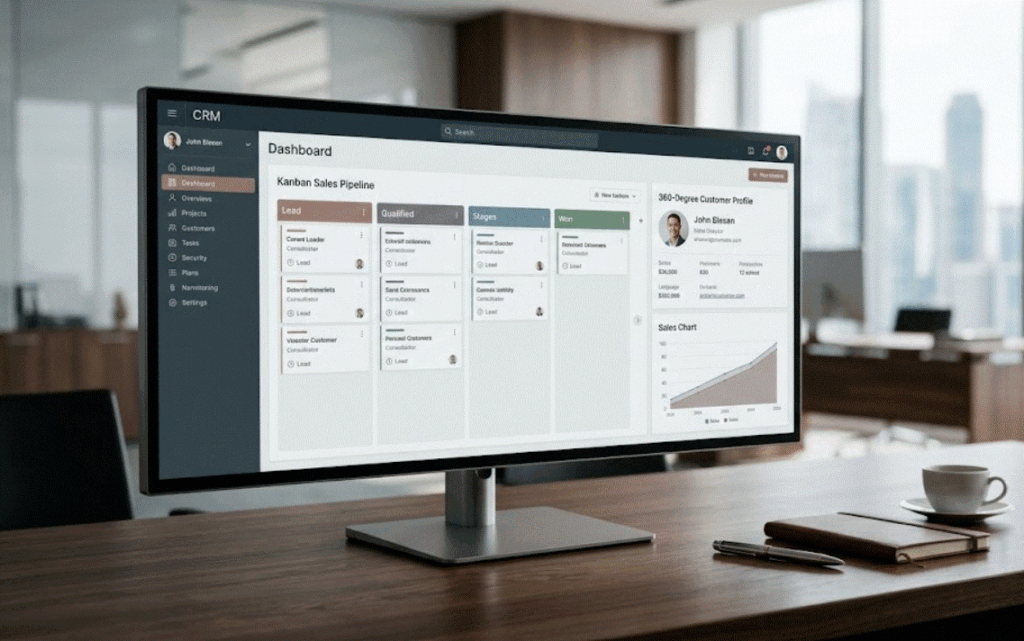
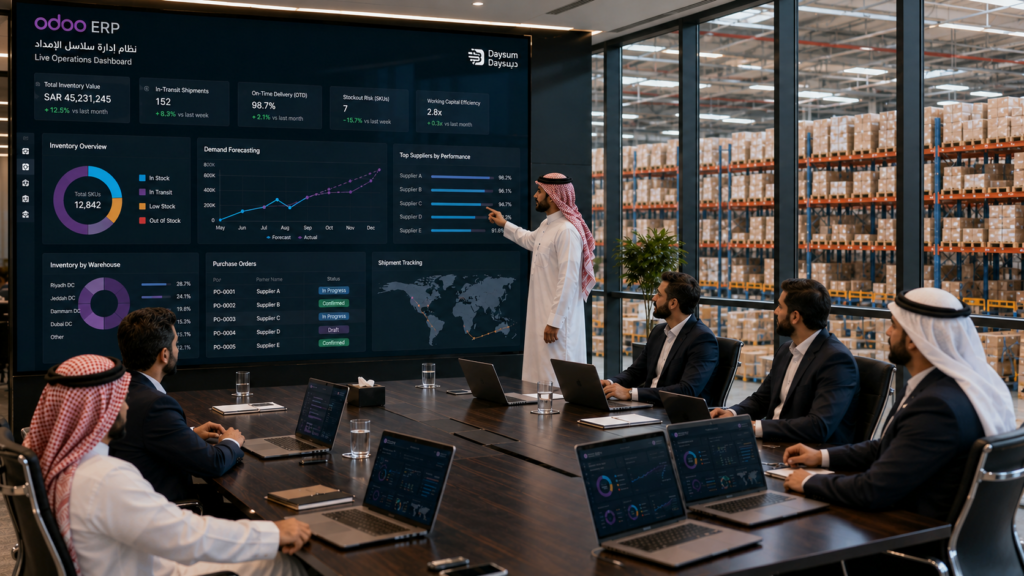
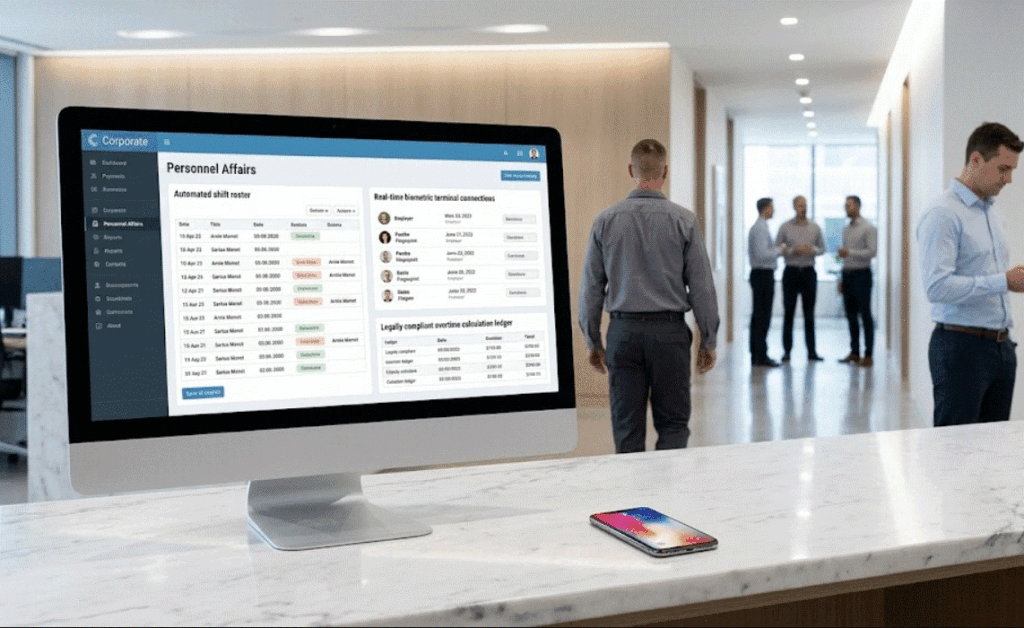
In the midst of Saudi Arabia’s ambitious Vision 2030, the Kingdom is undergoing one of the most rapid digital transformations in the world. Businesses, from burgeoning SMEs to established enterprises, are in a race to modernize, streamline operations, and enhance efficiency. At the heart of this transformation is the need for a single, powerful tool to manage every aspect of the business. This is where Enterprise Resource Planning (ERP) systems come in. For years, the ERP market was dominated by complex, expensive legacy systems. Today, a new leader has emerged, perfectly aligned with the needs of the modern Saudi market: Odoo. But what is Odoo? And what specific factors are fueling its explosive growth across the Kingdom? This in-depth guide will answer these questions, break down the Odoo ecosystem, and explain why choosing the right Odoo ERP services partner is the most critical decision you’ll make in your digital transformation journey. First, What is an ERP? (And Why Do You Need One?) Before diving into Odoo, let’s clarify what an ERP is. Imagine your business is running on a dozen different, disconnected applications: Your data is scattered, reports are a manual nightmare, and inefficiency is costing you time and money. An Enterprise Resource Planning (ERP) system solves this. It acts as the central nervous system for your entire organization. It’s a single, integrated suite of applications that manages all your core business processes within one database. When your sales team makes a sale, the inventory is updated automatically, a new entry is created in accounting, and the customer’s record is updated—all in real-time. What is Odoo ERP? The “All-in-One” Revolution Odoo is a comprehensive, all-in-one suite of business management applications. Unlike traditional ERPs, Odoo’s primary strength lies in its unique modular design. Think of it like a set of business LEGOs. You don’t have to buy the entire, massive box. You can start with just the blocks you need—like Sales and Accounting—and then add more modules (or “apps”) like Inventory, Manufacturing, HR, or Project Management as your business grows. All these apps are perfectly integrated, “talk” to each other, and share the same central database. This eliminates data silos and provides a single source of truth for your entire company. Key Odoo modules include: Odoo Community vs. Odoo Enterprise: A Critical Choice A key part of understanding Odoo is knowing the difference between its two versions. This choice significantly impacts cost, functionality, and your need for Odoo ERP services. Feature Odoo Community Odoo Enterprise Cost Free (open-source license) Paid (per-user, per-app, per-month/year) Core Functionality Includes most core apps (CRM, Sales, etc.) Includes all Community apps + exclusive features. Exclusive Features N/A Advanced Accounting, Manufacturing (MRP), Barcode Scanning, and more. ZATCA Compliance Requires significant custom development. Natively supported and maintained (especially with a partner). Hosting Self-hosted (on-premise or private cloud). On-premise, private cloud, or Odoo.sh (PaaS). Support Community forums (DIY). Direct support from Odoo and your partner. Best For Startups, developers, or businesses with very simple needs and high technical skill. Most SMEs and enterprises in KSA needing a full, supported, and compliant solution. For businesses in Saudi Arabia, Odoo Enterprise is almost always the recommended choice due to its advanced features and, most importantly, its ability to be easily configured for ZATCA e-invoicing. The 7 Core Reasons for Odoo’s Rapid Growth in Saudi Arabia Odoo isn’t just growing; it’s thriving in the KSA market. Here are the specific, localized reasons why. 1. Seamless ZATCA E-Invoicing Compliance (Phase 1 & 2) This is the single most significant driver. ZATCA’s mandatory e-invoicing regulations (Fatoora) sent businesses scrambling for compliant software. 2. Perfect Alignment with Saudi Vision 2030 Vision 2030 is built on pillars of economic diversification, SME growth, and widespread digitalization. Odoo is the perfect ERP for this mission: 3. Unmatched Affordability & Total Cost of Ownership (TCO) The traditional ERPs (like SAP or Oracle) are notoriously expensive, with high licensing fees and implementation costs that can run into millions. Odoo shatters this model. 4. The “All-in-One” Solution: Eliminating Software Chaos Saudi businesses are tired of “software patchwork”—using one app for HR, another for accounting, and a third for inventory. Odoo’s all-in-one approach is a massive relief. It provides a single, unified platform where data flows seamlessly from one department to another, eliminating redundant data entry and providing a 360-degree view of the business. 5. Extreme Flexibility & Customization for Local Needs Odoo is not a rigid, one-size-fits-all system. It’s more like a platform of “clay” that can be molded to your exact business processes. This is where Odoo ERP services from a local partner become invaluable. 6. Scalability That Grows With Your Business The modular “LEGO” approach is a game-changer. A small trading company in Riyadh can start today with just the Sales, Inventory, and Accounting apps. Two years later, as they grow and open a small workshop, they can simply “plug in” the Manufacturing module. This “pay-as-you-grow” model gives businesses unparalleled flexibility to scale their systems in lockstep with their growth. 7. A Modern, User-Friendly Interface Let’s be honest: many old ERPs are ugly and clunky, leading to low employee adoption. Odoo looks and feels like a modern web application. Its clean, intuitive, and mobile-friendly interface means teams actually enjoy using it. This reduces training time and ensures the system is used to its full potential. What are “Odoo ERP Services”? (Why the Partner is More Important Than the Software) This is the most crucial takeaway. Odoo is a powerful tool, but it is not a magic “plug-and-play” solution. The success or failure of your entire project depends on the quality of your Odoo ERP services provider. An expert Odoo Gold Partner like Daysum is responsible for the entire journey: Why Choose Daysum for Your Odoo ERP Services in KSA? Choosing a partner is a long-term commitment. As a Certified Odoo Gold Partner based in Saudi Arabia, Daysum is uniquely positioned to guarantee your success. Conclusion: Your Future on a Single Platform Odoo is the fastest-growing ERP in Saudi

Read more

Odoo ERP Services in Saudi Arabia: Transforming Business Operations with Daysum

As Saudi Arabia continues its Vision 2030 journey toward full digital transformation, businesses across industries are embracing integrated ERP solutions to streamline operations, ensure compliance, and enhance productivity.Among the top choices for Saudi enterprises is Odoo ERP — a powerful, open-source business management platform trusted globally for its flexibility, scalability, and cost-efficiency. With Daysum’s specialized Odoo ERP Services in Saudi Arabia, companies can unlock the system’s full potential through tailored implementation, seamless integration, and ongoing local support. Why Odoo ERP is Revolutionizing Saudi Businesses Odoo isn’t just another ERP system — it’s a complete business ecosystem.Unlike traditional software that operates in silos, Odoo connects every department through a single, unified platform. Here’s why Saudi companies are making the switch: All-in-One Solution: Manage accounting, HR, sales, CRM, inventory, and manufacturing in one place. Fully Customizable: Adjust modules and workflows based on your business size, industry, and goals. ZATCA & VAT Compliance: Stay compliant with Saudi e-invoicing and tax regulations effortlessly. Open-Source Flexibility: Scale affordably without high licensing costs. Modern User Experience: A clean, intuitive interface accessible from desktop and mobile devices. Key Odoo ERP Modules for Saudi Businesses Odoo’s modular design allows companies to start small and expand as they grow. The following modules are particularly valuable for the Saudi market: Accounting & Finance Automate transactions, manage VAT, and stay compliant with ZATCA e-invoicing standards. Sales & CRM Manage your sales pipeline, track leads, and convert opportunities — all within one system. Inventory & Supply Chain Gain real-time visibility into stock levels, warehouses, and reordering operations. Human Resources Handle attendance, payroll, and GOSI compliance easily with localized HR features. Manufacturing & Project Management Plan production, track work orders, and manage resources with precision. Dashboard & Analytics Make data-driven decisions with real-time insights and visual reports. Why Choose Daysum for Odoo ERP Services in Saudi Arabia Choosing the right implementation partner is key to ERP success.With Daysum, Saudi businesses gain more than technical expertise — they gain a partner that understands both business operations and local regulations. What sets Daysum apart: Certified Odoo Experts: Skilled professionals ensuring a smooth, error-free implementation. Tailored Customization: Solutions built around your specific business model. Local Compliance: Integrated Saudi VAT and ZATCA modules for effortless regulatory alignment. Scalable Growth: Whether you’re an SME or a large enterprise, Daysum ensures Odoo grows with you. Continuous Support: From training to system upgrades, Daysum provides ongoing assistance. Real Business Impact Businesses that adopt Odoo ERP with Daysum report measurable benefits: 40% faster process execution through automation Increased data accuracy with centralized management Reduced operational costs due to open-source flexibility Enhanced decision-making with real-time analytics These tangible improvements make Odoo not just a software upgrade — but a foundation for sustainable growth in Saudi Arabia’s evolving digital economy. In a market driven by innovation and digital transformation, Odoo ERP Services in Saudi Arabia empower companies to automate, optimize, and grow with confidence.With Daysum, businesses gain a partner that blends technical expertise with local understanding — delivering ERP solutions that align with Saudi Vision 2030 and beyond. Ready to transform your operations? Contact Daysum today to discover how Odoo ERP can streamline your business and drive long-term success. Frequently Asked Questions (FAQs)

Read more
odoo 10

Odoo ERP & CRM Software: How Daysum Enhances Accounts Receivable Management

Odoo ERP & CRM software has become a game-changer for businesses in Saudi Arabia seeking to streamline operations and strengthen customer relationships. By integrating Odoo CRM software with robust ERP capabilities, companies can efficiently manage their sales pipelines while maintaining precise financial records. Daysum takes this a step further by offering tailored Odoo ERP & CRM solutions designed to enhance Accounts Receivable (AR) management. From issuing sales invoices to tracking payments and conducting aging analysis, Daysum’s platform ensures faster collections, improved cash flow, and stronger financial control, empowering businesses to stay competitive in today’s dynamic market. The Importance of Accounts Receivable in Business Cash Flow Strong cash flow is the lifeline of any business, and efficient Accounts Receivable (AR) management plays a critical role in achieving it. With Odoo ERP & CRM software, businesses in Saudi Arabia can ensure accurate tracking of customer payments, reduce overdue balances, and maintain steady liquidity. This integration allows for real-time visibility into receivables, helping decision-makers act quickly. By combining sales insights from Odoo CRM software with financial data, companies can optimize cash flow and strengthen their financial stability. Why Accounts Receivable Impacts Cash Flow Delayed collections can create liquidity gaps that hinder operations. Efficient AR processes accelerate payment cycles and improve working capital. Real-time receivables tracking ensures proactive follow-ups. How Odoo ERP & CRM Software Streamlines AR Processes Integrating odoo erp & crm creates a unified system where customer interactions and financial transactions work hand in hand. Businesses can seamlessly link sales data from Odoo CRM software with AR records in the ERP module, reducing manual data entry and errors. Daysum customizes this integration to match Saudi market needs, ensuring compliance with local invoicing regulations. The result is a faster, more accurate, and transparent AR process that enhances efficiency and supports sustainable growth. Key Streamlining Features Centralized platform for sales and receivables management: Odoo ERP & CRM software unifies all sales and AR data in one hub, enabling Daysum to deliver seamless monitoring and faster decision-making. Automated syncing between CRM and ERP records: The system ensures real-time updates between customer data and financial records, reducing errors and saving valuable time. Regulatory compliance for e-invoicing in Saudi Arabia: Daysum’s Odoo ERP & CRM solution fully aligns with ZATCA standards, ensuring smooth and compliant invoicing for Saudi businesses. Managing Sales Invoices and Payment Collection Efficiently Timely invoicing and payment collection are the backbone of healthy AR management. Odoo ERP & CRM software simplifies this by automating invoice creation directly from confirmed sales orders and recording payments with minimal manual input. Through Daysum’s customization, Saudi businesses can set flexible payment terms, send reminders, and even accept multiple payment methods. This streamlined process not only speeds up revenue collection but also enhances the customer experience by reducing disputes and delays. Efficient Invoicing & Collection Steps Sales order confirmation in Odoo CRM software. Automatic invoice generation in ERP. Payment reminders sent before due dates. Multi-channel payment acceptance (bank, online, POS). Automating Aging Analysis and Follow-Ups with Daysum Aging analysis helps identify overdue accounts and prioritize collection efforts. With odoo erp & crm, this process becomes fully automated—reducing the need for manual spreadsheet work. Daysum’s solution provides real-time aging reports segmented by customer, due date, or outstanding balance. Automated follow-up emails or calls can be scheduled to maintain a professional yet consistent collection strategy. This not only saves time but ensures that no overdue payment slips through unnoticed, ultimately boosting cash flow. Aging Analysis Automation Benefits Feature Benefit Real-time AR aging reports Quick identification of overdue accounts Auto-generated follow-up reminders Reduces manual workload Segmentation by customer/payment status Prioritizes high-risk accounts How Daysum’s Solution Improves AR and Customer Relations Efficient Accounts Receivable (AR) management is essential for any business aiming to boost cash flow and customer satisfaction. With Odoo ERP & CRM software powered by Daysum, Saudi companies gain a unified platform that not only streamlines invoice tracking but also enhances client communication. By integrating sales, payment history, and customer data in real time, businesses can respond faster to payment issues and build stronger client trust, ensuring that collections are both timely and customer-friendly. Key Improvements Offered by Daysum Unified view of customer sales and payment history. Automated reminders to reduce overdue invoices. Real-time synchronization between AR and CRM records. Case Study: Improving Collections with Odoo ERP & CRM by Daysum One Saudi retail business faced delayed payments that strained their cash flow. After implementing Daysum’s Odoo ERP & CRM solution, they achieved faster collections and improved customer communication. The system automated invoice follow-ups, provided detailed aging reports, and integrated seamlessly with the sales team’s CRM dashboard. Within three months, overdue payments dropped by 40%, and customer satisfaction scores increased significantly, proving that streamlined AR management can deliver measurable business growth. Collection Enhancement Results Metric Before Daysum After Daysum Overdue invoices High Reduced by 40% Follow-up time per customer 2 hours 20 minutes Customer satisfaction score 70% 90% Tips for Reducing Late Payments Using Odoo Software Late payments can disrupt cash flow, but with the right tools in Odoo CRM software, businesses can minimize delays. Daysum’s solution automates payment reminders, tracks aging reports, and integrates customer relationship management with financial data. This not only ensures prompt collections but also maintains professional client interactions. By leveraging these tools, Saudi businesses can strengthen relationships while keeping receivables under control. Best Practices to Reduce Late Payments Set up automated invoice reminders in Odoo. Offer multiple payment methods for customer convenience. Use aging analysis to prioritize high-risk accounts. How to Get Started with AR Management in Daysum’s Odoo ERP & CRM Adopting Odoo ERP & CRM software with Daysum’s customization is straightforward. Businesses can integrate their existing sales and payment data, configure automated workflows, and train staff to maximize the system’s potential. The process is designed to be fast, ensuring minimal disruption while delivering immediate improvements to AR tracking, reporting, and collections. Quick Start Steps Contact Daysum for a tailored Odoo ERP & CRM setup. Migrate existing AR and CRM records into the system.

Read more
odoo 7

Odoo Software Services: How Daysum Simplifies Accounts Payable Management

Odoo software services are transforming the way Saudi businesses manage their financial operations. With increasing demand for efficient and reliable accounting systems, Daysum offers expert Odoo implementation in Saudi Arabia, providing tailored odoo software solutions that simplify Accounts Payable management.  Handling purchase invoices, payment terms, and supplier payments becomes seamless when integrated with purchase orders and inventory.  Daysum’s solutions empower businesses to automate daily AP processes, improve accuracy, and maintain strong supplier relationships.  Discover how Daysum’s Odoo software services can streamline your Accounts Payable workflow and enhance your company’s financial efficiency. What Is Accounts Payable and Its Role in Odoo Software Services Accounts Payable (AP) is a critical financial function responsible for managing purchase invoices, payment terms, and supplier payments. In the context of odoo software services, AP is integrated seamlessly with other business modules to ensure smooth financial operations. For companies in Saudi Arabia, Daysum offers expert odoo implementation and customized odoo software solutions that optimize AP workflows, reduce errors, and enhance supplier relationships, making financial management more efficient and transparent. Key Functions of Accounts Payable Processing and recording supplier invoices. Managing payment schedules and terms. Ensuring timely supplier payments to maintain trust. Managing Supplier Invoices Efficiently with Daysum Efficient management of supplier invoices is essential to avoid delays and errors in payment processing. Daysum leverages advanced odoo software services to automate invoice entry, approval workflows, and payment scheduling. With customized odoo implementation in Saudi Arabia, businesses can reduce manual work, minimize discrepancies, and improve cash flow management. Steps to Efficient Invoice Management Automatic invoice capture and data extraction. Automated validation and matching with purchase orders. Approval routing based on company policies. Scheduled payment processing aligned with terms. How Daysum Links Purchase Orders and Inventory with AP One of the strengths of Daysum’s odoo software solutions is the integration between Accounts Payable, purchase orders, and inventory. This connection ensures that invoices are directly linked to received goods and purchase authorizations, reducing errors and improving financial accuracy. For Saudi businesses, this integrated approach streamlines procurement and payment processes. Integration Benefits Real-time matching of invoices with purchase orders. Daysum’s odoo software services enable instant verification of invoices against purchase orders, ensuring accuracy and preventing discrepancies. Automatic updating of inventory records upon payment. With odoo implementation in Saudi Arabia by Daysum, inventory levels are updated automatically as payments are processed, maintaining stock accuracy. Reduced risk of duplicate or incorrect payments. Daysum’s odoo software solutions help prevent errors by cross-checking invoices and payments, safeguarding your business from costly mistakes. Enhanced visibility into procurement costs. Integrated AP management through Daysum offers Saudi companies clear, real-time insights into procurement expenses, aiding better financial decisions. Automating Payment Terms and Due Dates in Odoo ERP Managing payment terms and due dates manually can be complex and risky. Daysum’s odoo software services include automation of these critical aspects within the Accounts Payable module, helping Saudi companies avoid late payments and penalties. Automated reminders and scheduling improve cash flow forecasting and vendor relationships. How Automation Works Define payment terms within the system. Automatically calculate due dates based on invoice dates. Generate payment reminders before deadlines. Integrate with financial reporting for cash flow insights. Benefits of Using Daysum for Odoo Implementation in Saudi Arabia Choosing the right partner for odoo implementation in Saudi Arabia is crucial for maximizing your ERP investment. Daysum offers comprehensive odoo software services tailored to local business needs, ensuring smooth deployment, customization, and ongoing support. With deep knowledge of Saudi regulations and industry practices, Daysum helps businesses streamline Accounts Payable processes, reduce errors, and improve operational efficiency. Key Benefits of Partnering with Daysum Expert customization aligned with Saudi market requirements. Daysum’s odoo software services tailor solutions to meet the unique financial and regulatory needs of Saudi businesses. End-to-end implementation and training support. From initial setup to user training, Daysum ensures a smooth and successful odoo implementation in Saudi Arabia. Integration with existing financial systems. Daysum connects Odoo seamlessly with your current financial tools for unified and efficient Accounts Payable management. Continuous local customer support and updates. Ongoing support and regular system updates from Daysum keep your odoo software solutions running optimally in the Saudi market. How AP Integration Improves Cash Flow Management Integrating Accounts Payable (AP) with other business modules using Daysum’s odoo software solutions enhances cash flow management by providing real-time visibility into liabilities and payment schedules. This integration helps Saudi companies plan expenses, avoid late payments, and optimize working capital, which is essential for sustaining growth and financial health. Cash Flow Improvements Through AP Integration Real-time tracking of outstanding invoices and due dates. Automated alerts for upcoming payments. Improved forecasting of cash requirements. Enhanced supplier relationship management through timely payments. Client Success Story: AP Management Transformation with Daysum A leading Saudi company partnered with Daysum for odoo implementation to overhaul its AP management. Before Daysum, manual invoice processing caused delays and errors. After deployment of customized odoo software services, the company achieved faster invoice approvals, automated payment processing, and improved financial reporting accuracy, boosting operational efficiency and supplier satisfaction. Success Highlights Reduced invoice processing time by 40%. Daysum’s odoo software services automate manual tasks, significantly speeding up invoice handling for Saudi businesses. Automated matching of purchase orders and invoices. With Daysum’s tailored odoo implementation in Saudi Arabia, invoices are accurately linked to purchase orders, reducing errors and ensuring financial accuracy. Enhanced compliance with Saudi financial regulations. Daysum’s odoo software solutions are designed to meet local regulatory standards, helping companies stay compliant and avoid penalties. Ongoing support and system updates by Daysum. Continuous assistance and updates from Daysum ensure your AP processes remain efficient and aligned with evolving Saudi market requirements. Step-by-Step Guide: Implementing Accounts Payable Module with Daysum Implementing the AP module using Daysum’s odoo software services involves a structured approach to ensure seamless integration and user adoption. This step-by-step process is designed to meet Saudi businesses’ unique financial and regulatory needs. Implementation Steps Assessment: Analyze existing AP workflows and challenges. Customization: Configure AP module tailored to company requirements. Integration: Connect AP with

Read more
odoo 4

Odoo ERP Cloud: Simplify Your General Ledger Management with Daysum

Odoo ERP Cloud is revolutionizing financial management by offering a scalable, efficient, and accessible solution for businesses in Saudi Arabia. The cloud Odoo platform centralizes your General Ledger (GL), the core of your financial ERP system, where all accounting entries from modules like Accounts Payable, Accounts Receivable, and Inventory are seamlessly recorded. Daysum, a leading provider of Odoo Cloud ERP solutions, simplifies General Ledger management by ensuring real-time accuracy and compliance with local regulations. With Daysum’s expertise, Saudi businesses can generate precise financial statements and maintain complete control over their finances through an intuitive, cloud-based system designed to streamline operations and support growth in today’s competitive market. What Is a General Ledger and Why It Matters in Odoo ERP Cloud The General Ledger (GL) is the central component of any financial system, serving as the comprehensive record of all accounting transactions. In odoo erp cloud, the GL consolidates data from multiple accounting modules into one unified platform. This consolidation ensures accurate bookkeeping, transparent financial management, and compliance with Saudi regulations. Daysum’s cloud Odoo solutions simplify GL management, enabling businesses to maintain a precise financial overview crucial for decision-making and regulatory reporting. Key Roles of the General Ledger Records all accounting transactions from various modules. Serves as the foundation for preparing financial statements. Ensures data integrity and audit readiness. How Daysum Integrates All Accounting Modules into the GL Daysum leverages the full capabilities of odoo cloud ERP to seamlessly integrate critical accounting modules such as Accounts Payable, Accounts Receivable, and Inventory into the General Ledger. This integration guarantees that all financial activities are captured in real time, reducing errors and improving efficiency for Saudi businesses using odoo erp cloud. Integration Process by Daysum Connect key accounting modules to the GL automatically. Sync transaction data across modules in real time. Validate entries to ensure accuracy and compliance. Provide unified financial data for reporting and analysis. Real-Time Financial Reporting with Odoo Cloud ERP One of the standout advantages of using cloud Odoo is the ability to generate real-time financial reports directly from the General Ledger. Daysum’s odoo erp cloud implementation empowers Saudi businesses to access up-to-date financial insights anytime, anywhere, enabling faster and more informed decisions that drive growth. Features of Real-Time Reporting Instant updates as transactions are recorded. With Odoo ERP Cloud, every entry in the General Ledger is updated in real time, ensuring accurate and up-to-the-minute financial data. Customizable reports tailored to business needs. Cloud Odoo allows you to design General Ledger reports that match your industry and management requirements for better decision-making. Easy access via cloud from any device. Odoo Cloud ERP lets you review and manage your GL securely from your laptop, tablet, or smartphone—anytime, anywhere. Enhanced transparency for stakeholders. Real-time GL reporting in Odoo ERP Cloud keeps managers, auditors, and partners informed with accurate, accessible, and transparent financial data. Advantages of Cloud-Based GL Management for Saudi Businesses Managing your General Ledger through odoo erp cloud offers numerous benefits, especially in Saudi Arabia’s fast-evolving business environment. Daysum’s cloud-based solutions deliver flexibility, security, and scalability, helping businesses meet local compliance standards while improving operational efficiency. Key Benefits for Saudi Businesses Benefit Description Enhanced Accessibility Access financial data remotely and securely. Cost Efficiency Reduce IT infrastructure and maintenance costs. Scalability Easily adapt as your business grows. Regulatory Compliance Align with Saudi accounting and tax regulations. Automating Journal Entries and Reconciliations in the General Ledger Automating journal entries and reconciliations within the General Ledger is a game-changer for businesses using odoo erp cloud solutions. This automation eliminates manual input errors and accelerates financial workflows by ensuring that all transactions from various modules—such as Accounts Payable, Accounts Receivable, and Inventory—are accurately recorded and matched. Daysum’s expertise in cloud Odoo enables Saudi companies to maintain real-time, error-free financial records, improving reporting accuracy and compliance with local regulations. How Automation Streamlines Journal Entries in Odoo Cloud ERP Automatically captures transactions from integrated accounting modules. Applies predefined rules to categorize and post journal entries. Updates the General Ledger in real time without manual intervention. Steps for Automating Reconciliations System imports bank and payment data automatically. Matches transactions with corresponding journal entries based on set criteria. Flags unmatched transactions for user review and resolution. Updates reconciliation status to reflect accuracy in the GL. Ensuring Data Security in Odoo ERP Cloud Solutions Data security is a top priority for any business, especially when managing sensitive financial information through odoo erp cloud systems. Daysum understands the critical need for protecting your General Ledger data against cyber threats and unauthorized access. Leveraging advanced encryption and compliance with Saudi data protection laws, Daysum’s cloud Odoo solutions ensure your financial data remains confidential, secure, and readily available only to authorized users. Key Security Measures Implemented by Daysum End-to-end encryption for data in transit and at rest. Odoo ERP Cloud by Daysum secures your General Ledger and all financial records with advanced encryption, protecting them during transfer and storage. Multi-factor authentication for user access. Cloud Odoo ensures only authorized personnel can access the GL through an added layer of identity verification beyond simple passwords. Regular security audits and compliance checks. Daysum’s Odoo Cloud ERP undergoes routine assessments to meet Saudi market compliance standards and detect vulnerabilities before they become risks. Secure backups and disaster recovery plans. All GL data is backed up securely in Odoo ERP Cloud, ensuring quick restoration and business continuity in case of any system failure. How Daysum Simplifies Month-End and Year-End Closing Processes Month-end and year-end closings can be complex and time-consuming, but with odoo cloud ERP, Daysum streamlines these critical financial tasks. Automating key closing activities within the General Ledger reduces errors and accelerates reporting cycles. For Saudi businesses, this means compliance with regulatory deadlines and accurate financial statements without the usual stress. Steps to Simplify Closing Processes Automate transaction reconciliation across all modules. Generate preliminary reports to identify discrepancies. Close accounting periods with system-guided checks. Produce final financial statements ready for audit and submission. Client Success Story: Streamlining GL Management with Daysum Many Saudi businesses have

Read more
odoo

Odoo ERP: How Daysum Simplifies Your Chart of Accounts Management

Odoo ERP is a powerful tool transforming business operations worldwide, especially in Saudi Arabia’s dynamic market. As a leading Odoo solution provider, Daysum specializes in delivering comprehensive Odoo ERP software solutions that streamline complex financial processes. One of the core pillars of effective financial management is the Chart of Accounts (COA)—the fundamental structure organizing assets, liabilities, expenses, revenues, and capital.  Without a clear and well-structured COA, businesses risk operational disruptions and inaccurate reporting. Daysum’s tailored Odoo ERP solutions simplify COA management, ensuring seamless integration, accuracy, and compliance for Saudi businesses. In this article, we explore how Daysum enhances your financial system by optimizing the Chart of Accounts, making accounting straightforward and efficient. Understanding the Chart of Accounts (COA) in Odoo ERP The Chart of Accounts (COA) is the backbone of any financial system, especially when integrated with advanced solutions like Odoo ERP software. It defines how your business classifies and tracks financial transactions by organizing accounts into a clear structure. For Saudi companies using odoo erp, understanding the COA is essential for accurate financial reporting and compliance. Daysum, a leading odoo solution provider, ensures that your COA is perfectly aligned with your business needs, empowering smooth financial management. What is the Chart of Accounts? A categorized listing of all accounts used in the general ledger. Organizes financial data into understandable segments. Acts as the framework for bookkeeping and financial statements. Role of COA in Odoo ERP Supports transaction recording and reporting. In Odoo ERP, the Chart of Accounts (COA) serves as the backbone for recording every financial transaction and generating accurate reports, ensuring businesses have reliable insights into their financial health. Enables customizable account grouping. Odoo ERP allows flexible grouping of accounts within the COA, letting Saudi businesses organize assets, liabilities, revenues, and expenses in a way that matches their operational and reporting needs. Facilitates regulatory compliance in Saudi Arabia. With Odoo ERP, the COA can be structured to meet Saudi accounting standards, ensuring seamless compliance with local financial regulations and ZATCA requirements. Why a Well-Organized COA Is Crucial for Your Business A disorganized Chart of Accounts can cripple your financial operations, leading to errors and inefficiencies. For businesses leveraging odoo erp software, a well-structured COA means more accurate data, better decision-making, and streamlined audits. Daysum’s expertise as an odoo solution provider helps Saudi businesses avoid common pitfalls by designing COAs tailored to their operational complexity, ensuring financial clarity and control. Consequences of a Poorly Organized COA Inaccurate financial reports. Difficulty tracking expenses and revenues. Increased audit risks and compliance issues. Benefits of a Well-Structured COA Benefits Description Improved Accuracy Reduces errors in financial statements. Simplified Reporting Easy to generate regulatory reports. Enhanced Decision-Making Clear financial insights for management. How Daysum Customizes COA for Different Industries Every industry has unique accounting requirements, and a one-size-fits-all COA can limit business growth. Daysum, as a trusted odoo solution provider, leverages the flexibility of odoo erp to tailor the Chart of Accounts to suit diverse sectors in Saudi Arabia—from retail and manufacturing to services and trading. Customized COAs optimize financial tracking and compliance specific to industry standards. Customization Process by Daysum Analyze industry-specific accounting needs. Map essential accounts based on operational flow. Configure Odoo ERP software to reflect tailored COA. Test and refine for accuracy and usability. Industries Served by Daysum Retail and e-commerce Manufacturing and production Professional services Wholesale and distribution Main Account Categories Explained: Assets, Liabilities, Revenues, Expenses, Capital Understanding the five main account categories is critical to mastering the Chart of Accounts in odoo erp software. Daysum helps Saudi businesses classify their financial data into these fundamental categories, ensuring clarity and compliance. Account Category Description Examples Assets Resources owned by the business. Cash, inventory, equipment Liabilities Obligations or debts owed. Loans, accounts payable Revenues Income earned from business activities. Sales revenue, service fees Expenses Costs incurred to operate the business. Rent, utilities, salaries Capital Owner’s equity or investment in business. Share capital, retained earnings Automating COA Setup with Daysum’s Odoo ERP Software Setting up a Chart of Accounts (COA) manually can be time-consuming and prone to errors, especially for growing businesses. Daysum leverages the power of Odoo ERP software to automate COA setup, ensuring accuracy and efficiency. With automation, Saudi companies benefit from a seamless financial structure aligned with local regulations and industry standards. Daysum’s smart automation reduces manual effort, speeds up implementation, and guarantees that your COA is ready to support your business’s financial operations from day one. Key Features of Automated COA Setup Predefined templates tailored for various industries. Automatic account numbering and categorization. Real-time validation to prevent errors. Easy updates to accommodate business changes. Benefits of Using Daysum as Your Odoo Solution Provider Choosing the right odoo solution provider is crucial to unlocking the full potential of your odoo erp software. Daysum stands out in the Saudi market by offering expert guidance, customized solutions, and dedicated support to optimize your financial systems. Our deep understanding of Saudi business regulations ensures that your Chart of Accounts and overall ERP setup comply with ZATCA requirements and other standards, allowing you to focus on growing your business with confidence. Why Daysum? Expert knowledge of Saudi financial regulations. Daysum’s Odoo ERP expertise ensures your Chart of Accounts is fully compliant with Saudi laws and ZATCA requirements, reducing compliance risks. Tailored Odoo ERP customization for your business needs. As a trusted Odoo solution provider, Daysum adapts the COA and modules to match your unique industry processes in Saudi Arabia. Dedicated local support and training. Daysum offers on-site and remote Odoo ERP support, ensuring your team confidently manages the Chart of Accounts and other financial tasks. Proven track record with diverse Saudi industries. With successful Odoo ERP software implementations across retail, manufacturing, and services, Daysum brings tested solutions to your business. Getting Started: Setting Up Your Chart of Accounts with Daysum Implementing a well-structured Chart of Accounts is the foundation of effective financial management. Daysum simplifies the setup process for businesses adopting odoo erp software by providing step-by-step guidance and tools tailored

Read more
odoo erp customization

Odoo ERP Customization Services by Daysum: Tailoring Open Source ERP for Saudi Business Excellence

As businesses in Saudi Arabia accelerate their digital transformation, many are turning to flexible and scalable enterprise platforms to manage operations more efficiently. While out-of-the-box ERP solutions offer standardized capabilities, they often fall short of addressing industry-specific or local requirements. That’s where odoo ERP customization services from Daysum come in—delivering tailored ERP experiences that align with unique business needs across various sectors. What Is Odoo ERP and Why Businesses Prefer It? Odoo ERP is a modular, open-source business management platform that offers a wide array of integrated applications, including accounting, sales, CRM, inventory, HR, and more. Unlike rigid legacy systems, odoo software is built for agility and customization, allowing companies to implement only the modules they need and scale over time. The true power of odoo open source ERP lies in its community-driven development model and its flexibility to adapt to evolving business processes. For Saudi organizations seeking growth without being constrained by technology, Odoo offers a dynamic foundation that evolves with the business. Why Off-the-Shelf ERP Systems Fall Short Many organizations begin their ERP journey with generic software that promises a quick fix. However, off-the-shelf platforms often lack the flexibility to adapt to localized workflows, regulatory environments, or industry-specific processes. This mismatch leads to inefficiencies, low user adoption, and missed opportunities. With odoo software, businesses benefit from a framework that is designed to be molded. Through effective customization, your ERP becomes a strategic enabler rather than a technical bottleneck. The Strategic Value of Odoo ERP Customization Services for Saudi Companies Daysum understands that no two businesses operate the same way. Our odoo ERP customization services are focused on enhancing user experience, automating local compliance processes, and aligning modules with your operational strategy. Key areas of customization include: This tailored approach allows organizations to achieve higher efficiency, data visibility, and user satisfaction from their odoo ERP software. Why Daysum Is the Right Partner for Odoo ERP Implementation and Customization With deep experience in both ERP strategy and Saudi market dynamics, Daysum delivers comprehensive odoo ERP implementation and customization services across the GCC region. We take a consultative approach, aligning business goals with technical execution. What sets us apart: Whether you’re starting fresh or scaling your existing odoo ERP instance, Daysum ensures that the solution fits your business like a glove. Our Approach to Successful Odoo ERP Implementation Customizing an ERP platform is not just about writing code—it’s about solving problems and creating value. Our odoo ERP implementation process includes: This lifecycle ensures that every feature deployed serves a clear business purpose and delivers measurable ROI. Real-World Success Stories with Odoo ERP Software Companies across sectors such as retail, logistics, and professional services have partnered with Daysum to build powerful, customized odoo ERP solutions. These implementations have resulted in: These outcomes demonstrate how odoo ERP customization services go beyond automation—they enable smarter decision-making, scalability, and digital maturity. Integration Power: Extend the Value of Odoo ERP A key strength of odoo open source ERP is its ability to integrate with virtually any platform. Whether it’s payment gateways, shipping APIs, CRM platforms, or government systems, Daysum enables: These capabilities turn odoo ERP software into a central hub for your entire enterprise ecosystem. Is Odoo Open Source ERP Secure and Scalable? Absolutely. While odoo open source ERP offers transparency and freedom from vendor lock-in, it also adheres to enterprise-grade security standards. At Daysum, we deploy Odoo in secure, encrypted cloud environments, ensuring that your data is protected and your infrastructure is scalable as your business grows. Conclusion: Unlock the Full Potential of Odoo ERP with Daysum For Saudi businesses seeking a flexible, reliable, and locally-optimized ERP platform, odoo ERP customization services from Daysum deliver unmatched value. With deep technical expertise, a localized approach, and an agile implementation methodology, we help you transform Odoo into a platform that accelerates growth—not just manages it. Looking to maximize your ERP investment?Contact Daysum today to schedule a free consultation and discover how a custom-tailored odoo ERP solution can transform your business operations.  

Read more
ERP System Software

Unify Your Business: The Transformative Power of Modern ERP System Software

In the contemporary corporate ecosystem, agility is no longer merely a competitive advantage; it is a fundamental prerequisite for survival. As the Kingdom of Saudi Arabia accelerates toward the ambitious technological and economic milestones outlined in Vision 2030, enterprises across all sectors—from retail and manufacturing to healthcare and logistics—are rapidly shedding legacy software in favor of dynamic, scalable digital platforms. Enterprise Resource Planning (ERP) systems represent the digital backbone of these modern operations, coordinating everything from supply chain logistics to human resources. However, a critical realization is emerging among C-level executives and IT directors: an ERP system must mold itself to fit the unique operational contours of the business, rather than forcing the business to adapt to rigid, pre-packaged software constraints. When you force a company to change its proven, profitable workflows to match a generic software template, you lose the very competitive edge that made the business successful in the first place. Odoo ERP has disrupted the global software market precisely because of its unparalleled flexibility. Built on a modular, open-source framework, it provides an exceptional foundation for business management. Yet, the true power of this platform is unlocked exclusively through strategic tailoring. Utilizing professional customization services transforms a generic suite of applications into a bespoke, high-performance engine designed to accelerate your specific strategic objectives. This comprehensive guide delves deeply into the mechanics of ERP modification, exploring how strategic investments in tailored software architecture directly maximize your Return on Investment (ROI). We will dissect the core areas that demand personalization, the critical importance of localized compliance, and why executing this digital transformation requires the expertise of a certified local partner like Daysum. 1. What Are Odoo ERP Customization Services? To fully appreciate the value of customization, one must understand the architectural philosophy of Odoo. Out-of-the-box, the software provides a robust array of over eighty primary applications and tens of thousands of community modules. For a standard enterprise, these out-of-the-box features might cover seventy to eighty percent of their required daily functionalities. Customization services exist to conquer the remaining twenty percent—the critical margin where your company’s unique value proposition and regional operational nuances reside. The Anatomy of Software Tailoring Odoo ERP customization services involve the deliberate modification, extension, or creation of software modules to support highly specific commercial operations. This is distinctly different from “configuration,” which simply involves changing settings, toggling features on or off, or adjusting user permissions within the existing user interface. Customization requires writing new, proprietary code—typically utilizing Python for backend logic and JavaScript/XML for frontend interfaces—to alter how the system fundamentally behaves and processes data. Core customization services typically encompass: Module Extension and Enhancement: Taking a standard module, such as Inventory, Manufacturing, or Sales, and writing supplementary code to capture new, industry-specific data points, alter validation rules, or change how the module interacts with other departments. Complex Workflow Automation: Developing custom scripts that eliminate manual human intervention. This might involve setting up automated procurement rules that trigger only when a complex matrix of supplier lead times, fluctuating commodity prices, and warehouse capacity criteria are simultaneously met. Third-Party API Integration: Connecting Odoo seamlessly to external systems that are vital to your operation, such as specialized logistics providers (like SMSA or Aramex), regional payment gateways (like Mada, STC Pay, or Apple Pay), or legacy machinery in a manufacturing plant. Table 1: Standard Odoo vs. Customized Odoo for Saudi Enterprises To illustrate the stark difference between a standard installation and a tailored deployment, consider the following comparison: Feature Area Standard Odoo (Out-of-the-Box) Customized Odoo (Tailored by Daysum) User Interface (UI) Generic global layout; basic RTL support. Fully optimized Arabic RTL layout; role-based, clutter-free dashboards. Tax & Invoicing Standard global VAT capabilities. 100% compliant with ZATCA Phase 2; automated cryptographic XML generation. Human Resources Standard global payroll and attendance tracking. Automated GOSI deductions, EOSB calculations, and Wage Protection System (WPS) alignment. Point of Sale (POS) Standard retail workflows and generic receipts. Tailored POS flows for specific industries (e.g., gold weighing integrations) and ZATCA B2C QR codes. Data Analytics Standard operational reports and graphs. Bespoke executive dashboards tracking hyper-specific local KPIs and multi-branch consolidation. Localization: The Saudi Compliance Imperative In the Middle East, customization is inextricably linked to strict regulatory compliance. Standard global software does not inherently understand the deep nuances of Saudi commercial law. Tailoring the system ensures absolute adherence to local mandates. This includes engineering flawless Right-to-Left (RTL) Arabic user interfaces, integrating Hijri calendar support for official HR contracts, and, most importantly, ensuring perfect compliance with e invoicing zatca Phase 2 requirements. A fully customized system generates the required cryptographic stamps, UUIDs, and XML payloads seamlessly in the background, shielding your operations from costly government penalties without slowing down your cashiers or sales teams. 2. Key Areas Requiring Customization to Maximize ROI Return on Investment in enterprise software is achieved through three primary avenues: reducing labor costs, eliminating costly human errors, and accelerating the sales and production cycles. To drive these specific outcomes, businesses should direct their customization budgets toward three high-impact areas. A. User Interface (UI) and User Experience (UX) The primary reason ERP implementations fail globally is poor user adoption. If a system is perceived as overly complex, visually overwhelming, or culturally disconnected, employees will actively bypass it, returning to decentralized spreadsheets and manual notebooks. Customizing the UI/UX directly combats this resistance. By designing “Role-Based Dashboards,” developers ensure that users only interact with data directly relevant to their specific job function. A warehouse floor worker requires a highly simplified, touch-friendly interface optimized for barcode scanners, completely devoid of complex financial analytics. Conversely, the Chief Financial Officer requires a dense, data-rich dashboard displaying real-time liquidity ratios, accounts receivable aging, and consolidated P&L statements. Furthermore, customizing the navigation pathways to reduce the number of “clicks” required to complete a routine task—such as processing a return or approving a purchase order—can save hundreds of cumulative labor hours annually across a large organization. B. Advanced Workflows and Operational Automation Every organization has a unique “secret sauce”—a specific way of handling

Read more
Why Choose Odoo Open Source ERP for Your Growing Business

Why Choose Odoo Open Source ERP for Your Growing Business?

In the era of Saudi Vision 2030, the business landscape across the Kingdom is transforming at a breakneck pace. From bustling retail hubs in Riyadh to massive manufacturing zones in Jubail, organizations are under immense pressure to digitize, optimize, and comply with rapidly evolving regulatory frameworks. For decades, the Enterprise Resource Planning (ERP) market was dominated by massive, rigid, and prohibitively expensive proprietary systems. These traditional systems forced businesses into a corner: adapt your unique business processes to fit our software, or pay millions for clunky customizations. Today, a powerful paradigm shift has disrupted the market. Odoo, the world’s leading open-source ERP, is empowering growing Saudi businesses with cost-effective scalability, absolute code transparency, and unprecedented customization freedom. By breaking the chains of proprietary vendor lock-in, Odoo allows enterprises to architect a digital ecosystem that perfectly mirrors their specific operational DNA. In this comprehensive, 1,700+ word guide, we will dissect the fundamental differences between open-source and proprietary software, explore the core benefits of Odoo’s architecture, and demonstrate how partnering with Daysum for a tailored implementation guarantees long-term, scalable success in the Saudi market. 1. The Great Divide: Open Source vs. Proprietary ERP To truly understand the value of Odoo, one must first understand the fundamental philosophy of open-source software compared to traditional proprietary models. The Trap of Proprietary Systems When you purchase a proprietary ERP (like SAP, Oracle, or Microsoft Dynamics), you are essentially renting a “black box.” The vendor owns the source code, and it is strictly hidden from your IT department. If your business requires a unique feature—such as a custom workflow for processing gold scrap in a jewelry store or a specific integration with a local Saudi shipping provider—you must submit a feature request to the vendor. You are entirely at their mercy regarding timelines, and you will likely pay exorbitant consulting fees to have that feature built. Furthermore, proprietary vendors often enforce “vendor lock-in,” making it financially and technically devastating to migrate your data to another platform if you become dissatisfied with their service. The Freedom of Open Source Odoo flips this model entirely on its head. Built on an open-source framework, the foundational source code is transparent and accessible. You are not renting a black box; you are acquiring the blueprint. No Vendor Lock-In: Because the code is accessible, you are never trapped. If you wish to change your hosting provider or your implementation partner, you have the absolute freedom to take your system and your data with you. Infinite Customizability: Your developers (or a certified partner) can open the hood, modify the core code, and build completely bespoke modules that cater precisely to your unique Saudi commercial workflows. Community-Driven Evolution: Odoo is supported by a massive global community of over 100,000 developers. This community continuously creates, tests, and publishes new applications—currently numbering in the tens of thousands—ensuring the software evolves at the speed of modern business. 2. Key Benefits of Odoo’s Open-Source Architecture Adopting Odoo is not just an IT upgrade; it is a strategic business decision that yields massive operational dividends. Here are the core benefits driving its explosive adoption across the GCC. Unmatched Flexibility and Modularity Unlike traditional ERPs that force you to buy a bloated, monolithic software package, Odoo operates on a modular “app” ecosystem. A growing startup can begin with just three basic applications: Sales, Inventory, and Accounting. As the company expands over the years, they can seamlessly activate Human Resources, Manufacturing, E-commerce, or Fleet Management with the click of a button. Every app is natively integrated, meaning data flows seamlessly across departments without requiring complex middleware. Enterprise-Grade Security and Transparency A common myth is that open-source software is less secure because the code is public. The reality is exactly the opposite. Because Odoo’s code is transparent, it is constantly being audited, tested, and stress-tested by thousands of cybersecurity experts globally. Vulnerabilities are identified and patched far faster than in proprietary systems, where a limited team of internal developers guards the code. Furthermore, Odoo allows businesses to implement hyper-granular, role-based access controls, ensuring that sensitive financial or employee data is only visible to authorized personnel. Rapid Innovation at Lower Costs Because Odoo does not have to maintain a massive, bloated corporate overhead to develop every single feature internally, the cost of the software is drastically lower. The global developer community ensures rapid innovation, creating specialized industry apps that proprietary vendors would deem “too niche” to develop. 3. Achieving Ultimate Saudi Compliance The true test of any ERP in the Kingdom of Saudi Arabia is its ability to handle complex, localized regulatory compliance. Standard global software often fails here. Because Odoo’s code can be deeply customized, it is the perfect vehicle for absolute Saudi compliance. ZATCA E-Invoicing Phase 2 The Zakat, Tax and Customs Authority (ZATCA) has revolutionized Saudi taxation with the “Fatoora” project. Businesses must now integrate their billing systems directly with government servers to clear B2B invoices and report B2C receipts in real-time using complex cryptographic stamps. Out-of-the-box proprietary systems struggle with this. However, by deploying specialized e invoicing software saudi arabia built on Odoo’s flexible architecture, Daysum ensures your system natively generates the required XML files, UUIDs, and Phase 2 QR codes in the background, keeping you 100% compliant without slowing down your operations. Flawless Arabic Localization Software adoption fails when employees struggle with the interface. Odoo provides a native, beautifully rendered Right-to-Left (RTL) Arabic interface. It supports Hijri calendar integration, ensuring that all official government documents and contracts are dated correctly according to local standards. GOSI and Saudi Labor Law Automation Managing a workforce in KSA requires strict adherence to Ministry of Human Resources regulations. Generic HR software requires manual spreadsheet calculations for local laws. By implementing tailored cloud hrms solutions within Odoo, your business automatically calculates End of Service Benefits (EOSB), accurately processes General Organization for Social Insurance (GOSI) deductions, and formats payroll exports perfectly for the Wage Protection System (WPS). Local Payment Gateway Integration E-commerce and retail are booming in Saudi Arabia. Odoo’s open architecture

Read more
All-in-One Business Control with Odoo ERP Software

All-in-One Business Control with Odoo ERP Software

In the era of Saudi Vision 2030, digital transformation is no longer a luxury reserved for massive conglomerates; it is a fundamental survival requirement for businesses of all sizes across the Kingdom. As the Saudi economy diversifies and regulatory frameworks—such as the Zakat, Tax and Customs Authority (ZATCA) mandates—become increasingly sophisticated, operating a business on outdated, fragmented software is a recipe for operational paralysis and financial penalties. Enter Odoo ERP, the world’s most dynamic, scalable, and cost-effective Enterprise Resource Planning platform. Odoo is revolutionizing the corporate landscape by centralizing complex business operations into one seamless, interconnected ecosystem. It eliminates the chaos of juggling fragmented tools for accounting, human resources, retail point-of-sale, and customer relationship management. In this comprehensive 1,700-word guide, we will explore the crippling cost of fragmented software, dive deep into Odoo’s core modules, analyze why it is the definitive choice for Saudi SMEs, and explain how partnering with Daysum for customized implementation guarantees unparalleled business growth. 1. The Hidden Cost of Fragmented Software Systems Before understanding the power of Odoo, we must examine the problem it solves: the “Silo Effect.” Historically, businesses adopted software in a reactive manner. When the accounting team needed to generate invoices, they bought an accounting software. When the sales team needed to track leads, they bought a standalone CRM. When retail expanded, they purchased an independent Point of Sale (POS) system. The Chaos of Data Silos This reactive approach leads to a fragmented digital infrastructure where different departments speak different digital languages. The consequences are severe: Data Duplication and Human Error: If a salesperson closes a deal in a standalone CRM, a finance clerk must manually re-enter that data into the accounting software to generate an invoice. This redundant data entry inevitably leads to typographical errors, mismatched figures, and furious clients. Lack of Real-Time Visibility: Executive leadership cannot make agile decisions if they have to wait days for different departments to consolidate their Excel spreadsheets into a single, cohesive report. Exploding IT Costs: Paying for multiple, disconnected software licenses (a CRM license, an HR portal subscription, a standalone inventory app) drains capital that could be reinvested into growth. Furthermore, maintaining custom integrations between these disparate systems is an IT nightmare. The Odoo Solution: A Single Source of Truth Odoo ERP eradicates fragmentation. It operates on a unified database architecture. When a cashier processes a transaction in the Odoo POS, the inventory level drops instantly, the cost of goods sold is recorded in the general ledger, and the customer’s profile is updated in the CRM—all in a fraction of a second, without a single manual data entry. Finance accesses sales data instantly; HR links payroll directly to attendance; and unified dashboards replace multiple costly licenses. 2. Demystifying Odoo’s Core Modules Odoo boasts a suite of over eighty fully integrated business applications. However, for most Saudi enterprises, four core modules form the bedrock of their digital transformation. A. Advanced Financial Accounting and Invoicing Accounting is the beating heart of any enterprise. Odoo’s accounting module is incredibly robust, moving far beyond basic bookkeeping. Localized Chart of Accounts: Odoo supports a fully translated Arabic Chart of Accounts tailored to the standards of the Saudi Organization for Certified Public Accountants (SOCPA). Automated Bank Reconciliation: The system can sync directly with local Saudi banks to match massive volumes of transactions instantly via AI-driven reconciliation models. ZATCA Compliance: The most critical feature for KSA businesses. Odoo generates cryptographically secure XML files and QR codes seamlessly in the background. By utilizing expert e invoicing software saudi arabia, businesses ensure they are 100% compliant with ZATCA Phase 2 (Integration Phase) without slowing down their billing process. B. Human Resources (HR) and Payroll Management Managing a workforce in Saudi Arabia involves navigating complex, highly specific labor laws. Employee Lifecycles: Odoo tracks everything from the initial recruitment pipeline and interview scheduling to onboarding, contract generation, and daily attendance. KSA Labor Law Automation: A generic HR system cannot handle local requirements. Through customized cloud hrms solutions, Daysum configures Odoo to automatically calculate End of Service Benefits (EOSB), manage General Organization for Social Insurance (GOSI) deductions, and generate files perfectly formatted for the Wage Protection System (WPS). C. Point of Sale (POS) and Inventory Sync For retail businesses, downtime is the enemy. Odoo’s POS is designed to be lightning-fast, user-friendly, and incredibly resilient. Offline Capabilities: Even if a retail branch loses internet connectivity, the Odoo POS continues to process sales and print receipts. The moment the connection is restored, it automatically syncs all transactions with the central cloud database. Multi-Store Management: Whether you run two boutiques in Riyadh or fifty supermarkets across the GCC, Odoo allows you to manage pricing, promotions, and loyalty programs across all branches from one central dashboard. Live Inventory Sync: Implementing a tailored retail erp saudi arabia ensures that when an item is sold in Jeddah, the central warehouse in Dammam sees the inventory drop in real-time, triggering automated procurement rules to prevent stockouts. D. Customer Relationship Management (CRM) Sales drive the business, and Odoo’s CRM ensures no lead is ever left behind. Visual Sales Pipelines: Sales managers can track the progress of every lead through customizable Kanban boards, moving prospects from “New” to “Qualified” to “Won.” Omnichannel Communication: Odoo integrates natively with modern communication tools. Sales reps can send emails, SMS messages, and even WhatsApp communications directly from the customer’s profile within Odoo, ensuring all communication history is logged in one place. Automated Lead Scoring: The system automatically assigns points to leads based on their interaction with your website and marketing emails, allowing your sales team to focus their energy on the hottest prospects. 3. Why Odoo is the Ultimate Solution for Saudi SMEs Small and Medium Enterprises (SMEs) form the backbone of the Saudi economy. However, traditional Tier-1 ERP systems (like SAP or Oracle) are often prohibitively expensive and overly complex for SMEs, requiring years to implement. Odoo occupies the perfect sweet spot. Affordable Modularity Odoo’s pricing model is revolutionary. You only pay for the modules you need. A

Read more
top
Business Challenges

Digital Transformation

Security

Automation

Gaining Efficiency