Gold ERP

Jewelry Data Security

Cloud ERP Cybersecurity for Diamond and Jewelry Stores

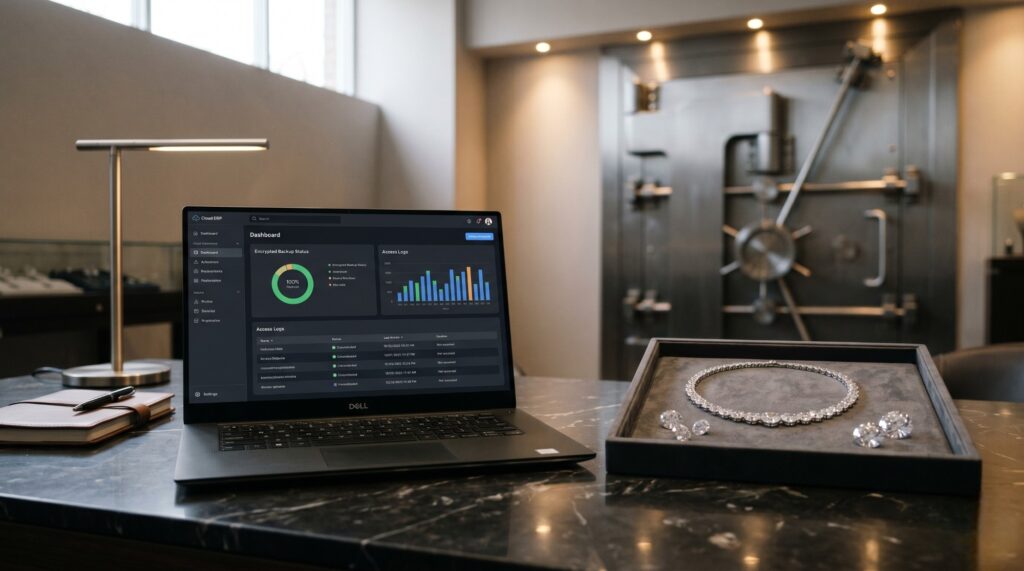
In the high-stakes world of fine jewelry and diamonds, physical security has always been a paramount concern. Store owners invest heavily in biometric safes, armed transport, shatterproof glass, and high-definition surveillance systems. However, as the retail industry undergoes a rapid digital transformation, the concept of the “vault” has fundamentally changed. Today, a jewelry brand’s most valuable asset is not just the diamonds in the display case, but the digital data stored on its servers. Customer purchase histories, ring sizes, anniversary dates, high-net-worth individual (HNWI) profiles, unreleased custom CAD designs, and precise wholesale margin calculations are highly lucrative targets for modern cybercriminals. A physical robbery might result in the loss of a few pieces of inventory, covered by insurance. A digital data breach, however, can result in the catastrophic loss of client trust, severe regulatory fines, and irreparable damage to the brand’s reputation. As jewelers transition from outdated manual ledgers to sophisticated, centralized digital platforms, prioritizing Jewelry Data Security is no longer optional. Implementing a modern Cloud ERP system is the most effective way to secure your digital assets. This comprehensive guide explores the anatomy of digital threats in the jewelry sector and how advanced encryption, strict user permissions, and automated backups act as an impenetrable digital fortress for your business. 1. Understanding Data Leak Risks in High-Value Retail Before you can defend your business, you must understand the nature of the threat. The jewelry sector is a unique target for cyberattacks because of the immense concentration of wealth it represents, both in physical inventory and in the financial profiles of its clientele. The True Cost of a Data Breach When a hacker infiltrates a standard retail store, they might acquire credit card numbers. When they infiltrate a high-end diamond boutique, they acquire a roadmap to the city’s wealthiest individuals. Hackers can leverage client purchase histories to execute highly targeted phishing campaigns, or worse, use the data to facilitate physical robberies at clients’ homes by knowing exactly what high-value items they recently purchased. The financial fallout for the jeweler is devastating. Beyond the immediate loss of operational capabilities, regulatory bodies heavily penalize businesses that fail to protect consumer data. In the Middle East, compliance with stringent data protection frameworks is mandatory. A breach can result in massive fines, legal settlements, and the loss of merchant processing privileges. Ultimately, the loss of reputation is the most expensive consequence; a VIP client who loses trust in your discretion will simply take their business to a competitor. Ransomware and the “Digital Hostage” Scenario One of the most pervasive threats to Cloud ERP systems and retail technology is ransomware. In a ransomware attack, malicious software encrypts your entire database—locking you out of your inventory system, your point-of-sale (POS), and your client records. The hackers then demand a massive financial ransom in exchange for the decryption key. For a jewelry store, downtime is incredibly expensive. If a store cannot access its pricing matrix, verify inventory, or process secure payments during a busy holiday season, the business grinds to a halt. Small vulnerabilities, such as an employee clicking on a phishing email disguised as a vendor invoice, can introduce this malware into an unprotected network. Insider Threats and the “Slow Leak” Not all threats come from shadowy hackers halfway across the world. Often, the most dangerous risks are internal. This is particularly relevant in the jewelry trade, where margins, supplier contacts, and VIP lists are highly guarded secrets. An insider threat could be a malicious employee attempting to steal client lists before leaving to start a competing business, or it could be a negligent employee accidentally emailing an unencrypted spreadsheet of financial data to the wrong person. Protecting your business requires a holistic approach that defends against both external cyber syndicates and internal vulnerabilities. The integration of physical PropTech (Property Technology)—such as RFID inventory scanners and smart cameras—with your digital ERP system creates a unified security perimeter that monitors both the physical and digital movement of your assets. For modern jewelers looking to increase profitability, we highly recommend reading about RFID Jewelry Inventory Tracking. 2. The Power of Cloud Encryption: Your Digital Vault Historically, jewelers preferred on-premise servers, believing that if they could physically see the blinking lights of the server in their back office, the data was safe. In reality, on-premise servers are highly vulnerable to localized disasters (fires, floods), physical theft, and sophisticated cyberattacks unless maintained by a dedicated, full-time cybersecurity team. The modern standard for Jewelry Data Security is the cloud. By migrating to a Cloud ERP system, jewelers outsource the heavy lifting of cybersecurity to dedicated experts who operate in world-class, heavily guarded data centers. End-to-End Encryption Explained The cornerstone of cloud security is encryption. Encryption scrambles your readable data (plaintext) into an unreadable format (ciphertext) using complex cryptographic algorithms. Even if a hacker manages to intercept the data, it appears as absolute gibberish without the specific decryption key. A robust ERP system utilizes encryption in two critical phases: Secure API Integrations and Tax Compliance A modern jewelry business does not operate in isolation; it must communicate with external platforms, from global diamond exchanges to local tax authorities. How this communication is handled is a massive security factor. For example, jewelers operating in Saudi Arabia are required to integrate their billing systems with the Zakat, Tax, and Customs Authority (ZATCA) for electronic invoicing. A poorly designed integration can act as a backdoor for hackers to enter your core financial system. Utilizing a system designed for encrypted e-invoice issuance and secure compliance ensures that the data sent to the government is heavily encrypted and authenticated via cryptographic stamping, fulfilling legal requirements without exposing your internal ERP architecture. By relying on secure cloud hosting and customized solutions, you ensure that your digital infrastructure is monitored 24/7 by dedicated security professionals, utilizing AI-driven threat detection to identify and neutralize cyberattacks before they ever reach your store’s network. 3. Staff Permissions and Role-Based Access Control The most robust encryption in the world is useless if you

Read more
Silver Wholesale ERP

Managing Silver Wholesale Purchasing & Landed Costs

The wholesale silver industry is a fast-paced, high-volume environment where margins are tight, and market variables are in constant motion. Unlike retail, where the focus lies heavily on consumer marketing and visual merchandising, the B2B wholesale sector is an intense logistical operation. Success in this field relies entirely on mastering the supply chain, executing precise financial calculations, and fostering reliable international partnerships. To achieve sustainable growth, modern distributors are moving away from fragmented spreadsheets and adopting a dedicated Silver Wholesale ERP to centralize their operations. Operating a successful wholesale business requires executing bulk purchases across international borders while protecting profit margins from invisible operational leaks. The journey of silver from a manufacturer’s facility to your regional distribution warehouse is fraught with fluctuating exchange rates, complex shipping logistics, and varying regulatory fees. Without a unified system to track these variables in real-time, businesses risk selling their inventory at a loss. By leveraging advanced business intelligence and precise calculations, distributors can transform their purchasing departments from administrative overhead into strategic, profit-driving engines. 1. The Complexities of the Global Supply Chain Importing silver on a commercial scale involves navigating a labyrinth of international trade mechanics. Silver jewelry and bullion are primarily manufactured in global hubs such as Italy, Turkey, Thailand, and India. Sourcing products from these diverse regions introduces a web of logistical and financial complexities that require meticulous oversight. Managing International Logistics The physical movement of precious metals is arguably the most vulnerable stage of the supply chain. High-value freight requires specialized handling, secure armored transport, and comprehensive maritime or aviation insurance. A delay at a major transit hub can disrupt your entire B2B wholesale distribution schedule, leaving your retail clients without the stock they need for peak seasonal sales. A centralized management platform provides end-to-end visibility over these logistics. By tracking shipments in real-time, wholesale managers can identify potential bottlenecks—such as port congestions or flight rerouting—before they escalate into critical delays. This proactive approach ensures that your inventory pipeline remains fluid, allowing you to meet delivery commitments and maintain the trust of your retail partners. Navigating Regional Customs and Trade Regulations For wholesalers importing into major regional hubs like Saudi Arabia, the UAE, or Egypt, dealing with local customs authorities is a critical operational hurdle. Each jurisdiction enforces specific regulations regarding the purity certification of precious metals, hallmark stamping, and required import documentation. A minor discrepancy in a commercial invoice or a missing certificate of origin can result in severe shipment delays or hefty financial penalties. A specialized system ensures that all necessary documentation is generated the first time correctly. By maintaining strict compliance with local import laws, businesses avoid the expensive nightmare of having their capital tied up in a customs warehouse. Seamless integration with regional regulatory portals ensures that your operations remain both legally sound and highly efficient. Mitigating Currency Exchange Volatility Silver is universally traded in US Dollars, yet the actual manufacturing costs, labor, and local shipping fees are often negotiated in the supplier’s local currency—whether that is the Euro, the Turkish Lira, or the Indian Rupee. This constant exposure to foreign exchange rates creates a significant financial risk. If a wholesaler issues purchase orders when a currency is highly favorable but fails to finalize payment until the exchange rate shifts against them, the projected profit margin can vanish overnight. Advanced Daysum ERP solutions allow financial teams to track multi-currency transactions in real-time. By locking in rates or utilizing hedging strategies within the platform, businesses can shield their capital from unpredictable global economic shifts and maintain stable financial projections. 2. Mastering the Landed Cost Calculation The most common and catastrophic error in the wholesale trade is confusing the “factory price” with the actual cost of the product. The price negotiated with the overseas manufacturer is merely the starting point. To determine true profitability, a business must accurately perform a comprehensive import cost calculation. Anatomy of the True Cost The “Landed Cost” represents the absolute total amount of money spent to get a single piece of silver from the factory floor to your warehouse shelf. Understanding this metric is non-negotiable. It encompasses several distinct layers of expenditure: Automating the Apportionment Process Attempting to calculate the landed cost manually for a shipment containing thousands of individual silver rings, chains, and bracelets is a logistical nightmare. How do you divide a $1,500 shipping bill and a $500 customs fee accurately among items of vastly different weights and values? A Silver Wholesale ERP automates this complex math through a process called cost apportionment. The system instantly distributes the total overhead expenses across every individual item in the shipment, typically based on weight or pure material value. This ensures that a heavy, high-value silver necklace absorbs its correct share of the freight cost, rather than artificially inflating the cost of lighter items. Financial Accuracy and Auditing When landed costs are calculated correctly, the resulting data must flow seamlessly into the company’s general ledger. Utilizing automated journal entries, the system updates the inventory valuation and accounts payable simultaneously. This level of financial synchronization guarantees that the balance sheet reflects the true value of the company’s assets, providing stakeholders and tax authorities with an impeccably accurate financial narrative. Optimizing your precious metals inventory becomes seamless when you leverage ROI Jewelry ERP Software Calculator. 3. Strategic Vendor Management and Evaluations A wholesale business is entirely dependent on the quality and reliability of its supplier network. Sourcing silver is not simply about finding the lowest cost per gram; it is about building sustainable partnerships that guarantee consistent quality, timely deliveries, and transparent communication. Establishing Vendor KPIs Vendor management requires a data-driven approach rather than relying on historical relationships or gut feelings. Modern procurement teams evaluate their suppliers against strict Key Performance Indicators (KPIs). These metrics typically include the percentage of on-time deliveries, the defect rate of the received goods, the flexibility of payment terms, and the vendor’s responsiveness to design modifications. By centralizing all vendor interactions, businesses can generate detailed performance reports. If a supplier in

Read more
Omnichannel Jewelry ERP

Connecting Your Physical Jewelry Store to E-Commerce: The Omnichannel Approach

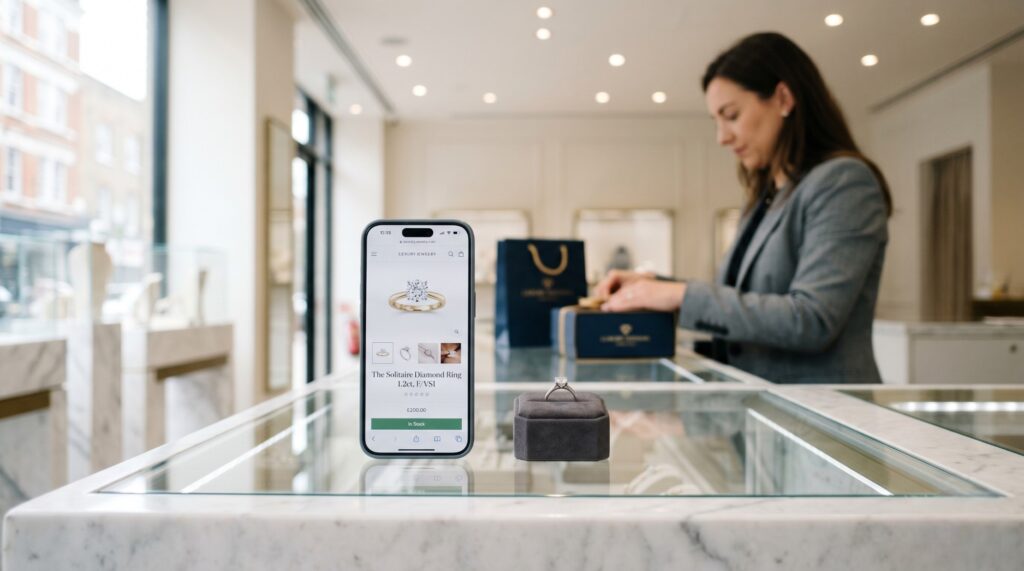
The jewelry industry has historically relied on the physical retail experience. The brilliance of a diamond under display lights, the weight of a gold necklace, and the personalized service of an expert jeweler are tangible elements that build trust and drive sales. However, the modern consumer demands more than just a beautiful storefront; they expect the convenience of browsing, purchasing, and interacting with your brand online. To thrive in this highly competitive market, jewelers must bridge the gap between their brick-and-mortar locations and their digital storefronts. The solution lies in adopting an Omnichannel Jewelry ERP—a comprehensive management system that unifies your physical and digital operations. By seamlessly connecting your physical jewelry store to your e-commerce platform, you can effectively double your retail revenue, eliminate inventory discrepancies, and provide a world-class customer journey. From high-ticket diamond transactions to high-volume silver sales, an omnichannel strategy ensures that your business is always open, accessible, and perfectly synchronized. 1. The Growing Importance of Online Sales in Jewelry The transition from traditional retail to digital commerce is no longer a futuristic concept; it is the current reality. While the physical store remains the heart of the jewelry business, online sales have become its primary growth engine. Shifting Consumer Behavior and Digital Sales Today’s consumers begin their purchasing journey on their smartphones. Whether they are researching engagement ring styles, comparing silver bracelet prices, or looking for a trusted local jeweler, their first point of contact is digital. By establishing a robust online presence, you capture this top-of-funnel traffic. Digital sales in the jewelry sector have surged, demonstrating that customers are entirely comfortable making significant financial investments via online platforms, provided the brand presents itself professionally and securely. The Rise of Diamond E-commerce Historically, industry experts believed that high-value items like diamonds would never sell well online because customers needed to inspect the stones in person. The explosion of Diamond ecommerce has shattered this myth. With the advent of high-definition 360-degree videos, digital GIA certificates, and secure, insured shipping, customers are confidently purchasing premium diamonds without ever setting foot in a store. If your physical inventory is not visible to the online market, you are artificially limiting your revenue potential and missing out on an entirely new demographic of buyers. 2. Real-Time Stock Sync: The Heart of Omnichannel The most significant challenge jewelers face when expanding online is inventory management. Jewelry inventory is uniquely complex; you are tracking individual pieces, varying carat weights, specific ring sizes, and fluctuating metal prices. Managing two separate inventories—one for the store and one for the website—is a recipe for disaster. Avoiding the “Out of Stock” Nightmare Imagine a scenario where a customer walks into your boutique and purchases a unique, one-of-a-kind sapphire ring. Ten minutes later, an online shopper adds that same ring to their cart and completes the checkout process. Without real-time synchronization, you now have to cancel the online order, process a refund, and apologize to a highly disappointed customer, potentially ruining your brand’s reputation. An Omnichannel Jewelry ERP prevents this by maintaining a single, centralized database. The moment an item is sold in-store, it is instantly removed from your e-commerce platform. Implementing specialized jewelry management software ensures that your physical stock and digital catalog are always a perfect mirror reflection of each other. Silver Stock Sync and High-Volume Management While diamond inventory requires precise tracking of unique items, silver jewelry presents a different challenge: high volume and rapid turnover. Silver stock sync is critical because these accessible items often move fast, both online and in-store. An automated system tracks bulk inventory, alerting you when specific silver chains or popular earring designs fall below optimal stock levels. This allows your purchasing department to reorder proactively, ensuring you never miss a sale due to an empty display case or an “Out of Stock” badge on your website. Automated Shopify Sync and Zid Integration Modern jewelry ERPs are designed to plug directly into the world’s leading e-commerce platforms. Whether you use global giants or regional favorites, the connection must be flawless. A direct Shopify sync allows you to push new inventory, update high-resolution images, and adjust pricing instantly across your global storefront. For businesses operating in the Middle East, connecting with local platforms like Zid or Salla is equally vital. By utilizing seamless ERP integrations, you can manage your local and international digital sales from the same dashboard you use to run your physical point-of-sale, dramatically reducing administrative workload and the risk of human error. 3. Handling Returns and Exchanges Across Channels A true omnichannel approach is not just about selling; it is about providing flexible, customer-centric post-purchase support. The way you handle returns and exchanges can either cement a customer’s loyalty or drive them to your competitors. Bridging the Gap: Buy Online, Return In-Store (BORIS) Consumers love the convenience of online shopping, but they often prefer the security of handling returns in person. The “Buy Online, Return In-Store” (BORIS) model is a massive competitive advantage. If a customer buys a necklace online but decides it isn’t the right length, allowing them to walk into your physical store to exchange it creates a seamless transition between your digital and physical presence. An Omnichannel Jewelry ERP handles the complex backend logistics of this transaction smoothly. When the item is returned in-store, the system instantly updates the global inventory, making the piece available for sale again, while adjusting the financial ledgers to account for the online refund or the in-store exchange. Online Payments, Refunds, and Compliance Managing Online payments requires absolute security and flawless accounting. When a customer pays via a digital gateway, the transaction must be instantly recorded in your central financial system. In regions with strict tax regulations, such as Saudi Arabia, these digital transactions must also comply with local laws. Integrating your e-commerce platform with your financial software ensures that every online sale automatically generates ZATCA-compliant electronic invoicing. This means that whether a customer buys a diamond online or a silver ring in-store, the tax data is uniform, accurate,

Read more
Jewelry Profit Analytics

Which is More Profitable: Diamonds or Silver Jewelry?

Store owners and retail executives constantly face a fundamental question regarding capital allocation: where should the purchasing budget go next quarter? The visual glamour of a showroom often masks the underlying financial realities of the products sitting inside the display cases. When comparing the core categories, the choice usually comes down to high-value items versus high-volume items. Answering this question accurately is impossible without empirical data. Relying on gut feeling or observing which display case looks emptier leads to catastrophic purchasing errors. A specialized software ecosystem, specifically a Daysum ERP equipped with Jewelry Profit Analytics, transforms raw transaction logs into actionable insights. This guide dissects the economic realities of diamond vs silver profits, explains how to read complex retail data, and provides a clear framework for making data-backed purchasing choices. Margin vs Volume: The Economics of the Showroom To understand profitability, a store owner must separate the concept of “revenue” from “profit.” Selling a single item for 50,000 SAR is excellent for top-line revenue, but if the wholesale cost was 45,000 SAR, the actual cash injected into the business is minimal compared to the capital risked. The Diamond Model: High Margin, Low Velocity Diamonds represent the traditional pinnacle of retail profitability. The economics of selling GIA-certified stones and high-end bridal sets rely on securing massive profit margins on individual transactions. The Silver Model: Low Margin, High Velocity Silver operates on the opposite end of the economic spectrum. The intrinsic metal value is low, and the retail price points are accessible to almost every demographic. Ultimately, the answer to “which is more profitable” depends on the store’s location, target demographic, and ability to manage cash flow. Forty silver rings yielding an 80 SAR profit each generate 3,200 SAR in a weekend. If the diamond ring yielding 3,200 SAR takes three months to sell, the silver is technically providing a faster, more reliable return on investment (ROI). Table: Comparing Profit Economics Economic Factor Diamond Jewelry Silver Jewelry Initial Capital Required Very High Low to Moderate Gross Margin Per Unit High (Thousands of SAR) Low (Tens or Hundreds of SAR) Inventory Turnover Rate Slow (Months to Years) Rapid (Days to Weeks) Primary Purchase Driver Emotional milestones, investment. Fashion trends, impulse, casual gifting. Risk of Dead Capital High (Capital frozen in slow items). Low (Items can be melted or heavily discounted). Reading BI Dashboards for Accurate Retail Reporting You cannot manage what you do not measure. Generic accounting software groups all sales into a single “revenue” bucket, making it impossible to separate diamond vs silver profits. Daysum utilizes Business Intelligence (BI) dashboards specifically engineered for precious metals and stones. The Anatomy of a Jewelry BI Dashboard When a retail manager opens the Daysum analytics module, they are presented with a visual breakdown of the company’s financial health. Instead of staring at endless rows in an Excel sheet, management uses these visual indicators to spot trends instantly. If the dashboard shows diamond margins dropping while silver volume spikes, the executive team knows exactly where the market is shifting. Identifying Top Items and Analyzing Sales Profitability is not just about the broad category; it is about the specific SKUs within that category. A rigorous sales analysis executed through your ERP reveals the hidden winners and losers on your showroom floor. The 80/20 Rule in Jewelry Retail In most stores, the Pareto Principle applies: 80% of the profit comes from 20% of the inventory. The Daysum system identifies this top 20% automatically. By rigorously separating the top items from the stagnant items, a store owner stops bleeding capital into inventory that the local market actively rejects. Making Financial Decisions and Purchasing Budgets The ultimate goal of tracking Jewelry Profit Analytics is to dictate the future actions of the procurement team. Every riyal spent on wholesale inventory must be justified by data. Directing the Cash Flow When planning the purchasing budget for the next fiscal quarter, management uses the Daysum BI reports to allocate funds precisely. A financial decision in the jewelry business should never be a guess. By deploying an advanced ERP like Daysum, Saudi retailers gain complete visibility into their operations, allowing them to balance the rapid cash generation of silver with the heavy margin payouts of diamonds seamlessly. Managing your workforce efficiently starts with adopting modern solutions like Self Service Systems Future In Attendance Management In Saudi Arabia. Frequently Asked Questions (FAQ) Can the analytics software calculate profit on gold pieces where the daily market rate fluctuates? Yes. The Daysum ERP logs the exact metal rate on the specific day an item was purchased from the vendor. When the item is sold months later, the system calculates the profit margin by comparing the final retail selling price against that locked-in historical cost, ensuring accurate profitability metrics despite daily gold rate changes. Does the system factor in operational costs, like staff commissions, when calculating profit? Absolutely. A robust retail reporting system calculates both Gross Profit (Revenue minus Wholesale Cost) and Net Operating Profit. The system can be configured to automatically deduct specific staff commissions, ZATCA VAT obligations, and credit card processing fees to show the true, final profit of every transaction. How do we analyze the profitability of a custom piece manufactured in our own workshop? For custom or bespoke items, the Daysum workshop module acts as the vendor. The system calculates the exact weight of the raw gold used, the cost of the loose stones, and the hourly labor rate of the goldsmith. It aggregates these into a total “Manufacturing Cost,” which is then compared against the customer’s final invoice to determine the exact profit margin of the bespoke piece. Can the BI dashboard tell us which specific vendors provide the most profitable inventory? Yes. The software features a “Vendor Performance” module. It cross-references the items supplied by a specific wholesaler with how fast those items sell and the margin they generate. This gives your purchasing manager immense leverage during wholesale price negotiations. Is it possible to export these analytics reports for our external

Read more
Silver Inventory Management

Strategies to Accelerate Inventory Turnover in Silver Retail

The silver retail sector operates on a fundamentally different dynamic than high-end diamonds or heavy gold bullion. Silver jewelry sales are heavily driven by fashion trends, seasonal collections, and impulse buying. Because the raw material cost is lower, retailers can afford to stock a massive variety of intricate designs, encompassing thousands of unique SKUs. However, this massive variety is a double-edged sword. While it attracts a diverse customer base, it also creates severe logistical challenges. A store with 10,000 unique silver rings, pendants, and bracelets can easily fall into “inventory bloat.” When pieces sit in the display case for six, nine, or twelve months without moving, they freeze the company’s working capital. Accelerating turnover—the rate at which inventory is sold and replaced—is the single most important metric for profitability in this sector. Implementing robust Silver Inventory Management powered by the Daysum ERP system allows retailers to transform static display cases into highly liquid cash flow engines. Identifying and Liquidating Dead Stock You cannot sell what customers do not want, and hoping a faded trend will suddenly return is not a viable business strategy. The first step to accelerating turnover is identifying the “dead” inventory that is occupying valuable physical and financial space. Executing Dead Stock Analysis Without proper software, finding slow-moving items requires physically picking through display trays. Daysum automates dead stock analysis through its central dashboard. The Liquidation Protocol Once the dead stock is identified, the retailer must ruthlessly liquidate it to free up cash flow. Accelerating Sales with Bundling Offers One of the most effective strategies to increase both turnover and the average transaction value is bundling. Bundling promotions group multiple items together at a slightly reduced combined price, compelling the customer to buy more than they initially intended. How to Structure Silver Bundles System Configuration for Bundles Generic cash registers struggle with bundles, often requiring cashiers to manually override prices, which ruins margin tracking. The Daysum Silver Inventory Management system handles this flawlessly. The manager creates a new “Bundle SKU” in the back office and links the individual component SKUs to it. When the cashier scans the Bundle barcode, the system automatically pulls the correct promotional price, prints a compliant ZATCA receipt, and deducts all individual component items from the active inventory simultaneously. Table: Single Item Sales vs. Bundling Strategy Retail Metric Single Item Focus Daysum Bundling Strategy Units Sold per Transaction 1 to 1.5 units. 2 to 4 units. Inventory Turnover Rate Slow; items sell individually. Rapid; multiple SKUs move simultaneously. Dead Stock Clearance Requires deep, profit-destroying discounts. Hidden within the bundle value, preserving margins. Customer Perception Standard retail transaction. High perceived value and “getting a deal.” POS Speed Efficiency During Peak Seasons In the silver trade, a massive percentage of annual revenue is generated during concentrated peak season rushes, such as the weeks leading up to Eid or major national holidays. During these periods, customer foot traffic multiplies exponentially. The Cost of a Slow Checkout If a customer selects a silver bracelet but sees a 15-minute line at the register, there is a high probability they will place the item back on the counter and walk out. Slow checkout speed directly caps your maximum daily revenue. Optimizing the Cloud POS Daysum is engineered for high-volume transactions. Speed efficiency at the point of sale is achieved through several technical advantages: By actively managing dead stock, deploying strategic bundles, and ensuring lightning-fast checkouts, silver retailers can dramatically increase their inventory turnover, generating consistent cash flow and protecting their business from the risks of stagnant capital. For modern jewelers looking to increase profitability, we highly recommend reading about Silver Inventory Turnover POS. How often should we run a dead stock analysis on our silver inventory? For high-volume fashion silver, you should run the Daysum aging report at least once a month. Fashion trends shift rapidly, and catching a slowing trend at 60 days gives you a much better chance of liquidating it profitably than waiting until it has sat for 180 days. Can the system track the performance of a bundle without ruining the profit margins of the individual items? Yes. The Daysum system utilizes proportional cost allocation. If a bundle is sold at a discount, the software automatically distributes that discount proportionally across the cost of goods sold (COGS) for each individual item within the bundle, ensuring your profit reports remain mathematically accurate. If our internet goes down during an Eid rush, will the POS stop working? No. The Daysum POS features an offline mode specifically designed for these scenarios. The register will continue to scan barcodes, apply prices, and print receipts without interruption. Once the internet connection is restored, the local terminal syncs the batch of offline transactions directly to the central cloud server. How do we handle price syncing for silver items that are sold by weight instead of by piece? Daysum manages this globally. The store manager inputs the daily base rate for 925 silver in the morning. When the cashier scans a weight-based item, the POS instantly multiplies the scanned weight by the updated daily rate, ensuring 100% pricing accuracy without manual calculations. Does the system allow us to track sales performance by individual employees? Absolutely. Every transaction processed through the Cloud POS requires the cashier or sales associate to log in with a unique PIN. The dashboard provides detailed reports showing exactly how many items each staff member sold, their average transaction value, and how effectively they pushed bundle promotions. Can we set automatic reorder alerts for our best-selling silver designs? Yes. Within the Silver Inventory Management module, you can establish minimum stock thresholds for specific SKUs or categories. When a popular item sells down to that limit, the system alerts the purchasing manager and can automatically generate a draft purchase order for the relevant vendor.

Read more
Multi-Branch Jewelry ERP

Managing Multiple Jewelry Stores from a Single Dashboard

Growing a jewelry brand from a single boutique into a multi-brpoint-of-sale terminal anch network is the primary goal for many retail operators. However, scaling up introduces exponential operational complexity. What works for one store—managing physical stock, setting daily silver rates, and tracking staff performance—breaks down entirely when applied across three, five, or ten locations scattered across different cities. Expansion without the right technological infrastructure leads to disjointed operations. Customers might find different prices for identical items depending on which branch they visit. Inventory might sit stagnant in a Riyadh showroom while the Jeddah branch loses sales due to stockouts of the exact same piece. Solving these geographical constraints requires a fundamental shift in how the business processes data. Implementing a Multi-Branch Jewelry ERP like Daysum transforms fragmented retail outposts into a unified, synchronized network. This guide details the operational mechanics of multi-store management, focusing on data centralization, pricing control, and secure inventory movement. What Are the Geographical Challenges of Multi-Store Retail? Operating stores in different physical locations creates information silos. When branches act independently rather than as a cohesive brand, the business suffers financial leaks and damages its reputation. The Cost of Information Silos The Role of Centralized Management The solution to geographical separation is centralized management. Cloud software allows the executive team to sit at the corporate headquarters and maintain total control over every retail touchpoint. A platform like Daysum acts as the brain of the operation, ensuring that whether a transaction occurs in Dammam or Mecca, the data instantly updates the master database. This centralization ensures consistent brand identity across the entire retail network. How Do You Execute Real-Time Price Syncing? The jewelry industry operates on fluctuating commodities. Gold, silver, and diamond market rates change daily, and sometimes hourly. Manually calling or emailing store managers to update their local pricing is a dangerous and obsolete practice. Automating the Daily Rate Updates A specialized Multi-Branch Jewelry ERP eliminates the risk of human error in pricing. Protecting Margins with Strict Price Controls Price syncing extends beyond raw metal rates. It controls fixed-price fashion items and diamond pieces. If the head office decides to run an Eid promotion discounting a specific diamond collection by 10%, they program the discount directly into the central ERP. The system activates the discount simultaneously across all branches at the specified start time and deactivates it exactly when the promotion ends. Store managers cannot alter these prices or invent unauthorized discounts, securing the company’s profit margins. Managing Secure Warehouse Transfers Inventory is a jewelry business’s most valuable asset. Moving high-value items between physical locations requires a bulletproof chain of custody. The Jewelry Stock Transfer Workflow Relying on hand-written delivery notes for moving diamonds and gold between stores invites theft and loss. Daysum digitizes and tracks the entire jewelry stock transfer process. Optimizing Inventory Distribution By monitoring real-time sales velocity across the network, the central management team can proactively execute transfers. If a specific diamond ring has sat unsold in Branch C for six months but is frequently requested in Branch D, the system’s analytics engine will suggest a warehouse transfer. Moving existing stock to where the demand is highest maximizes capital efficiency and reduces the need for unnecessary wholesale purchasing. Optimizing your precious metals inventory becomes seamless when you leverage Silver Wholesale Import ERP.  Traditional vs. ERP-Managed Transfers Transfer Aspect Traditional Manual Process Daysum ERP Process Request Method Phone calls or unstructured emails. Standardized digital request logged in the system. Stock Status Items remain active in the origin store until physically received elsewhere. Items are instantly isolated in an “In-Transit” ledger. Discrepancy Detection Discovered days later during a manual audit. Flagged instantly at the moment of receipt scanning. Financial Tracking Difficult to trace which branch holds the capital. Exact capital value tracked per branch in real-time. The Power of the Admin Dashboard To manage a retail empire, executives need actionable data presented clearly and instantly. The admin dashboard is the control center of the Multi-Branch Jewelry ERP. Consolidating Business Intelligence The Daysum dashboard provides a bird’s-eye view of the entire organization while allowing managers to drill down into the microscopic details of a single store. By removing the geographical barriers to information, Daysum allows jewelry retailers to scale aggressively. Owners can open their fifth or fiftieth store knowing the operational mechanics, pricing integrity, and inventory security will seamlessly replicate the success of their very first boutique. Frequently Asked Questions (FAQ) What happens if one branch loses its internet connection? Daysum is designed for retail resilience. If a specific branch loses internet access, the local POS system will continue to function in offline mode, processing sales and generating ZATCA-compliant receipts using the last synced daily metal rate. Once the connection is restored, the local system automatically pushes the queued transaction data up to the central cloud database. Can we set different prices for the same item depending on the city? Yes. While centralized management usually enforces uniform pricing, the system allows for geographical pricing tiers. If you operate a high-end boutique in a luxury mall and a secondary outlet store, you can configure the ERP to apply different markup rules or making charges based on the specific branch profile. How does the system handle a customer returning an item to a different branch? Because the customer database and transaction logs are centralized, a customer can buy a silver necklace in Riyadh and return it in Jeddah. The Jeddah cashier scans the receipt, and the ERP instantly verifies the original purchase, authenticates the ZATCA UUID, and processes the refund or exchange, seamlessly updating the global inventory. Can store managers see the financial data of other branches? No. Daysum features granular user permission controls. A local store manager will only have access to the sales, inventory, and staff data for their specific location. Only regional managers or the executive team at the head office can access the consolidated multi-branch financial reports. Does the system support inter-branch silver shop sync for customer repairs? Yes. If a client drops off

Read more
Jewelry Workshop ERP

Automating Jewelry Workshops: From Intake to Delivery

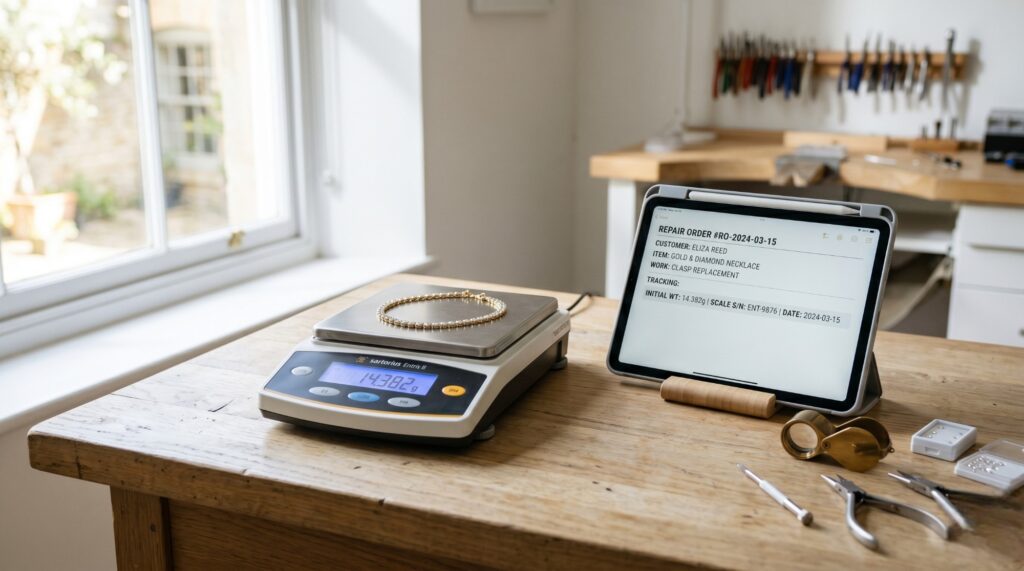
The showroom is where jewelry is sold, but the workshop is where value is created, restored, and sometimes, unfortunately, lost. Whether a Saudi business operates a large-scale manufacturing facility or a small back-room repair bench, handling raw precious metals and customer-owned diamonds carries immense financial and reputational risk. Historically, workshops have operated on trust, memory, and handwritten paper slips. In a modern retail environment, these analog methods are unacceptable. A misplaced repair envelope or a miscalculated gold melt can cost a business thousands of riyals and permanently destroy customer trust. Implementing a specialized Jewelry Workshop ERP through the Daysum platform replaces operational ambiguity with strict digital accountability. This guide details the transformation of workshop processes, focusing on intake security, labor tracking, and the critical financial management of material loss. The Financial Cost of Workshop Chaos Before addressing the solution, management must understand the specific vulnerabilities of a disorganized workshop. Relying on basic point-of-sale systems or paper ledgers creates distinct points of failure. Executing a Secure Digital Intake Process The foundation of goldsmith management begins the moment the customer hands the piece over the counter. Daysum digitizes this exchange, protecting both the client and the business. The “Job Bag” Creation When an item is received, the sales associate opens the jewelry repair software module within Daysum and creates a new “Job Bag” or work order. Tracking Order Status and Goldsmith Routing Once the intake is complete, the physical item is placed in a secure, barcoded envelope that matches the digital work order. The item is then routed to the workshop. Centralized Workflow Management A Jewelry Workshop ERP acts as an air traffic control system for your manufacturing floor. Table: Paper Repair Logs vs. Daysum Workshop ERP Operational Aspect Traditional Paper Envelopes Daysum Workshop ERP Intake Documentation Brief handwritten notes; prone to illegibility. High-res photos, exact digital weights, and signed terms. Order Tracking Requires physically searching the workshop benches. Instant live status visible from any store dashboard. Customer Updates Manual phone calls taking up staff time. Automated SMS/WhatsApp notifications triggered by status changes. Labor Accountability Difficult to track which goldsmith worked on which piece. Digital audit trail logs exactly who performed the work and when. Cost Variations Hard to adjust initial quotes without messy paperwork. Quotes updated dynamically; digital approval requested from client. Metal Loss Calculation and Accountability The most critical financial component of goldsmith management is handling shrinkage. Working with gold and silver naturally produces dust and scrap during filing, cutting, and polishing. Differentiating Allowable Loss from Shrinkage Management must differentiate between acceptable manufacturing loss (metal dust suspended in polishing liquids or ventilation filters) and unacceptable loss (internal theft or carelessness). Daysum automates metal loss calculation by enforcing strict weighing protocols: The software automatically calculates the variance between the issued weight and the returned weight. Management configures an “Allowable Loss Percentage” within the ERP (e.g., allowing a 3% variance for heavy polishing). If a goldsmith returns a job with a 6% metal loss, the system instantly flags the work order for managerial review, preventing continuous, silent financial leaks. By deploying Daysum’s comprehensive workshop module, Saudi jewelers protect their margins, secure their clients’ assets, and transform a historically chaotic back-room operation into a highly efficient, trackable profit center. Implementing the right billing strategy is much easier when you read about Tax Invoice Requirements And How To Apply Them In Saudi Arabia. Frequently Asked Questions (FAQ) Can the system handle custom design orders where the customer provides their own gold to melt? Yes. The intake process has a specific workflow for “Customer Provided Materials.” The system logs the exact weight and purity of the old gold the customer brings in, calculates its current market value, and applies it as a financial credit against the final labor and material cost of the new custom design. How does the workshop module integrate with ZATCA Phase 2 e-invoicing? When a repair is marked “Completed,” and the customer arrives for pickup, the Daysum POS pulls the final billable amount directly from the workshop module. It then generates a ZATCA-compliant invoice that clearly separates the cost of any new materials (e.g., a replacement clasp) from the labor charges, applying the correct VAT to each segment. Does the software track the inventory of repair parts, like clasps, earring backs, and solder? Absolutely. The jewelry repair software treats workshop consumables as standard inventory. When a goldsmith uses a 14K lobster clasp for a repair, they scan its barcode. The system adds the cost of the clasp to the customer’s bill and deducts the item from the workshop’s raw material inventory. Can we set different labor rates for different types of repairs? Yes. Daysum allows you to build a comprehensive service catalog. You can pre-program specific prices for standard services (e.g., Ring Resizing Down = 150 SAR, Chain Soldering = 75 SAR). This speeds up the intake quoting process and prevents cashiers from guessing the cost of repairs. What happens if an item is damaged while in the workshop? Because the system requires high-resolution photos during intake, you have an immutable baseline. If an item is damaged during the repair process, the digital work order provides the exact specifications needed to replace or compensate for the piece accurately, and the system logs the incident against the specific goldsmith’s performance metrics. Can the system handle outsourcing repairs to third-party workshops? Yes. If you do not have an in-house goldsmith and outsource complex repairs, Daysum tracks the “Out of Store” status. The ERP generates a B2B transfer manifest for the third-party workshop, tracking the date it left your store, the expected return date, and the wholesale cost owed to the external contractor.

Read more
Jewelry CRM Software

VIP Client CRM for Luxury Diamond & Jewelry Brands

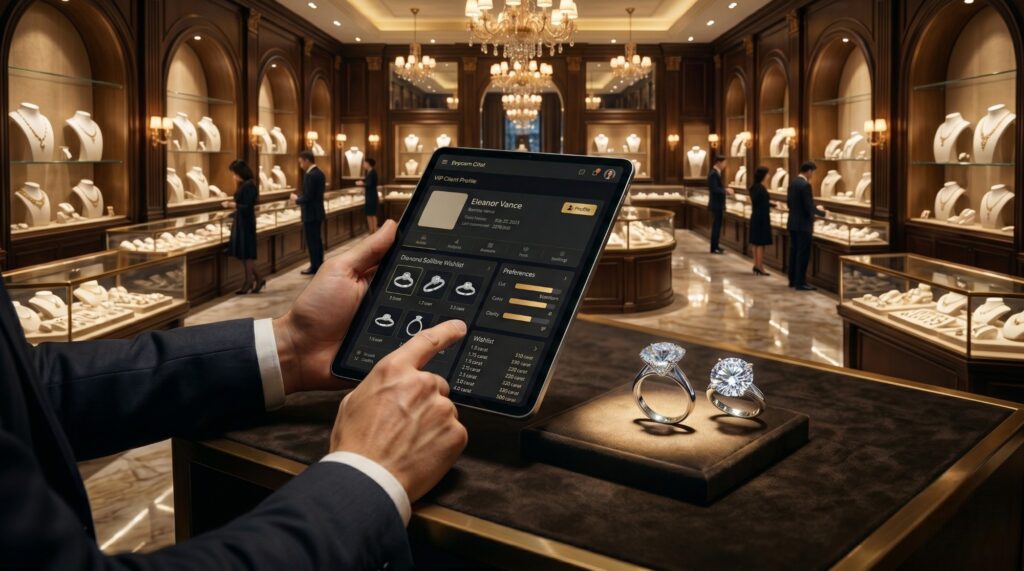
Selling a diamond is fundamentally different from selling any other retail commodity. The transaction is rarely a casual purchase; it is tied to life’s most significant milestones—engagements, anniversaries, birthdays, and major personal achievements. Because these purchases carry intense emotional and financial weight, the modern luxury consumer expects a highly personalized, white-glove customer experience. However, as a jewelry brand scales across multiple locations, relying on the individual memory of a sales associate to recognize a returning buyer becomes a massive operational risk. A high-net-worth individual expects your brand to know their ring size, their preference for platinum over white gold, and the exact carat weight of the diamond they purchased three years ago. Managing this level of detail requires sophisticated technological infrastructure. Integrating a specialized Jewelry CRM Software through the Daysum platform transforms how your sales team interacts with VIP diamond clients. This guide explores the mechanics of client relationship management in the jewelry sector, focusing on data tracking, automated personalization, and actionable strategies for sales growth. Why Do Diamond Brands Need Specialized CRM? Customer Relationship Management (CRM) tools are common in business, but a generic CRM built for software sales or real estate fails in a luxury retail environment. The jewelry industry requires specific data fields and rapid, on-the-floor accessibility. The Problem with Disconnected Data In many traditional jewelry stores, client data is either stored in a physical black book kept by the store manager or scattered across isolated spreadsheets. This creates several critical failure points: The Daysum Advantage A dedicated Jewelry CRM Software solves these issues by centralizing all data into a secure, accessible cloud database. When a client walks into a Daysum-powered boutique in Riyadh or Jeddah, any authorized staff member can securely pull up their profile. The brand owns the relationship, ensuring a consistent, elite experience regardless of which associate is working the floor. Tracking Purchase History and Client DNA The foundation of any successful VIP strategy is accurate data collection. Every interaction a client has with your brand—whether they make a purchase, bring a ring in for polishing, or simply try on a necklace without buying—builds their “Client DNA.” Comprehensive Data Capture When setting up a client profile in the Daysum system, the software prompts the sales associate to capture critical, jewelry-specific details: The “Wishlist” Functionality One of the most powerful tools in tracking purchase history is the digital wishlist. If a VIP client tries on a 3-carat diamond tennis bracelet but decides not to purchase it that day, the associate logs the exact SKU into the client’s CRM wishlist. Months later, when the client’s spouse calls the store looking for a gift recommendation, the staff can instantly suggest the exact bracelet, turning a cold inquiry into a guaranteed, high-ticket sale. Executing Personalized Offers and Targeted Campaigns Data collection is only useful if it drives revenue. The core purpose of Jewelry CRM Software is to shift your marketing from a “spray and pray” approach to precision-guided, targeted marketing. Segmenting the Database Daysum allows management to segment the customer database based on hard data rather than intuition. You can filter your client list by: Crafting the Personalized Campaign Once the database is segmented, you can deploy highly personalized offers. Instead of a generic discount code, imagine generating a targeted list of 50 VIP diamond clients who have previously purchased solitaire engagement rings. The CRM automatically sends a customized WhatsApp message or email inviting them to a private, closed-door viewing of newly imported, matching diamond eternity bands just in time for the upcoming wedding season. This level of personalization makes the client feel valued and drastically increases conversion rates. Table: Mass Marketing vs. CRM-Driven Marketing Marketing Aspect Mass Marketing CRM-Driven Marketing (Daysum) Audience Entire database (everyone gets the same message). Highly segmented lists based on specific purchase history. Messaging Generic (e.g., “Huge Holiday Sale!”). Personalized (e.g., “Matching earrings for your pendant”). Client Perception Annoying, feels like spam. Exclusive, feels like a concierge service. Conversion Rate Typically under 2%. Often exceeds 15% for VIP segments. Margin Protection Relies on deep discounts to drive traffic. Relies on exclusivity; protects high margins. Boosting Retention Through Retail Loyalty Programs Acquiring a new diamond buyer costs significantly more than retaining an existing one. Boosting retention is the fastest path to sustainable profitability. Retail loyalty programs integrated directly into your POS and CRM ensure that clients have a financial incentive to return to your brand rather than shopping at a competitor. Tiered Loyalty Structures Daysum allows jewelers to configure tiered loyalty systems directly tied to spending thresholds. For example: Automated Trigger Alerts The system removes the burden of memory from your sales team. The CRM tracks the calendar and automatically triggers alerts on the associate’s dashboard. Two weeks before a VIP client’s anniversary, the system prompts the associate to make a phone call. Because the associate has the client’s purchase history and wishlist on their screen, the call is not a cold sales pitch; it is a helpful reminder and a tailored recommendation, cementing the client’s loyalty to the brand. Implementing this technology through Daysum ensures that your boutique does not just sell jewelry; it builds generational relationships that guarantee long-term sales growth. Frequently Asked Questions (FAQ)     Is client data secure within the Daysum CRM system? Yes. Daysum utilizes enterprise-grade cloud encryption. Client data is strictly siloed and protected by advanced firewalls. Furthermore, store owners can set strict user permissions, ensuring that junior staff can only view specific details while restricting the ability to export or download the entire VIP client list. How do we convince clients to give us their personal information? In luxury retail, clients are willing to share information if they understand the value exchange. Train your staff to position the CRM as a “concierge profile.” Explain that capturing their ring size, anniversary dates, and preferences allows the store to provide faster service, secure warranties, and assist their spouses with future gift selections. Can the CRM track interactions across multiple store branches? Absolutely. Because Daysum is a cloud-based

Read more
Jewelry ZATCA E-invoicing

ZATCA Phase 2 E-Invoicing for Saudi Jewelry Stores

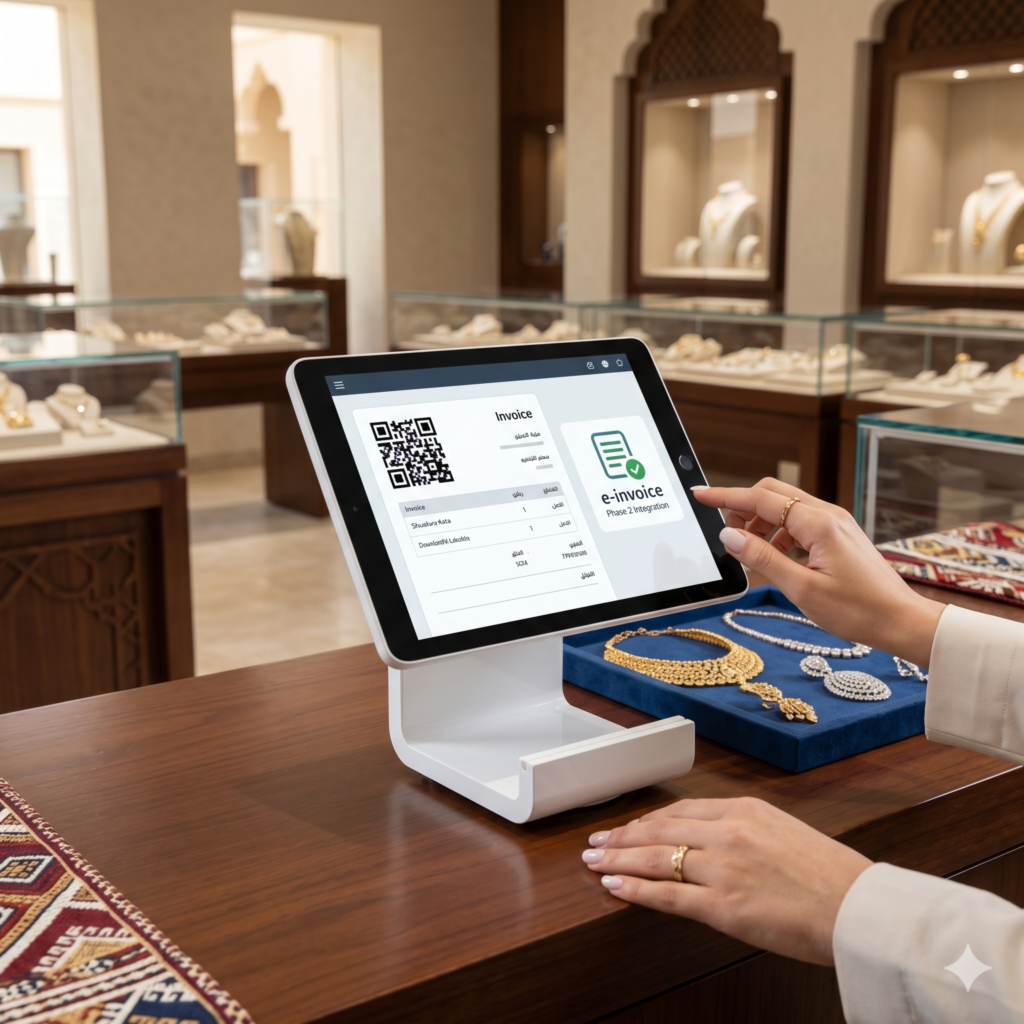
Operating a high-value retail business in Saudi Arabia requires absolute precision in accounting and taxation. The Zakat, Tax and Customs Authority (ZATCA) has fundamentally changed how businesses document their sales, moving from basic paper receipts to cryptographic, real-time digital reporting. This transition is not merely a software update; it is a complete overhaul of the retail checkout process. For the jewelry sector, this transition presents unique technical hurdles. Precious metals and gems are subject to complex pricing mechanisms involving daily market rates and artisanal labor costs. Standard retail software cannot process these variables while maintaining strict compliance with government mandates. Implementing a dedicated Jewelry ZATCA E-invoicing system powered by Daysum ensures that your operations remain fully legal, avoiding heavy fines while streamlining your daily financial reporting. This guide dissects the technical requirements of Phase 2, the exact mechanics of taxing precious metals, and how Daysum automates the entire compliance workflow. What Are the ZATCA Phase 2 Rules? The Saudi tax authority rolled out the e-invoicing initiative in two distinct phases. Phase 1 (Generation) simply required businesses to stop writing manual invoices and use an electronic system to generate a POS receipt featuring a basic QR code. Phase 2 (Integration), however, is significantly more complex and rigorous. The Core Requirements of Integration Under Phase 2, a jewelry store’s point-of-sale system must communicate directly with the Fatoora portal (the central ZATCA server). This integration enforces a strict set of cryptographic rules: Cryptographic Stamp: Every invoice must be digitally stamped using a private security key issued by the government. This proves the invoice originated from your specific, registered Daysum terminal. Previous Invoice Hash: To prevent the deletion or manipulation of past sales, each new invoice must contain a cryptographic “hash” (a unique text string) of the invoice that immediately preceded it. This creates an unbreakable chain of transactions. Real-Time Clearance: For B2B transactions (Tax Invoices), the system must send the XML data to ZATCA for clearance before you can hand the printed invoice to the buyer. ZATCA validates the data and returns it with an official QR code. Reporting of B2C Sales: For standard retail sales to end consumers (Simplified Tax Invoices), the system generates the invoice and QR code immediately for the customer, but it must report the transaction data to the ZATCA portal within 24 hours. The Risks of Non-Compliance Failing to comply with these rules—whether by using unapproved software, attempting to edit an invoice after issuance, or failing to report transactions within the time limit—results in severe consequences. The tax authority imposes escalating financial fines, and repeated violations can lead to the suspension of your commercial registration or the forced closure of your physical store. Splitting Metal vs Labor: The VAT Calculation The most critical challenge for tax compliance jewelry systems is the legal requirement to separate the cost of the raw material from the cost of the labor. When a customer buys a gold or silver piece, they are buying two distinct things combined into one item. The Mechanics of the Split Saudi tax law dictates specific rules for how VAT applies to precious metals versus how it applies to making charges. A standard POS system will apply a flat 15% VAT to the total final price. However, specialized jewelry accounting requires granular separation to protect margins and satisfy auditors. The Raw Metal Value: This is calculated based on the daily global spot price multiplied by the exact weight of the piece. The Making Charges (Labor): This is the fee charged by the craftsman or factory to design and assemble the item. Stone Valuation: If the piece contains diamonds or cubic zirconia, the value of those stones must also be accounted for. A specialized Jewelry ZATCA E-invoicing system like Daysum automatically splits these components internally the moment the cashier scans the barcode. Table: Anatomy of a Compliant Jewelry Invoice Invoice Component Data Required by ZATCA How Daysum Handles It Seller Details Store Name, Address, VAT Number. Hardcoded into the system settings. Item Description Clear definition of goods (e.g., 18K Gold Ring). Pulled instantly from the database upon scanning. Weight & Rate Grams sold and the base metal price applied. Displayed clearly; rate is synced dynamically. Making Charges The specific labor fee applied to the item. Calculated automatically and split from the metal cost. VAT Calculation Exact 15% applied correctly to the taxable amounts. Auto-calculated with zero rounding errors. Cryptographic Data Hash, UUID, Cryptographic Stamp, Phase 2 QR. Generated in milliseconds via direct API link. When the POS receipt is printed, it satisfies both the customer’s need for transparency and the government’s need for exact tax data without requiring the cashier to perform any manual math. Managing Return Policies Under ZATCA In the retail sector, returns and exchanges are unavoidable. However, under ZATCA Phase 2, you cannot simply delete a previous invoice or hand cash back to a customer without proper documentation. Deleting a transaction breaks the cryptographic hash chain and immediately triggers an audit flag on the government portal. The Credit and Debit Note Protocol To handle return policies legally, your Daysum software must utilize electronic Credit Notes and Debit Notes. Credit Notes (Returns): If a customer returns a 10,000 SAR diamond necklace, the system must generate a ZATCA-compliant electronic Credit Note. This document must explicitly reference the original 36-character Unique Universal Identifier (UUID) of the initial sales invoice. The Credit Note reverses the VAT liability legally. Debit Notes (Upcharges): If an error occurred and the customer was undercharged, you must issue a Debit Note referencing the original invoice to collect the remaining balance and record the additional VAT. Daysum automates this. When a cashier processes a return, they simply scan the original receipt. The system automatically pulls the original UUID, generates the correct XML Credit Note, signs it cryptographically, and reports it to the Fatoora portal within the mandated 24-hour window. This ensures your tax filing at the end of the quarter is perfectly balanced. ERP Automation: Securing Your Operations with Daysum Achieving ZATCA integration is not

Read more
RFID Jewelry Inventory

RFID Jewelry Tracking: 100% Accuracy in Minutes

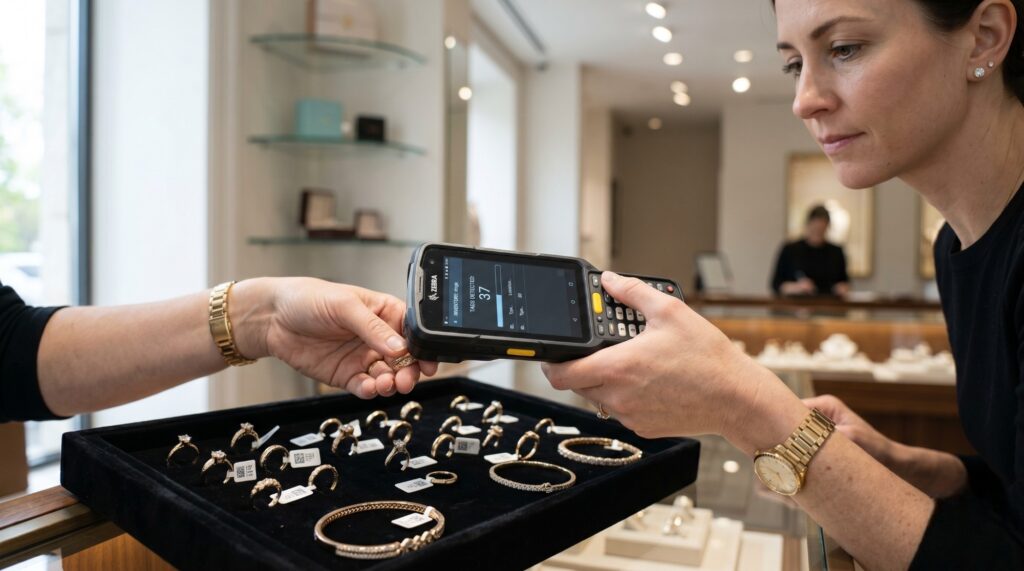
For jewelry retailers managing high-value assets, knowing exactly what is in the display case, what is in the vault, and what has been sold is not just an operational requirement; it is the foundation of business security. Historically, jewelers have relied on manual counting to reconcile physical stock with accounting records. However, as stores scale and transaction volumes increase, these archaic methods become unsustainable. Modern Saudi retail environments demand technological precision. Implementing an RFID Jewelry Inventory system, particularly one integrated directly into a specialized platform like Daysum, fundamentally restructures how a store handles its assets. By combining radio frequency identification with advanced software, store owners can achieve absolute stock visibility, eliminating discrepancies and protecting their capital. This guide explores the mechanics of this technology, the financial impact of adopting it, and how it directly addresses the vulnerabilities of manual operations. The Financial Drain of Manual Audit Pains Before understanding the solution, store owners must quantify the exact cost of the problem. A traditional gold shop audit is a grueling process that damages both employee morale and the store’s bottom line. Time and Labor Exhaustion A typical jewelry boutique may hold anywhere from 2,000 to 10,000 individual pieces. Conducting a manual stock audit requires staff to physically touch every single item, read the tiny tag, and check it off a printed ledger or scan it individually with a basic barcode scanner. Store Closures: To prevent inventory movement during the count, stores are often forced to conduct audits after hours, paying overtime rates, or closing the store entirely for a day, resulting in lost sales. The “Double-Check” Requirement: Because manual counting is inherently flawed by human fatigue, any discrepancy found at the end of the audit requires the staff to start over and recount the entire section to find the missing item. Operational Blind Spots: Because manual audits are so painful and expensive, store managers perform them rarely—perhaps once a quarter or twice a year. This creates massive blind spots; if a piece goes missing in January, management might not discover the loss until the June audit. Limitations of the Standard Barcode Jewelry System While a standard barcode jewelry system is a step up from pen and paper, it still requires line-of-sight. The employee must pick up the ring, find the tag, aim the barcode scanner, and pull the trigger. If a display tray holds 100 rings, the employee must perform this action 100 times. It is slow, tedious, and still prone to omission if two tags are stuck together. Revolutionizing how retailers manage high-value assets requires adopting an advanced RFID Jewelry Inventory Tracking system to replace outdated manual counting methods. This innovative technology enables instant stock audits by scanning hundreds of tagged items in seconds, drastically reducing discrepancies and saving countless administrative hours. By seamlessly integrating these instant scans into a comprehensive ERP platform, business owners can maintain absolute control over their inventory and secure their profit margins. How RFID Works in Precious Metals Retail Radio Frequency Identification (RFID) solves the line-of-sight limitation. It allows a user to scan hundreds of items simultaneously from a distance. For a system managed by Daysum ERP, this technology transforms days of work into seconds. The Technical Mechanics An RFID system consists of three primary components working in unison: The RFID Tag: Each piece of jewelry is fitted with a specialized tag containing a microchip and a tiny antenna. This microchip stores a unique identification number tied directly to the item’s profile in the Daysum database. The RFID Reader: A handheld or fixed device that emits radio waves. When the tag is within range of these waves, the tag’s antenna powers the microchip, which then broadcasts its unique ID back to the reader. The Software Engine: The reader transmits the collected IDs to the central Daysum ERP. The software instantly compares the physical tags detected against the expected inventory list in the database. Executing a Minute-Long Audit With an RFID Jewelry Inventory setup, the audit process changes drastically. A manager simply opens the audit module on their tablet, picks up the handheld RFID reader, and slowly waves it over the display cases. The reader captures up to 500 tags per second. As the manager walks the floor, the screen turns green for verified items. If the database expects 450 items in a specific showcase and the reader only detects 449, the system instantly flags the discrepancy, isolating the missing piece by its exact SKU, description, and last known location. An entire store can be audited with 100% accuracy in under ten minutes, allowing management to perform daily audits without disrupting retail operations. Smart Barcode Design and Tagging Strategy Implementing RFID does not mean abandoning visual identification. The most secure methodology uses a hybrid approach, combining the radio chip with a smart barcode design. Dual-Technology Tags Jewelry tags are notoriously small because they must not obscure the beauty of the piece. A high-quality RFID tag manufactured for precious metals incorporates both technologies: The RFID Inlay: Hidden inside the plastic or paper layer of the tag. The Printed Surface: Displays the human-readable text (Weight, Carat, Price) and a scannable 2D barcode (QR code or DataMatrix). Why the Barcode Remains Necessary Even with RFID handling the bulk stock audit, the physical barcode serves critical functions at the point of sale. Precision at Checkout: When a customer buys a single ring, the cashier uses a standard barcode scanner to process that specific transaction. This prevents the system from accidentally scanning a neighboring ring via RFID during the checkout process. Customer Transparency: The printed barcode and pricing provide the buyer with visual confirmation of the item’s specifications. Backup Protocol: If the RFID microchip is physically crushed or damaged by a careless customer, the printed barcode ensures the item can still be identified and sold without issuing a completely new tag. Daysum provides specialized label printing software that encodes the RFID chip and prints the visual barcode simultaneously in one seamless step during inventory intake. Anti-Theft Benefits and Financial Security

Read more
top
Business Challenges

Digital Transformation

Security

Automation

Gaining Efficiency