Upgrade your financial workflows and experience true e-invoicing business transformation with Daysum. For centuries, the fundamental act of billing a client has remained largely unchanged: an invoice is created, sent, received, manually processed, and eventually paid. However, the world of accounting is currently experiencing a seismic shift. This transformation is not driven by minor software updates, but by a fundamental redesign of how financial data is created, exchanged, and stored. The catalyst for this revolution is electronic invoicing (e-invoicing).
To understand the magnitude of this change, we must first clearly define what e-invoicing actually is. It is a common misconception to equate a simple PDF document sent via email with an e-invoice. A true electronic invoice is the digital generation, exchange, and storage of structured invoice data in specific machine-readable formats, such as XML or UBL. This structured format allows the invoice to be read and processed automatically by the recipient’s accounting software without any human intervention.
This shift from paper-based or unstructured manual workflows to fully automated, interconnected systems is profoundly transformative. It dramatically elevates data accuracy, ensures immediate regulatory compliance, and enables businesses to operate with real-time financial visibility.
Beyond the PDF: Understanding True E-Invoicing
The critical distinction between a digital invoice (like a PDF or Word document) and a true e-invoice lies in the data structure. A PDF is essentially a digital picture of a piece of paper; it requires a human to read it and manually type the information (invoice number, date, total amount, tax) into their accounting system.
In contrast, an e-invoice contains structured data. When a supplier generates an e-invoice, their system packages the financial data into a standardized code. When it arrives at the buyer’s system, the software instantly reads this code and processes the invoice automatically. This eliminates the need for manual data entry, physical archiving, and the lengthy validation processes that have historically bogged down accounts payable departments. It represents seamless, machine-to-machine system integration.
Core Advantages for the Modern Enterprise
Transitioning to this structured digital workflow provides immediate, highly measurable benefits across the entire organization, fundamentally improving the company’s financial health.
Accelerated Processing and Improved Cash Flow
The most immediate benefit is speed. Instant generation and delivery completely eliminate postal delays and internal processing lags. Because the invoice is received and validated automatically by the buyer, the payment cycle is significantly shortened. This directly improves the company’s cash flow by reducing the Days Sales Outstanding (DSO)—the average number of days it takes to collect payment after a sale has been made.
Drastic Cost and Error Reduction
The financial savings associated with e-invoicing are substantial. Companies entirely eliminate the recurring expenses of paper, printing ink, envelopes, and physical mailing costs. Furthermore, physical archiving requires extensive storage space and administrative time, both of which are eliminated by secure digital storage.
Equally important is the reduction of errors. Manual data entry is inherently flawed. A single typo regarding a tax amount or an invoice total can lead to delayed payments, frustrated clients, and costly reconciliation efforts. Automated validation ensures that the data sent is exactly the data received, preventing manual mistakes and saving countless hours of administrative troubleshooting.
Uncompromising Regulatory Compliance
Governments worldwide are increasingly mandating e-invoicing to combat tax evasion and increase economic transparency. Utilizing structured e-invoices ensures that a business meets the strict, specific standards set by national bodies, such as the Zakat, Tax and Customs Authority (ZATCA) in Saudi Arabia or the Federal Tax Authority (FTA) in the UAE.
Redefining the Accounting Profession
The implementation of e-invoicing is not just a technological upgrade; it fundamentally alters the daily responsibilities and strategic value of accounting teams.
From Data Entry to Strategic Analysis
Historically, accountants spent a significant portion of their time performing repetitive, low-value tasks like transcribing data from paper invoices into computer systems. E-invoicing automates this entirely. This crucial shift frees up accounting staff, allowing them to transition from data entry clerks into strategic financial analysts. They can allocate their time to high-value, forward-thinking tasks, such as budgeting, financial forecasting, and deeply analyzing profitability.
Real-Time Reporting and Audit Readiness
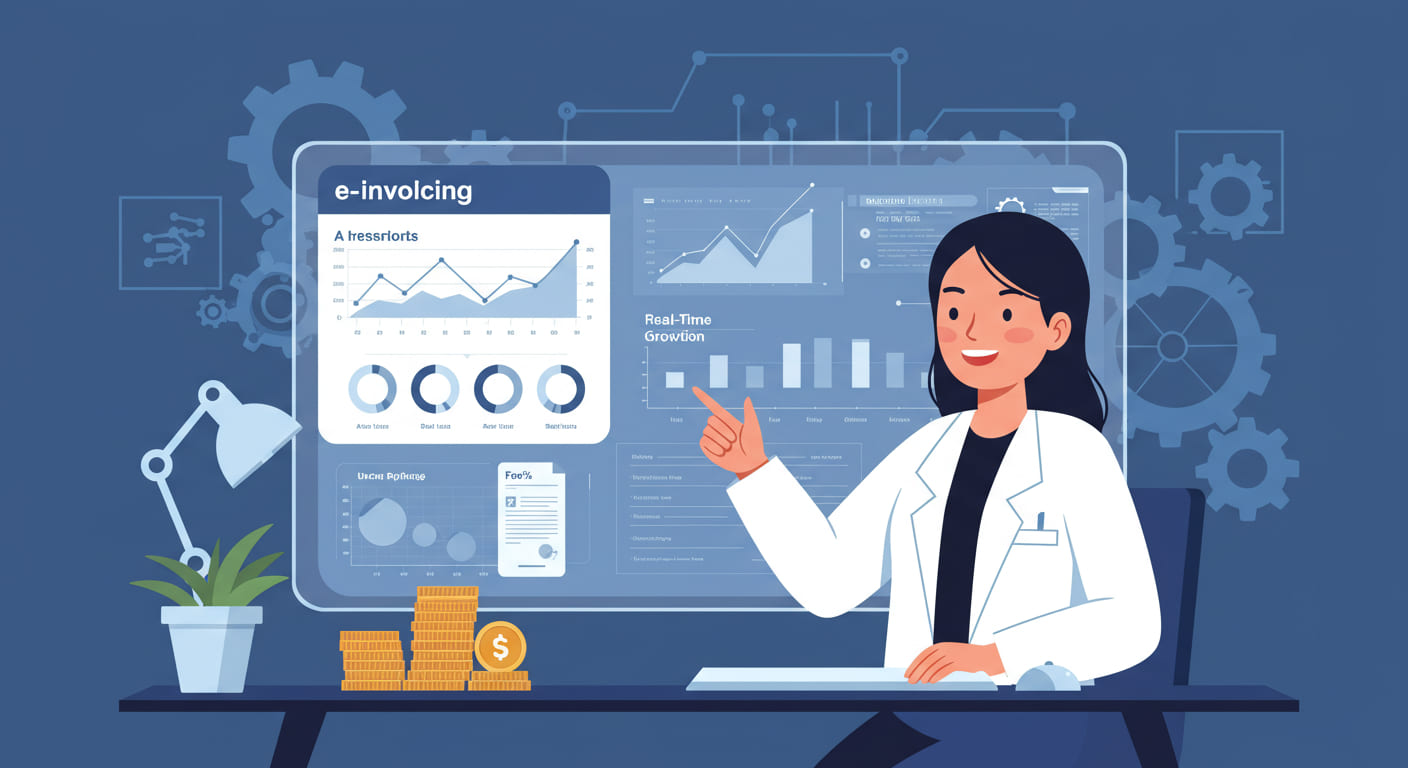
Because invoices are processed instantly, the company’s financial ledgers are always up to date. This provides management with live financial data, enabling instant, highly informed decision-making. Furthermore, the digital trail created by e-invoicing simplifies compliance reviews significantly. When auditors request information, accountants do not need to spend days digging through physical filing cabinets; they can retrieve perfectly categorized, cryptographically secure digital records with a few clicks, ensuring complete audit readiness at all times.
The E-Invoicing Landscape in the Middle East
The Middle East, and specifically the Kingdom of Saudi Arabia, is moving aggressively toward full digitization. E-invoicing is not merely a suggestion; it is a strict government mandate reshaping the regional economy.
Regional adoption is accelerating rapidly, led by strict requirements from authorities like the Saudi Arabia’s ZATCA. In the Saudi context, businesses are required to integrate their billing systems directly with the government’s Fatoora platform. This phased rollout involves strict technical specifications, and failure to comply within the designated timelines results in severe financial penalties and operational restrictions.
The ultimate goal of this government-led initiative is to ensure absolute tax transparency, drastically reduce the shadow economy, and foster a fairer, more competitive business environment. For a deeper look at what is required to navigate these regulations, reviewing the zatca e invoicing phase 2 checklist ksa is an essential step for any commercial entity.
Securing Your Financial Future with Daysum
Navigating this complex transition requires a robust, specialized technological partner. Attempting to build an in-house solution or relying on outdated accounting software is a recipe for compliance failure. This is where Daysum provides a definitive operational advantage.
Daysum offers a comprehensive, ZATCA-compliant automated invoicing solution specifically engineered for the Saudi market. The platform provides real-time integration with your existing accounting and ERP systems, ensuring that your financial data flows flawlessly from the point of sale directly to the government portals. Furthermore, recognizing the diverse workforce and client base within the Kingdom, Daysum offers full multi-language support, ensuring that your localized staff can operate the system efficiently and your clients receive professional, easily understood documentation. Exploring comprehensive e-invoicing solutions is the most secure way to protect your business against regulatory penalties.
Preparing for the New Standard
E-invoicing is no longer a futuristic trend; it is the current, non-negotiable standard of global commerce. It is an essential requirement for maintaining regulatory compliance, driving operational efficiency, and ensuring your business remains competitive in a rapidly modernizing economy. Do not wait for penalties to force your hand. The future of accounting is already here, and it is entirely digital. Secure your operations, empower your accounting team, and ensure your business is fully future-proofed by transitioning to Daysum’s specialized e-invoicing ecosystem today.
Frequently Asked Questions (FAQs)
No. While a PDF is digital, it is unstructured data. ZATCA regulations specifically require structured data formats (like XML) that can be read by government systems. A PDF may be generated as a human-readable copy, but the underlying XML file is the true, legally required e-invoice.
E-invoicing systems create a direct, real-time link between the business's sales data and the national tax authority. Because every invoice must be cleared and cryptographically stamped by the government portal before it is considered valid, it becomes nearly impossible to manipulate sales figures or hide taxable revenue.
If implemented correctly with a robust partner like Daysum, the disruption is minimal. Modern e-invoicing platforms are designed to integrate natively via APIs with your existing accounting or ERP software, running seamlessly in the background without requiring your staff to learn entirely new accounting principles.
For B2C (Business to Consumer) transactions, ZATCA regulations allow for offline generation in emergency situations, provided the system can securely store the data and upload it to the portal immediately once the connection is restored, typically within a 24-hour window.
ZATCA and other regional tax authorities require businesses to retain electronic invoices securely for a minimum of several years (typically 5 to 10 years, depending on the jurisdiction). Cloud-based e-invoicing solutions automatically handle this secure archiving, ensuring you remain compliant without managing physical server space.