The foundation of any luxury diamond business is trust. For decades, this trust has been physically manifested in the form of paper certificates from gemological laboratories, primarily the Gemological Institute of America (GIA). However, managing these physical documents presents a significant operational hurdle for modern jewelry retail operations. Handling high-value items requires absolute precision; a misplaced certificate can instantly devalue a stone or halt a high-ticket sale.
Implementing a robust Diamond POS Saudi Arabia system shifts the paradigm from manual paper shuffling to seamless digital management. By migrating to a specialized point of sale system, diamond retailers can securely link physical inventory to immutable digital records, ensuring every stone’s carat weight, cut, color, and clarity are instantly accessible. This guide breaks down the process of digitizing GIA certificates, resolving inventory discrepancies, and streamlining the checkout process for high-end clientele.
Managing high-value gemstone inventory requires more than standard retail software; it demands a specialized Diamond POS GIA Tracking solution integrated seamlessly into your broader business operations. This advanced digital capability ensures every certified stone is meticulously logged with its unique grading report, cut, clarity, and origin, providing uncompromised transparency at the point of sale. By unifying these intricate details into a centralized platform, jewelry retailers can confidently guarantee authenticity, elevate the luxury customer experience, and secure their high-margin assets. Experience full transparency with our advanced Diamond POS GIA tracking feature for your jewelry store.
What Are the Main Diamond Tracking Challenges?
Running a diamond boutique involves tracking hundreds or thousands of unique items, many of which look identical to the naked eye. Relying on physical documentation and manual ledgers creates several critical vulnerabilities.
- Document Degradation and Loss: Physical GIA certificates are printed on paper. They can be torn, stained, misfiled, or completely lost during transport, store audits, or daily handling. A missing certificate requires shipping the stone back to a laboratory for regrading, incurring shipping costs, grading fees, and weeks of lost sales time.
- Mismatched Inventory: Loose diamonds or identical settings are easily mixed up during customer presentations. Without a fast, digital way to cross-reference the laser inscription on the stone with the certificate at the counter, staff risk selling a stone with the wrong documentation.
- Time-Consuming Audits: Manual stocktakes in a diamond store require verifying both the physical piece of jewelry and its accompanying paperwork. This double-verification process forces stores to close early or pay staff overtime to complete routine audits.
- Data Entry Errors: Manually typing the complex details of a diamond (measurements, fluorescence, symmetry, polish, and custom map inclusions) into a basic spreadsheet or generic POS system guarantees human error. A single mistyped digit in a carat weight can dramatically alter the calculated price and profit margin.
- Customer Friction at Checkout: High-end buyers expect a seamless, sophisticated purchasing experience. Rummaging through filing cabinets to find the correct GIA report while the customer waits tarnishes the luxury experience.
How Do You Link GIA Data to Your ERP?
Solving these challenges requires direct communication between your store’s database and the issuing laboratory. Linking GIA reports to your Enterprise Resource Planning (ERP) system or Diamond POS Saudi Arabia transforms how data enters your ecosystem.
The API Integration Process
Modern GIA tracking software utilizes Application Programming Interfaces (APIs). An API allows your store’s software to communicate directly with the GIA’s secure database. When a new shipment of diamonds arrives, your intake team no longer types out the stone’s specifications.
- Input the Report Number: The staff member scans a barcode or types the GIA report number into the POS system.
- Data Fetching: The system sends a secure request to the GIA servers.
- Automatic Population: Within seconds, the software pulls down the exact specifications of the gemstone—including carat, color, clarity, cut grade, measurements, and polish—and populates your item card.
- Verification: The intake manager verifies the physical stone under a loupe to ensure the laser inscription matches the fetched data, then approves the entry.
This direct link eliminates transcription errors and drastically reduces the time required to log new inventory. It also ensures that the terminology used in your database matches industry standards exactly.
Managing Proprietary Settings and Mixed Pieces
Often, retailers purchase loose stones and set them into proprietary designs. A dedicated Diamond POS allows you to link a specific GIA certificate to a new SKU created for the finished ring or necklace. If the stone is ever unmounted, the software retains the relationship, allowing you to return the loose diamond to your inventory with its digital certificate intact.
Why is Diamond Inventory Automation Critical?
Transitioning from static spreadsheets to automated diamond inventory control fundamentally changes retail operations. In the luxury sector, inventory is not just stock; it is tied capital. Efficient movement and tracking of this capital dictate business survival.
Real-Time Stock Visibility
With automated tracking, every action taken in the store updates the central database instantly. If a diamond is moved from the vault to the display case, or transferred from the Riyadh branch to the Jeddah branch, the system logs the movement, the exact time, and the staff member responsible.
Dynamic Pricing Management
Diamond prices fluctuate based on international markets (like the Rapaport Diamond Report) and local currency exchange rates. An automated system allows management to apply percentage markups based on real-time cost data rather than static purchase prices. If the wholesale cost of a specific carat weight bracket increases, the POS can automatically adjust the retail pricing across the entire network of stores.
Table: Manual vs. Automated Diamond Inventory
|
Feature |
Manual Inventory Management |
Automated Diamond POS System |
|
Data Entry |
Typed manually from physical papers; high error rate. |
Fetched via API directly from GIA; zero transcription errors. |
|
Stock Audits |
Requires matching physical stones to paper files; takes days. |
Completed via barcode or RFID scanning in minutes. |
|
Certificate Retrieval |
Searching through physical filing cabinets at the counter. |
Instant PDF viewing on a tablet or screen at the point of sale. |
|
Pricing Updates |
Recalculated and relabeled one item at a time. |
Bulk updates applied automatically based on global index feeds. |
|
Security Tracking |
Difficult to trace who last handled a specific stone. |
Granular audit logs track every employee interaction with a SKU. |
The Role of a Digital Archive in Retail
The physical GIA certificate is a highly sensitive document, but it does not need to be handled daily. By creating a secure digital archive, retailers can protect the physical assets while keeping the data accessible.
Storing and Retrieving Digital Assets
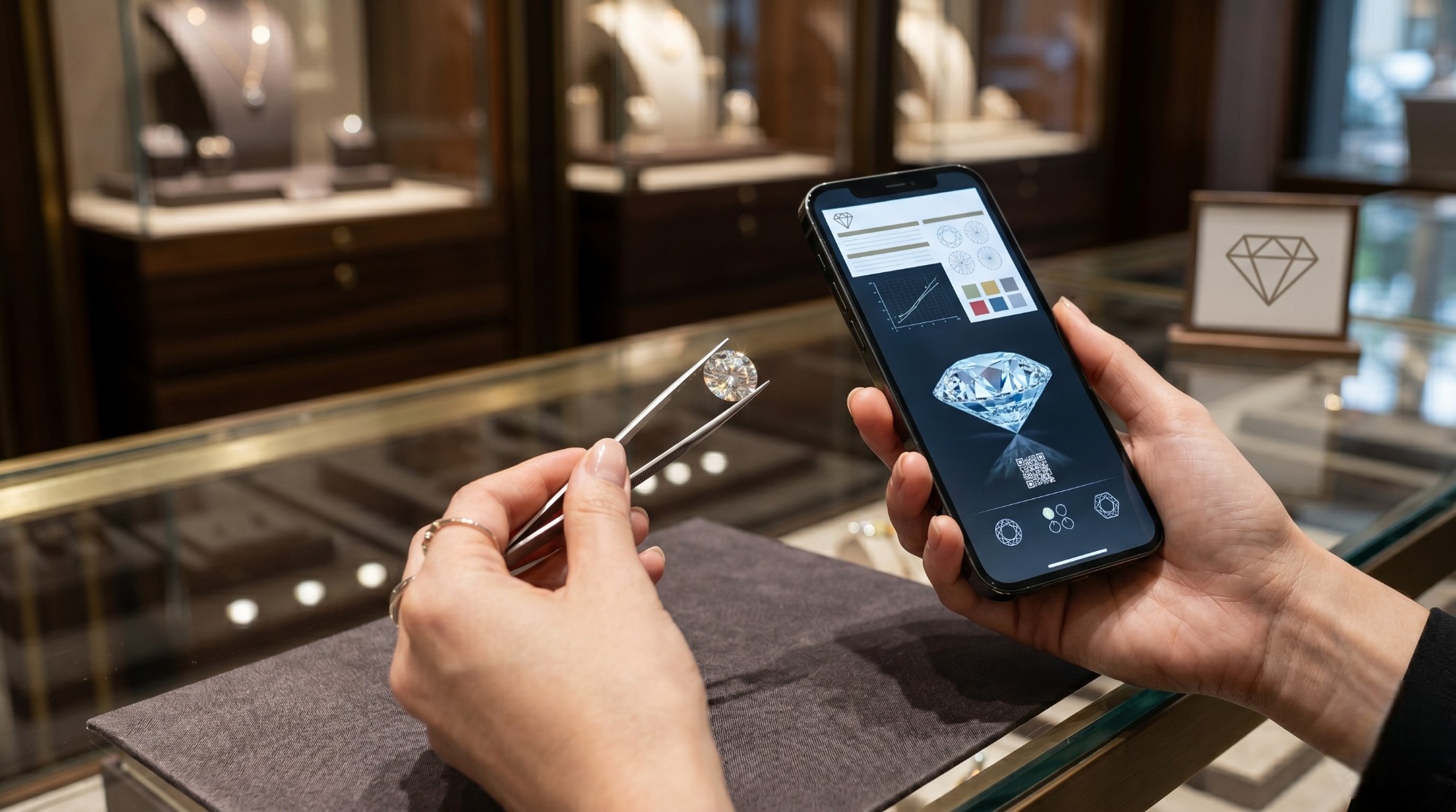
When a GIA certificate is linked to your ERP, the system downloads a high-resolution PDF copy of the grading report. This file is stored in a secure cloud database, forming your digital archive. This means the physical paper can be immediately sealed in a secure, fireproof vault off the shop floor. Sales staff never need to touch the physical paper during a presentation. They simply pull up the digital file on an iPad or high-definition monitor to walk the customer through the stone’s inclusions, proportions, and grading.
Streamlining the Point of Sale
Experience
The modern point of sale is about speed, transparency, and experience. When a customer decides to purchase a piece of jewelry, the checkout process must be flawless.
With a digital archive, the sales associate adds the item to the digital cart. The system automatically attaches the digital GIA certificate to the customer’s profile and the digital receipt. The retailer can instantly email the PDF certificate and the invoice to the client before they even leave the store. The physical certificate is then retrieved from the vault by a manager and securely packaged with the item, untouched and pristine.
This workflow prevents the embarrassing scenario of completing a high-value transaction only to ask the customer to wait twenty minutes while staff search the back room for the correct paperwork. A dedicated diamond module lets your sales team pull up the GIA certificate on the POS screen in seconds, building instant buyer trust on high-ticket pieces. Schedule a walkthrough to see certificate tracking live in a Daysum demo.
Essential Features to Look for in GIA Tracking Software
When selecting a system for your diamond boutique, generic retail software will fail to meet the nuanced needs of gemstones and precious metals. You must seek out specific architectural features built for luxury jewelers.
- Native GIA/IGI API Integration: The system must connect natively to major laboratories without requiring third-party bridging software.
- Granular Search Filtering: Staff must be able to filter the database rapidly by exact parameters (e.g., finding all round cut diamonds between 1.00 and 1.15 carats, with VS1 clarity, D color, and excellent cut).
- High-Resolution Media Storage: The database must support the upload of not just the PDF certificate, but also 360-degree videos of the stone and high-resolution macro photography.
- Strict User Permissions: Store managers must be able to restrict who can edit stone specifications. Sales staff should only have “view” access to prevent accidental data modification.
- Memo and Consignment Tracking: Diamond retail often relies on memo (consignment) goods from wholesalers. The software must distinctly separate owned inventory from memo inventory, applying different accounting and return logic to each.
- ZATCA E-Invoicing Compatibility: For operations in Saudi Arabia, the system must generate cryptographic e-invoices that comply precisely with local tax authority regulations for high-value goods.
Transforming the Jewelry Retail Business
The transition to digital management is not merely an IT upgrade; it is a fundamental shift in business strategy. By eliminating the friction caused by paper management, you reclaim hours of administrative time every week. This time is redirected toward clienteling, building relationships with VIP buyers, and curating better inventory.
A specialized Diamond POS Saudi Arabia secures your data, protects your margins from pricing errors, and presents a highly professional, technologically advanced face to your consumers. In a market where buyers are increasingly educated about diamond specifications, your ability to instantly access, verify, and share those specifications with confidence is a direct competitive advantage.
Frequently Asked Questions (FAQ)
If the laboratory's servers are undergoing maintenance, you can still enter the diamond into your system manually. Once the API connection is restored, you can trigger a refresh to fetch the official PDF and overwrite your manual entry with the verified laboratory data.
Yes. The physical certificate remains an essential document for the end consumer and for resale value. The digital archive is for daily operational efficiency, allowing you to store the physical papers securely in a vault until the exact moment of handover to the buyer.
A robust jewelry retail ERP will include a workshop or job bag module. You can transfer a specific diamond SKU to a "Workshop" location in the system. The digital certificate remains attached to the item, and the system tracks the date it left, the expected return date, and the craftsman responsible.
Specialized software allows you to build a "Parent" SKU (the finished ring) and attach multiple "Child" SKUs (the individual certified diamonds). When the parent item is scanned at the point of sale, the system automatically registers the sale of all associated child stones and updates the inventory accordingly.
Modern cloud-based POS systems utilize enterprise-grade encryption (such as AES-256) and store data on secure servers like AWS or Google Cloud. This is significantly more secure than an on-premise server in the back of your store, which is vulnerable to hardware failure, physical theft, or local damage.
Yes. Once the data is fetched into your inventory automation system, you can generate and print custom jewelry tags. These tags can feature a barcode or QR code. When a customer scans the QR code with their smartphone, it can direct them to a landing page displaying the diamond's specifications and the digital GIA report.
High-end diamond inventory software supports multiple API connections. While GIA is the industry standard, systems designed for international markets also integrate with the International Gemological Institute (IGI) and the Hoge Raad voor Diamant (HRD), allowing you to manage all certified stones through the exact same automated workflow.