
How to Track Production Costs in a Gold Store
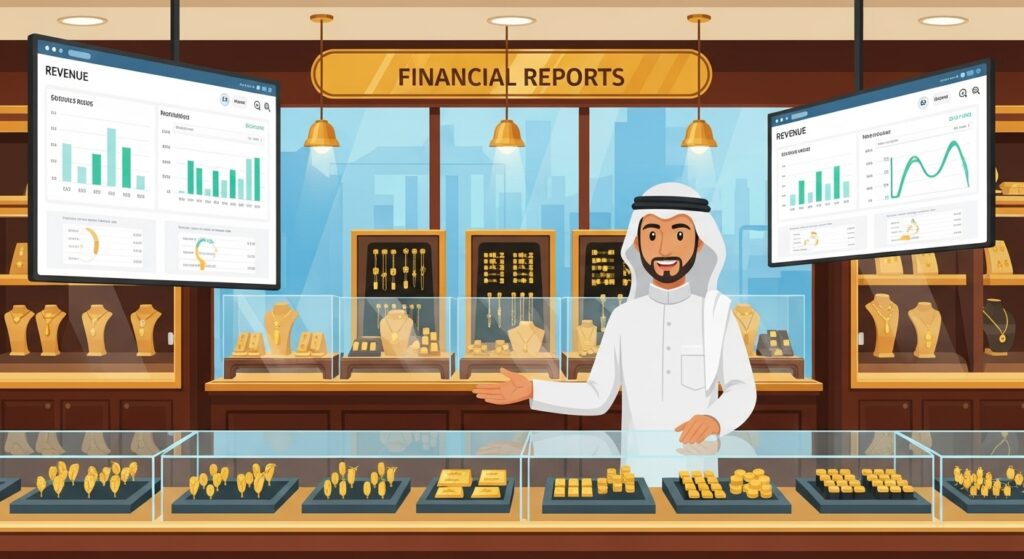
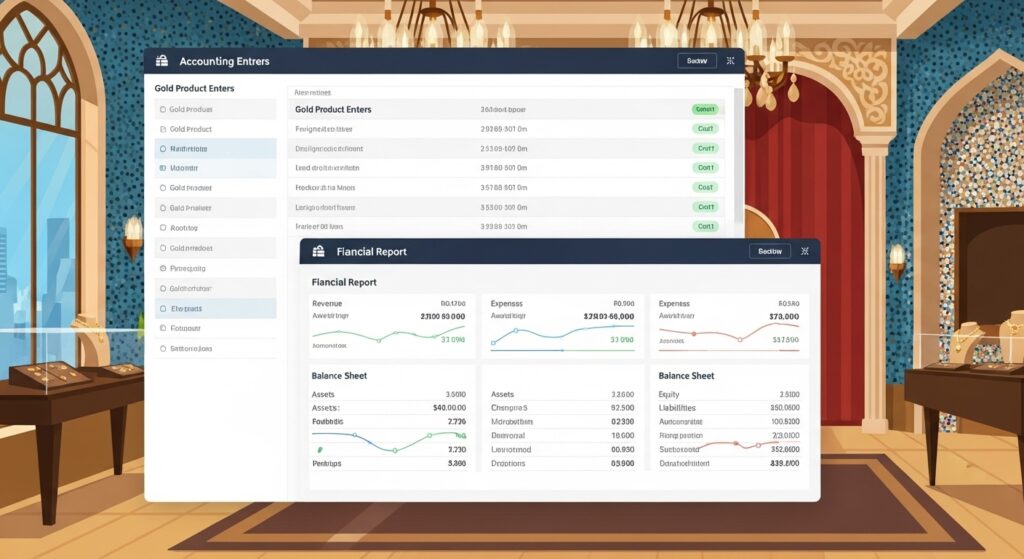
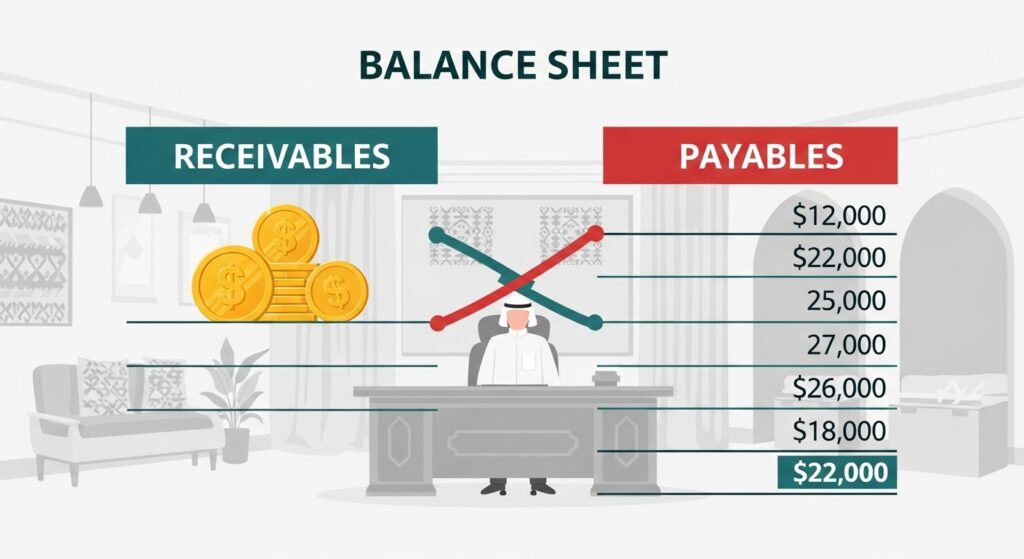
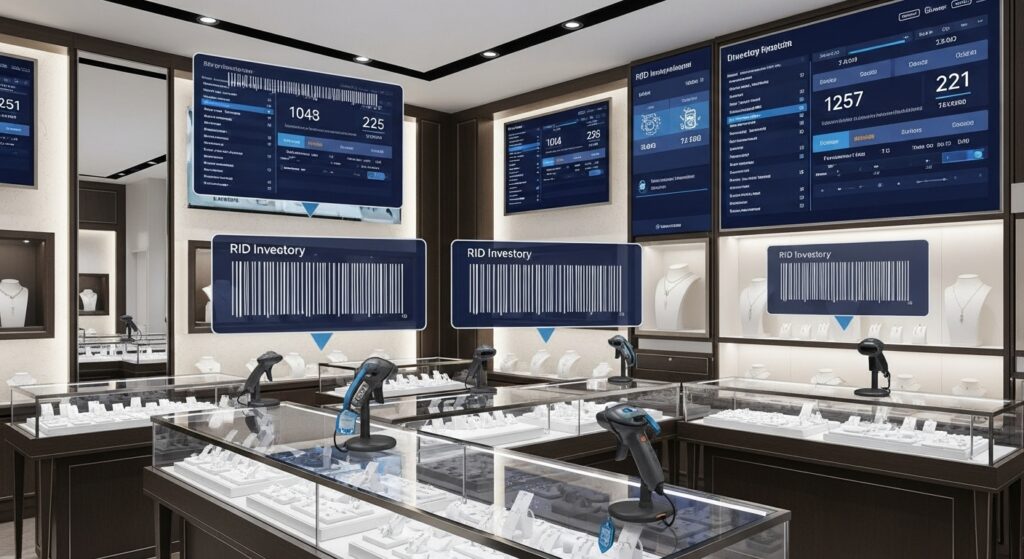
Imagine managing a high-end jewelry showroom where the foot traffic is constant and the display cases are frequently emptied. On the surface, the business looks like a resounding success. However, without deep financial intelligence, this “success” could be a dangerous illusion. In the precious metals trade, high sales volume does not automatically equate to high net profit. Because you are dealing with a commodity that fluctuates in value every second, you could be moving kilograms of gold while actually eroding your capital. The difference between a store that merely survives and one that operates as a “profit machine” lies in the ability to see past the glitter of the gold and into the hard mathematics of the operation. Modern jewelry retail is no longer just about the art of the sale; it is about the science of data. Financial reports act as the high-resolution sensors of your business, revealing exactly where your margins are healthy, where your costs are hidden, and how global market volatility is impacting your bottom line in real-time. By transitioning from “gut-feeling” management to a data-driven strategy, owners can stop reacting to the market and start anticipating it. Understanding the importance of financial analysis in the gold industry is the fundamental shift required to protect your investment and scale your brand across the region. Why is Absolute Financial Visibility Non-Negotiable for Jewelers? In standard retail, a “liquidity crisis” usually happens because of a massive drop in sales. In the gold industry, a liquidity crisis can happen even when sales are record-breaking. This paradox is unique to the precious metals trade and is the primary reason why advanced reporting is a survival requirement. Preventing Liquidity Crises During Market Swings:When the global price of gold drops suddenly, customers often rush to buy, creating a surge in revenue. However, if a store owner mismanages this cash—perhaps by paying off long-term debts or over-investing in non-liquid assets—they may find themselves without the cash needed to “restock” the gold they just sold at the new market rate. Precise reporting ensures that you always have a clear view of your cash flow, protecting you from being “asset rich but cash poor.” Reflecting Real-Time Inventory Valuation:Your inventory is not a static asset. A 21k bridal set is worth a different amount at 10:00 AM than it is at 4:00 PM. Accurate accounting gold practices ensure that your balance sheet reflects the absolute current market value of your stock. This prevents you from making expansion decisions based on outdated financial snapshots. Building Stakeholder and Investor Trust:If you intend to scale your business—whether through bank financing or private equity—you must present an undeniable paper trail. Professional investors and banks look for institutional-grade financial reports that prove you understand your wastage, your making charges, and your turnover velocity. Data is the universal language of trust in the financial world. The Essential Report Matrix: Turning Data Into Actionable Insights To manage a gold business effectively, you don’t need a thousand different spreadsheets. You need a few core, highly accurate reports that speak directly to the challenges of the jewelry trade. When these reports are generated by a specialized gold erp system, they provide the following clarity: Essential Report What it Actually Reveals The Profitable Action to Take P&L Statement The true gap between total revenue and the total cost of materials, labor, and wastage. Identify and cut specific product lines or suppliers that are consistently eating your margins. Cash Flow Report The exact timing of cash inflows versus outflows for overhead and inventory. Time your bulk bullion purchases to coincide with market dips and avoid high-interest emergency loans. Inventory Turnover The “velocity” of your stock—how many days a piece sits in the case before selling. Aggressively discount or melt down slow-moving stock to free up capital for high-demand designs. 1. The Power of the Profit & Loss (P&L) Statement A specialized P&L for a jewelry store does more than just list expenses. It breaks down the “Cost of Goods Sold” (COGS) into granular detail. It separates the cost of the raw metal from the making charges and the financial impact of the “wastage” (the 3-7% of metal lost during polishing and casting). If your P&L shows that your gross profit is healthy but your net profit is slim, you can instantly spot if the culprit is high electricity costs in the workshop or excessive marketing spend that isn’t converting. 2. Mastering the Cash Flow Statement This is your “oxygen” report. In the jewelry industry, “Profit” and “Cash” are two very different things. You might show a $100,000 profit for the month, but if that profit is tied up in a heavy gold necklace that hasn’t sold yet, you can’t use it to pay your staff. The Cash Flow statement tells you exactly how much liquid cash you have available to pivot your strategy at a moment’s notice. 3. Inventory Turnover: Measuring Your Showroom’s Heartbeat Every day a gold piece sits in your display case, it is “costing” you money in insurance, security, and the “opportunity cost” of the cash tied up in it. Using gold inventory system analytics to track turnover helps you realize that a fast-selling 18k item with a lower margin might actually be more profitable over a year than a slow-moving 22k bridal set with a high margin. How Data-Driven Decision Making Boosts Showroom Performance Once you have the reports, the next step is implementation. High-performance jewelry businesses use these insights to optimize four critical areas of their daily operations: Optimal Pricing Strategies:Pricing gold is a mathematical tightrope walk. Price it too high, and you lose customers to the shop next door; price it too low, and you’re essentially giving your gold away for free. Financial reports help you calculate the “perfect margin”—one that covers your making charges and wastage while remaining competitive against global market volatility. Precision Promotion Analysis:Many store owners run “No VAT” or “50% off making charges” campaigns during wedding seasons. But were they actually profitable? By analyzing sales data