The Saudi Arabian business landscape is currently undergoing a tectonic shift. Driven by the ambitious goals of Saudi Vision 2030, the Kingdom is rapidly evolving into a global investment powerhouse and a hub for digital innovation. For enterprises operating in this dynamic environment, the ability to streamline operations, maintain strict regulatory compliance, and scale rapidly is no longer a luxury—it is a survival mandate. In this context, Odoo has emerged as the strongest and most adaptable Enterprise Resource Planning (ERP) system in Saudi Arabia.
While global giants like SAP and Oracle have traditionally dominated the high-end market, and local solutions have served basic needs, Odoo occupies a unique “sweet spot.” It offers the enterprise-grade power of top-tier systems with a modularity and price point that makes it accessible to the Kingdom’s growing Small and Medium Enterprise (SME) sector. However, the true strength of Odoo in the local market isn’t just in the software itself; it lies in the ecosystem of certified partners like Daysum who tailor the platform to meet the specific legal, cultural, and operational requirements of the Saudi market.
The software licence is the smaller half of the equation; a professional odoo implementation saudi arabia is what determines whether the system ends up matching how your business actually runs.
1. The Core Strengths: Why Odoo Dominates the KSA Market
A. Modular Architecture: Pay Only for What You Use
One of the most significant barriers to ERP adoption in the past was the “all-or-nothing” approach. Companies were forced to buy massive, expensive licenses for features they might not use for years. Odoo flipped this script. Its modular nature allows a business to start with a single app—perhaps Accounting or CRM—and add modules like Inventory, Manufacturing, or E-commerce as they grow. This scalability is perfect for Saudi startups and SMEs that are looking to manage their cash flow while building a robust digital foundation.
B. Seamless Integration: Breaking Down Information Silos
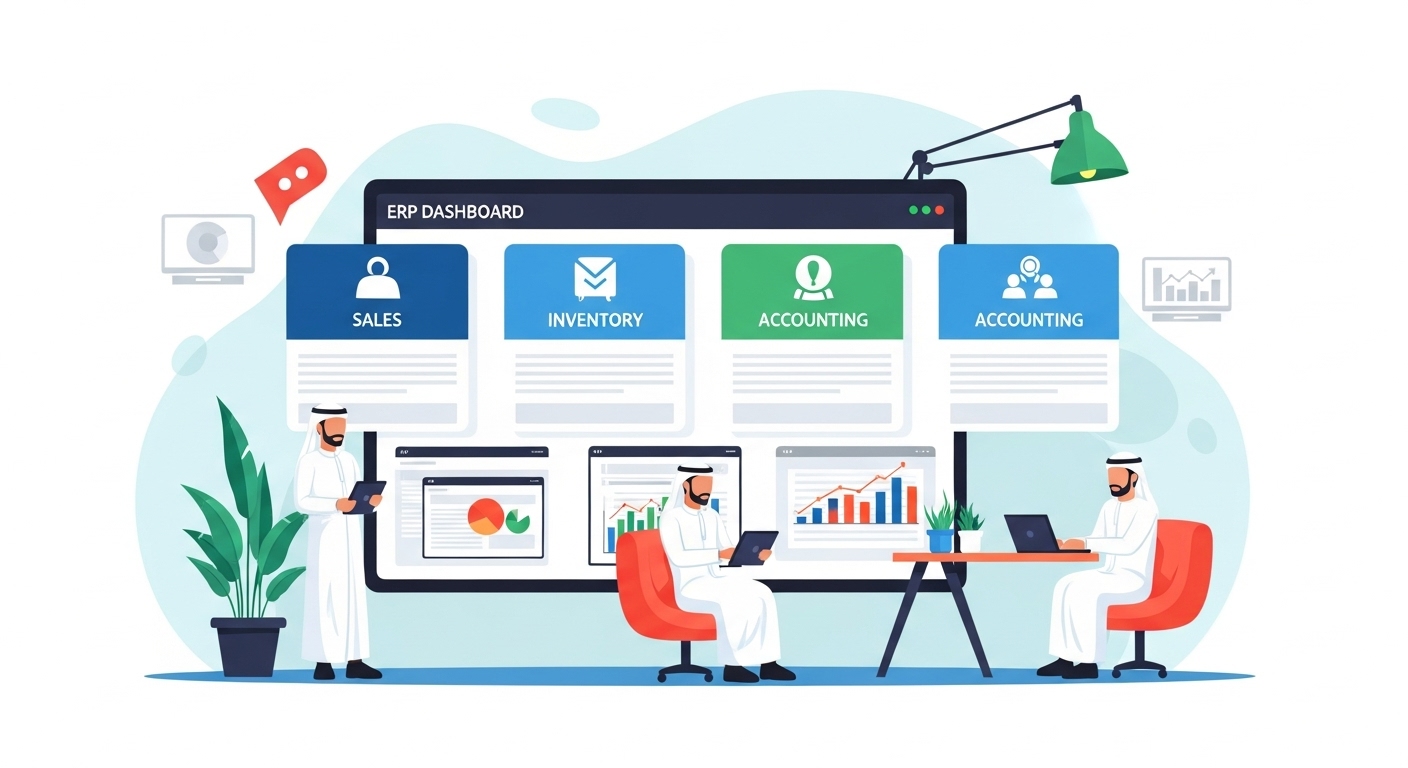
In many traditional Saudi businesses, the sales team uses one program, the warehouse uses another, and the accountants use a third. This leads to manual data entry, human error, and a lack of real-time visibility. Odoo integrates these departments seamlessly. When a sale is made, the inventory is automatically updated, a delivery order is generated, and a ZATCA-compliant invoice is created in the accounting module—all without a single duplicate entry.
C. Localized Compliance: ZATCA, VAT, and Mada
For any business in Saudi Arabia, compliance is non-negotiable. Odoo, especially when implemented by Daysum, is fully localized for the Saudi market. This includes:
- ZATCA Phase 2 (Fatoora): Invoices generated as structured XML with the cryptographic stamp the integration phase requires.
- VAT Management: Automatic calculation and reporting of Value Added Tax in accordance with Saudi law.
- Mada & Local Payments: Integration with Saudi-specific payment gateways.
- Arabic UI & Hijri Calendar: A native Right-to-Left (RTL) interface and support for the Hijri calendar, ensuring that the staff feels comfortable and productive.
2. Odoo vs. The Competition: How the Main Options Compare
When Saudi business owners search for ERP solutions, they frequently compare Odoo with other major players. Here is how the top systems compare for a typical Saudi enterprise.
Competitor Comparison Table
| ERP System | Core Strengths | Weaknesses | Saudi Market Fit |
|---|---|---|---|
| Odoo | Modular, highly affordable, ZATCA-native, huge local community. | Requires a strong partner for complex customization. | Top Choice: Ideal for SMEs and growth-focused firms; Vision 2030 ready. |
| SAP Business One | Extremely robust, deep analytics, global standard. | High total cost of ownership, rigid setup, complex for small teams. | Enterprises: Best suited for massive conglomerates with huge IT budgets. |
| Microsoft Dynamics 365 | Seamless integration with Office 365 and Azure ecosystem. | Expensive licensing, can be overkill for non-MS-heavy offices. | Moderate: Best for companies already fully locked into the Microsoft stack. |
| ERPNext | Open-source, strong manufacturing and retail features. | User interface is less polished, smaller local partner network in KSA. | Alternative: Good for companies with in-house technical teams. |
| Elate ERP | Strong local focus, specific modules for Saudi HR/Payroll. | Limited scalability, less frequent global feature updates compared to Odoo. | Local Entry: Good for traditional businesses with fixed, simple needs. |
Odoo’s leadership in the market is often attributed to its cost-effectiveness. While SAP or Oracle might require an initial investment of hundreds of thousands of riyals, an Odoo subscription remains manageable, allowing businesses to redirect their capital toward marketing and expansion.
3. The Critical Role of a Certified Partner: Why Daysum?
The biggest mistake a business can make is treating an ERP project like a simple software installation. An ERP implementation is a business transformation project. ERP projects rarely fail because the software was wrong. They fail because nobody mapped the processes before configuring them, and the gap only becomes visible after go-live. This is where Daysum (known as ديسم in Arabic) makes the difference.
A. Strategic Consulting and Process Mapping
Before a single line of code is written, Daysum consultants map your existing business processes first, identify where the inefficiencies actually sit, and design the Odoo environment around them. The distinction matters: installing Odoo and configuring it to match how your business already works are two different projects.
B. Professional Project Recovery: Rescuing Stalled Implementations
A unique challenge in the Saudi market is the “abandoned project.” Many companies attempt to implement Odoo using freelancers or inexperienced vendors, only to have the project stall midway. Daysum handles project recovery: auditing what was actually built, identifying which decisions caused the stall, and rebuilding from there rather than starting the whole implementation over.
C. ZATCA Phase 2 Integration
As the Kingdom moves into the Integration Phase of e-invoicing, businesses need a partner who understands the technical specifications of e invoicing zatca. Daysum ensures your Odoo system is cryptographically stamped and seamlessly linked to the Fatoora portal, preventing costly fines and legal complications.
4. Industry-Specific Excellence: Odoo for Retail and Gold
Saudi Arabia’s retail sector is one of the most vibrant in the region. However, it faces unique challenges in inventory management and tax compliance. Odoo, when configured as a retail erp saudi arabia, provides tools that general systems simply cannot match.
The Gold and Jewelry Sector
In the Saudi gold market, precision is everything. Inventory must be tracked by weight (grams), purity (karat), and labor cost (craftsmanship). Daysum has developed specialized extensions for Odoo that allow gold merchants to:
- Track live gold prices and update inventory values automatically.
- Manage “scrap” gold and melting processes.
- Issue detailed tax invoices that separate the gold value from the craftsmanship fee, as required by Saudi law.
Power means nothing without the right apps — see how Daysum’s Odoo Apps for Stores turn raw ERP potential into daily operational results.
5. Elevating Performance with Daysum Cloud Solutions
In the modern world, being tied to a physical office is a competitive disadvantage. The Saudi workforce is increasingly mobile, and remote work trends are here to stay. Daysum Cloud provides managed infrastructure for your Odoo system, with monitoring, backups, and security handled as part of the service rather than left to your IT team.
A. Secure Saudi-Based Hosting
Security is a top priority for Saudi firms. Daysum provides secure cloud hosting that aligns with local data residency preferences. This ensures that your business data is protected by the latest encryption standards while remaining accessible to your team from anywhere in the world.
B. Scalability Without Infrastructure Costs
One of the main reasons Odoo is the strongest ERP in the Kingdom is its ability to scale. With Daysum Cloud, you don’t need to buy expensive servers or hire a large IT team. As your business grows from 10 employees to 500, the cloud infrastructure scales with you.
C. Integrated HR and Attendance
A robust business needs more than just accounting; it needs to manage its people. By utilizing cloud hrms solutions, Saudi companies can:
- Track employee attendance via GPS or biometric integration.
- Manage GOSI, Muqeem, and Qiwa requirements.
- Automate payroll processing in compliance with the Wage Protection System (WPS).
6. The Digital Transformation Journey: A Roadmap
For a Saudi company to succeed with Odoo, we recommend a phased approach:
- Discovery Phase: Analyze current pain points and set clear KPIs for the ERP project.
- Implementation: Focus on the core modules (Accounting and CRM) to establish a baseline of data integrity. Ensure you are using a certified e invoicing software saudi arabia to meet legal standards immediately.
- Expansion: Once the core is stable, add modules like Inventory, Manufacturing, or HR.
- Optimization: Use Odoo’s advanced reporting and AI tools to analyze business performance and find new growth opportunities.
7. Conclusion: Odoo Powered by Daysum is the Future
Odoo’s advantage in this market is not that it does more than SAP or Dynamics; it is that a Saudi SME can actually afford to implement it properly, module by module, without committing to a licence it will not fully use for three years.
However, the software is only as good as the hands that guide its implementation. To truly unlock the power of Odoo, you need a partner who speaks the language of Saudi business. Daysum (ديسم) provides the local expertise, technical excellence, and ongoing support needed to ensure your digital transformation is a resounding success. From managing your daily sales to securing your e invoicing software saudi arabia compliance, we are with you every step of the way.
Start with a process mapping session. Show the Daysum team where your current operation actually breaks — the duplicate data entry, the stalled implementation, the invoice that still needs manual work before it reaches Fatoora — and get a scoped plan before you commit to anything.
Frequently Asked Questions (FAQs)
While SAP is a powerful system, its implementation cost and complexity are often prohibitive for SMEs. Odoo offers a modular approach, allowing SMEs to pay only for the apps they need. Furthermore, Odoo’s interface is more modern and user-friendly, leading to faster employee adoption and lower training costs in the Saudi market.
Yes, Odoo is fully capable of meeting ZATCA Phase 2 requirements, including the generation of XML files and cryptographic stamps. However, this compliance requires a professional configuration by a certified partner like Daysum to ensure your system is correctly linked to the ZATCA Fatoora portal.
Absolutely. Through specialized modules developed by Daysum, Odoo can manage Saudi-specific HR needs such as GOSI contributions, Wage Protection System (WPS) file generation, Hijri-based contract tracking, and automated end-of-service (EOSB) calculations according to the Saudi Labor Law.
Daysum offers specialized project recovery services. We can perform a forensic audit of your current system, identify the technical or procedural bottlenecks that caused the stall, and implement a rescue plan to get your project live and your business back to full productivity.