Gold for Gold: How to Legally Calculate Price Differences and VAT on Exchanges
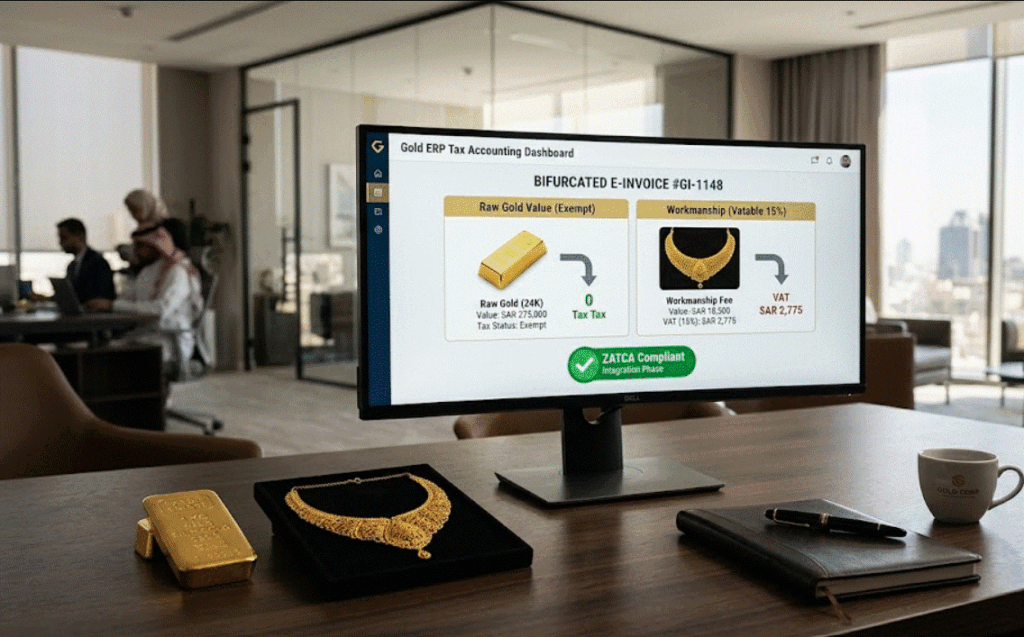
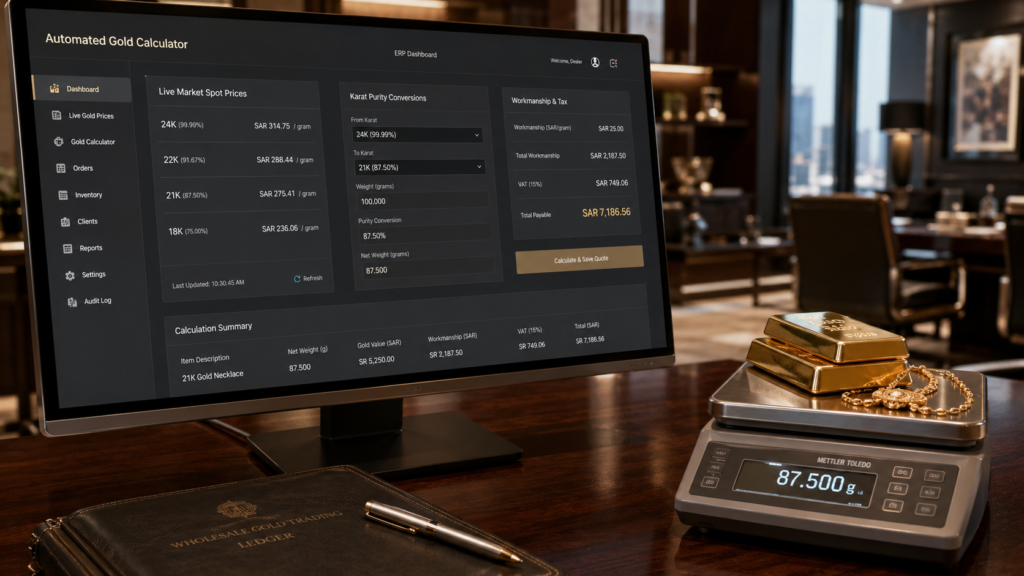
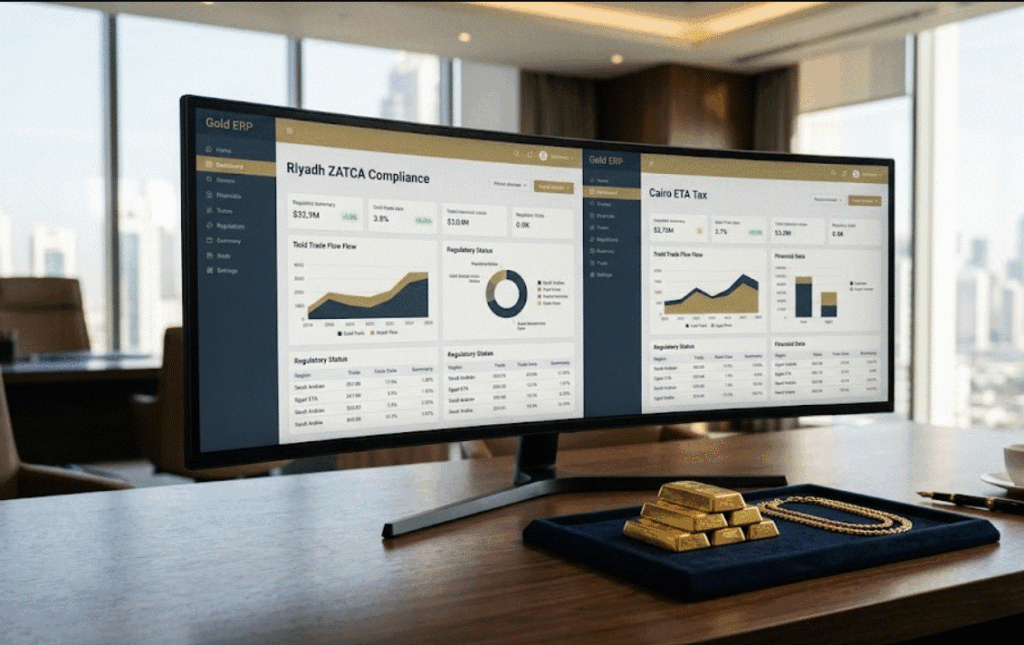
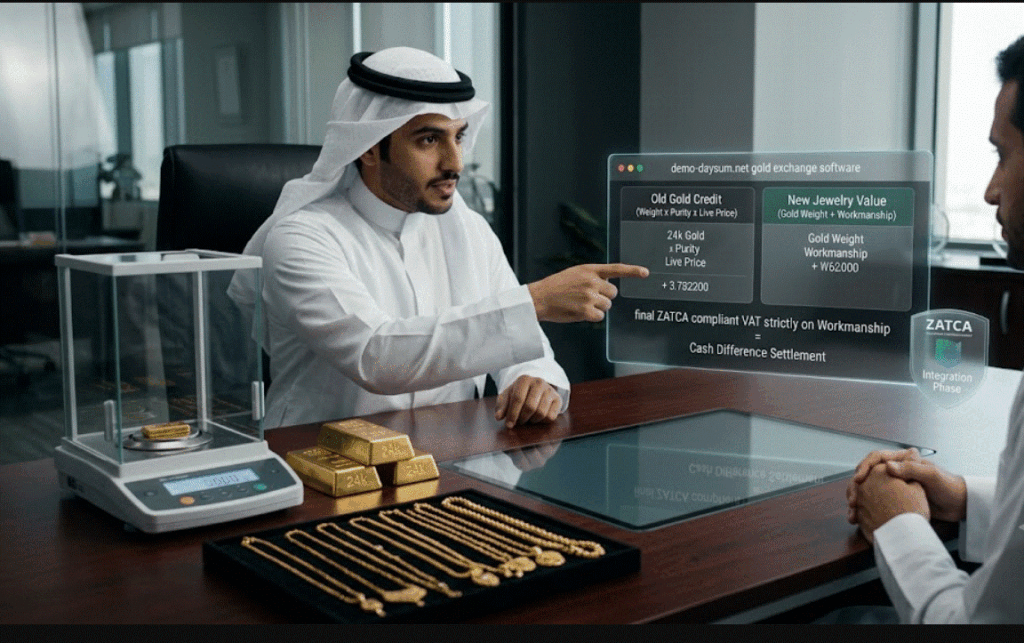
In the complex, high-velocity world of B2B gold distribution and jewelry manufacturing, the “Gold for Gold” exchange—where a wholesale client or retail branch trades in raw gold or old jewelry against new, manufactured pieces—is a standard operating procedure. However, for the financial controller, this process is fraught with accounting and fiscal risks. When managed manually, these exchanges often result in “ghost” entries, reconciliation nightmares, and, most dangerously, tax compliance failures. For a Chief Financial Officer (CFO), the goal is to transform these exchanges from an administrative burden into a source of financial clarity. The solution lies in the deployment of a specialized Gold ERP that treats gold exchanges not as simple bartering, but as sophisticated financial events that require precise accounting and localized tax treatment. By automating the calculation of the cash difference and enforcing the ZATCA-compliant rule that VAT applies strictly to the workmanship (the added value) and not the raw asset, modern enterprises protect themselves from double taxation while simultaneously reclaiming hundreds of hours previously lost to manual ledger adjustments. 1. The Accounting Identity: The Tax-Base Conundrum in Gold Exchanges The fundamental challenge in gold exchange accounting is the “identity” of the gold itself. In the eyes of the tax authorities, gold bullion or scrap metal is a commodity—often treated as a non-taxable asset or a zero-rated supply in B2B transactions. Conversely, the labor, design, and manufacturing overhead (the “making charges” or “workmanship”) constitute a service, which is a taxable event. When a wholesale distributor accepts gold in exchange for new goods, they are essentially conducting a dual-track transaction: If the accounting system does not automatically bifurcate these two values, the merchant risks double taxation. If the tax is applied to the total value of the new gold jewelry without deducting the value of the raw material asset provided by the client, the business pays VAT on an asset that should be tax-exempt. This is the “Double Taxation Trap.” A professional B2B accounting system must be able to perform this bifurcation at the transactional level, ensuring that the VAT output on the new piece is net of the asset value provided by the client, and compliant with the latest E-invoicing mandates. 2. Technical ERP Logic: Automating the Exchange Calculation To achieve absolute accounting precision, the ERP system must execute a precise mathematical protocol. It is not sufficient to simply track the weight; the system must manage the financial value of the gold at the moment of the exchange. The Automated Calculation Flow: By executing this calculation within the ERP, the system generates an audit-ready Gold invoice that clearly shows the gross price, the trade-in credit, the taxable workmanship base, and the final VAT amount. This process removes the possibility of human math errors and ensures that the financial data transmitted to the Tax authority is structurally perfect. Manual vs. Automated ERP Accounting for Gold Exchanges Accounting Metric Manual/Traditional Method Automated B2B ERP System Tax Calculation Applied to total; risks double taxation. Applied strictly to workmanship; prevents over-taxation. Weight/Purity Tracking Manual logs; error-prone and slow. Real-time tracking of Gram and Karat conversion. Audit Trail Incomplete/Paper-based; difficult to verify. Immutable, detailed ledger of every exchange. Efficiency Hours per day for reconciliation. Seconds per transaction (Automated). 3. The Localization Imperative: ZATCA and Regional Compliance In regions such as the Kingdom of Saudi Arabia, compliance with the Zakat, Tax and Customs Authority (ZATCA) is the primary driver for digitizing the gold supply chain. Tax authorities require that electronic invoices be generated in a specific format (e.g., UBL XML) that contains all required cryptographic stamps and QR codes. A localized ERP system does not just perform the math; it formats the transaction for government reporting. When a gold exchange occurs, the system automatically creates the credit note for the return (the old gold) and the invoice for the new item. Because the system is “localization-aware,” it knows that the ZATCA-compliant file must itemize the gold weight (tax-exempt) and the workmanship (taxable) separately. If a merchant attempts to issue an invoice that does not follow this itemization, the system rejects it, preventing the merchant from submitting an invalid file and triggering a penalty. This level of localized accounting professionalism is what differentiates a generic business software from a dedicated B2B financial platform. For companies looking to integrate their entire financial lifecycle, digital transformation is the only path forward. Review this overview of digital transformation to see how such integrations provide a competitive edge. 4. Operational Efficiency and the Role of the CFO For a CFO, the value of an automated gold exchange system is found in the “Accounting Identity” of the business. The system acts as a guardian of the General Ledger, ensuring that every time a gram of gold enters or leaves the vault, the corresponding financial account is updated. Eliminating Manual (Reconciliations) In a manual B2B environment, accounting teams spend hours at the end of each week trying to reconcile the physical gold weight in the vault with the theoretical weight in the ledger. Differences often arise because of incomplete documentation of exchanges. When the ERP system mandates that an exchange cannot occur without a logged transaction, the ledger always matches the physical stock. The “Account-Ledger-Physical-Stock” triangle is closed. The CFO no longer needs to hunt for missing documentation because the system forces the documentation to exist as a condition of the transaction. Scaling Through Automation As the wholesale volume increases, the business cannot scale if the finance team is tied to spreadsheets. An automated system allows a jewelry manufacturer to handle 10 exchanges a day as efficiently as 1,000. It scales the process without scaling the administrative staff. This efficiency directly impacts the bottom line, freeing up resources to focus on expanding the B2B distributor network or investing in better manufacturing technologies. Managing your workforce efficiently starts with adopting modern solutions like A Guide For Saudi Companies On Compliance With Labor Laws Using HR Systems. The CFO’s ROI on Gold Exchange Automation Financial Outcome Mechanism of Improvement Corporate Benefit Reduced